



Integrated development new model for urbanization









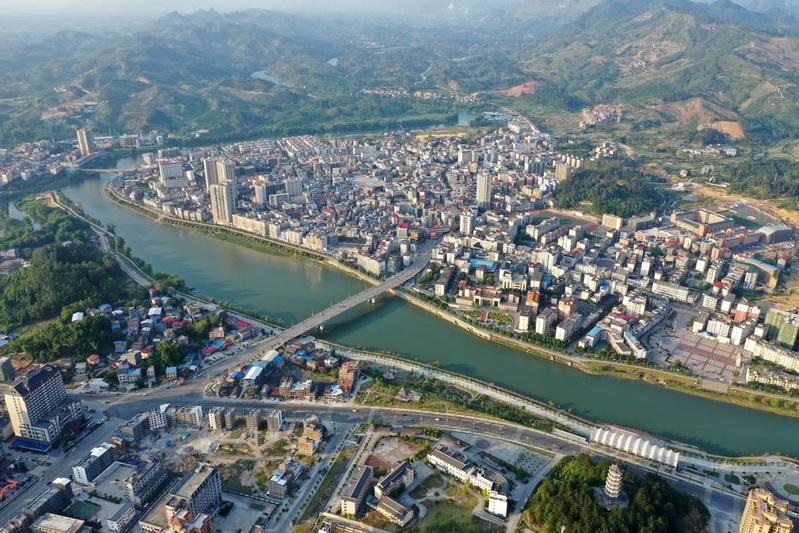
China's urbanization rate in terms of permanent residents was more than 60 percent by the end of 2020, a spokesperson for the National Development and Reform Commission said at a news briefing on Monday.
Judging from the experience of developed countries, urbanization is the only way to achieve modernization. Compared with a 90 percent urbanization rate in the United States, China's is still an ongoing urbanization process, but it has distinct characteristics and advantages.
After decades of economic growth, an urbanization pattern with Chinese characteristics has taken shape. So far, 19 city clusters-which are home to more than 70 percent of China's population and contribute more than 80 percent to its GDP-h(huán)ave been formed. These are not only in the eastern coastal region, but also in the central and western regions. For example, city clusters with Zhengzhou, Xi'an, Chengdu and Chongqing, as the major cities, have come into being. These city clusters not only have a strong regional agglomeration capacity, they also act as a strong driving force for sustainable development.
The process of urbanization has hastened China's industrial transformation and upgrading, while urban living conditions have steadily improved and orderly progress has been made in building green, smart, culturally rich cities. In addition, high-speed railways and highway networks have improved connectivity among cities across the country. The unimpeded flow of people, logistics and capital, and lower production and living costs have improved the quality of China's urbanization.
Although the gaps between urban and rural areas have not been fundamentally eliminated, the gap between urban and rural residents' living standards continues to narrow and China has been steadily advancing toward realizing balanced distribution of urban-rural public services and infrastructure. The top-level design for integrated urban-rural development has basically been completed and is expected to break the country's long-entrenched dual urban-rural structure.
The simultaneous advancement of China's urbanization and modernization through the integrated development of urban and rural areas is a new type of urbanization path that China is exploring, which if successful could become a new urbanization model for the world.





