



Suez Canal incident puts focus on global food flow









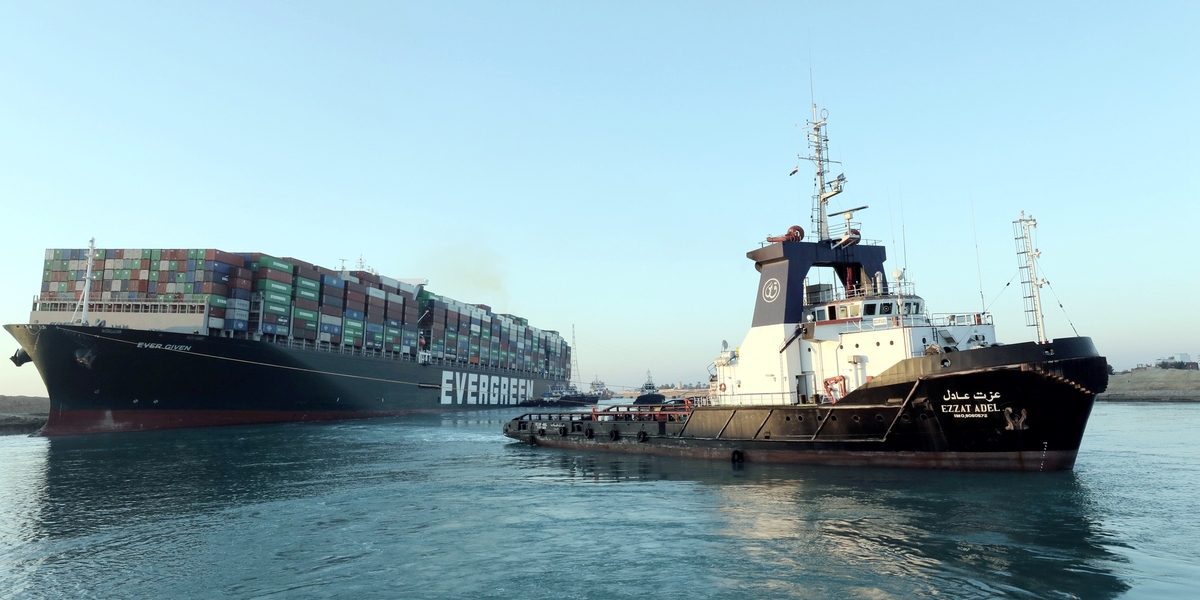
The novel coronavirus epidemic has brought about challenges to the stability of the global food supply and logistics chains and added fresh risks to China's food imports. The recent blocking of the Suez Canal by a stranded container vessel is a reminder that transportation security is crucial to ensuring the security of China's food imports, and it must hold a long-term view and enhance its global food supply chain management capacity.
Grain is one of the main goods in the dry bulk transportation at sea, accounting for more than 10 percent of the total sea dry bulk transportation, behind only iron ore and coal. At present, the global grain trade mainly depends on the routes of the Pacific Ocean, Atlantic Ocean and Indian Ocean. Once these trade routes are blocked, the global grain supply chain will be disrupted thus pushing up global grain prices.
The recent canal accident has so far had a limited impact on China's grain imports. But this is because the sources of China's grain imports are mainly from the Americas, with soybean imports from Brazil, the United States and Argentina accounting for more than 90 percent of its total soybean imports. In recent years, China has been diversifying its grain imports, beginning to source grain from Russia, Ukraine, and Central Asian and African countries. High-quality wheat imports from Central Asia and Russia are mainly carried by freight trains between China and Europe, and only corn and wheat imports from Ukraine and France are shipped through the Suez Canal, but the volume from these two countries is relatively small.
Logistics and transportation are key links in the global food security chain. China should work with other countries to strengthen global logistics infrastructure and establish a multidimensional transportation network that integrates railway, sea and air routes to ensure the security of food transportation. It should cultivate multinational grain merchants, encourage domestic grain enterprises to go global to establish large-scale overseas grain production, processing, storage and transportation bases and fully participate in the reconstruction of the global grain industry, value and supply chains. On the basis of economic and trade cooperation, China should also try to establish a diversified food cooperation mechanism and promote diversification of grain import sources to reduce possible trade risks.





