



Avoid accidents during Qingming Festival









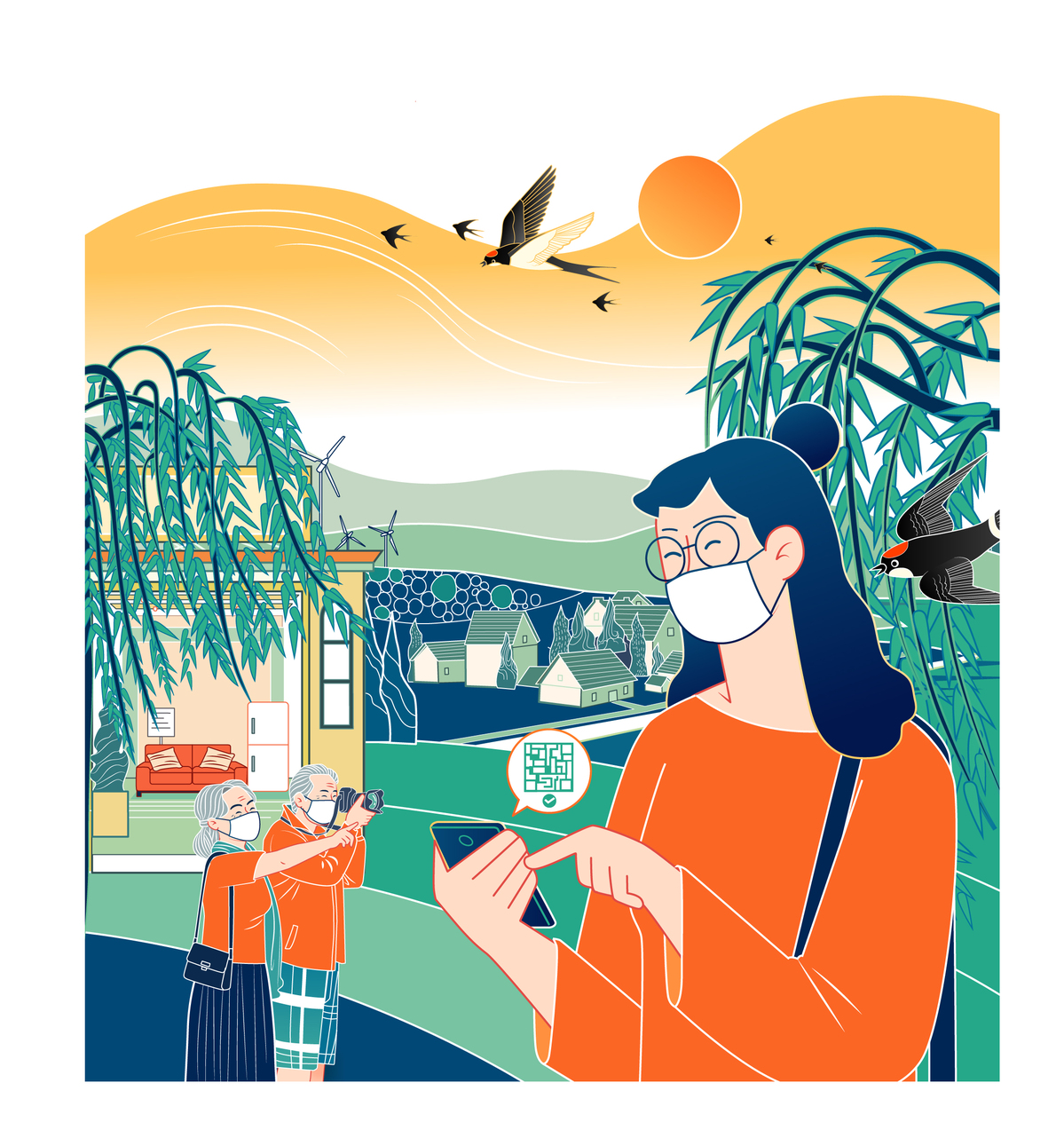
Qingming Festival, also known as Tomb Sweeping Day, is a traditional festival when people clean the tombs of their ancestors and pay respects to them by burning joss sticks and joss paper.
The tradition of burning joss sticks and joss paper (also known as ghost money) in the open makes Qingming a peak time of bushfires and environmental pollution, prompting many local governments to impose restrictions on such practices in recent years. But Qingming is much more than burning joss paper, it is also a time to demonstrate filial piety.
For this year's Qingming Festival, which falls on Sunday, Harbin, capital of Heilongjiang province, has banned the production, sale and burning of joss paper in the city, triggering controversy.
It makes sense to promote environmentally friendly ways of observing festivals, but outrightly banning the burning of ghost money is inadvisable, because it takes time for people to abandon centuries-old ritual practices, change their traditional habits and adopt eco-friendly, modern ways of paying respects to their ancestors.
Local governments such as that in Harbin have banned the burning of ghost money in the open as some people's carelessness has caused wildfires resulting in huge environmental damage in some places.
Many of those working and living in cities who cannot visit their ancestors' tomb burn ghost money on pavements to pay respects to their ancestors, which could be fire hazards and add to urban pollution. Besides, stalls spread across tens of meters selling ghost money and firecrackers often cause traffic jams in cities, as the rapid economic development and increase in incomes have added extravagance even to traditional festivals and rituals.
Like Spring Festival and Mid-Autumn Festival, Qingming too is a festival when families get together-the difference is they do so to pay respects to their departed relatives. It's such an important occasion that some Chinese people travel huge distances, even from abroad, to sweep their ancestors' tombs and pay respects to them. Not for nothing was the festival listed in the first batch of national intangible cultural heritages in 2006.
Still, people should exercise extreme caution at cemeteries not only to avoid sparking a fire by burning joss paper but also to prevent the spread of the novel coronavirus, as the threat of the pandemic is not yet over.
Social distancing and wearing of face masks are the best ways to cut the transmission chain of the virus. In fact, to prevent large-scale flow of people and thus reduce the chances of infection, the government advised people to stay in the city where they work during the Chinese Lunar New Year holiday.
The internet helped many people celebrating Spring Festival away from their hometown to overcome loneliness, as they could use video calls to chat with family and friends and gift digital hongbao (red envelopes) to youngsters.
Meanwhile, dozens of websites have sprung up, offering internet users virtual flowers to place on the digital tombs of their ancestors. Perhaps people should observe Qingming Festival in the same way they celebrated Spring Festival, with those unable to travel back home using technology to pay respects to their ancestors.
But since Qingming Festival is part of traditional Chinese culture and needs to be cherished, local governments should not make arbitrary decisions and impose a total ban on traditional rituals.
The views don't necessarily represent those of China Daily.
The author is a professor at the School of Public Administration and Policy, Renmin University of China.





