



Western companies can learn several lessons from H&M scandal









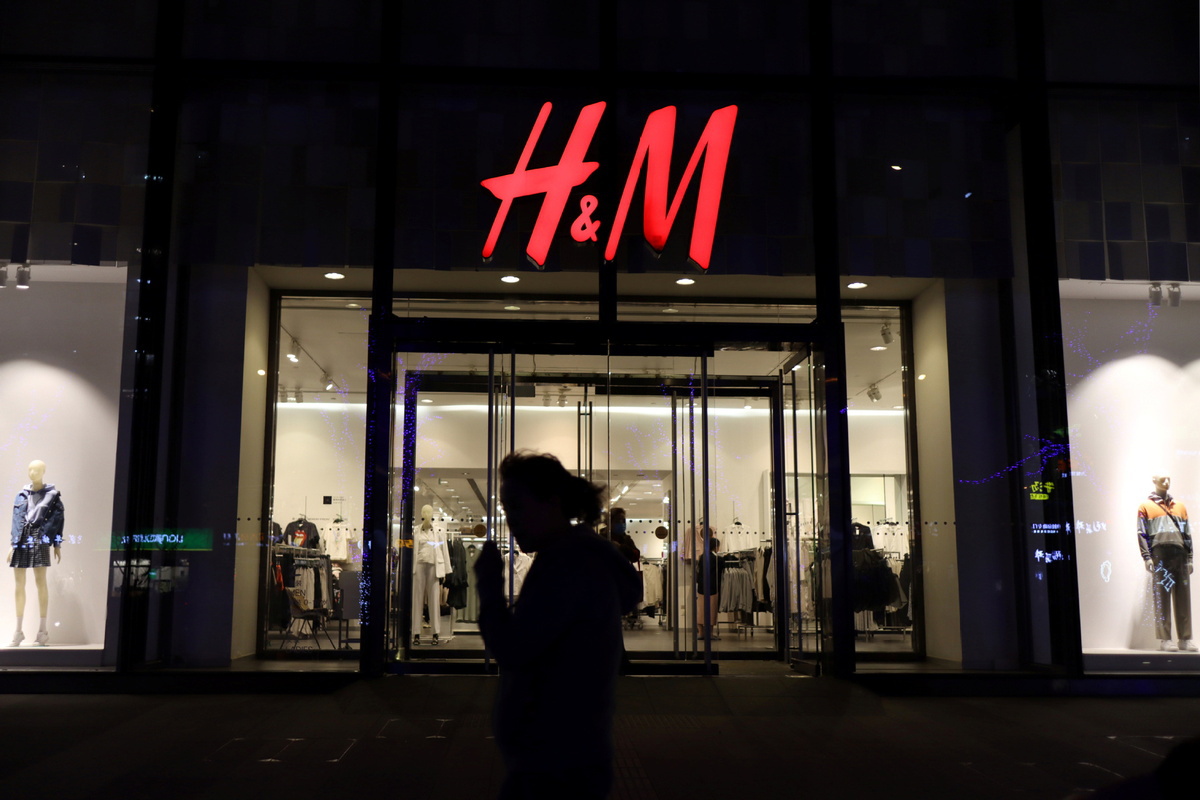
Swedish retailer H&M sparked a scandal this week when Chinese social media users discovered its previous statement about the situation in the Xinjiang Uyghur autonomous region. The company provocatively said that it was "deeply concerned" about Western media reports alleging all sorts of human rights abuses there. It then confirmed that it doesn't source any products or labor from the region. This sparked fury in Chinese society since many people rightly interpreted the company's politically tinged comments as very disrespectful and therefore worthy of a boycott.
All Western companies can learn several lessons from the H&M scandal. The first is that it's not an economic entity's place to make political statements. Doing so risks incensing patriotic customers in the country that such a comment is directed against. It's unbelievably arrogant that any company would ever think that it could get away with slandering their customers' homeland in such a way and that civil society wouldn't rise up to impose economic consequences against them in response. The days of imperialism are long gone and China isn't Western countries' captive market anymore. Its people aren't forced to buy anyone's products at gunpoint.
The Chinese people once again proudly debunked Western governments' claims about their country being a so-called "dictatorship". No dictatorship anywhere in the world in the dictionary sense of the word would ever allow its civil society to organically and peacefully organize around any cause, including an interconnected economic-patriotic one such as the boycott that they're proposing in response to H&M's slanderous comments. This unquestionably disproves the false accusations that the Chinese people aren't free to do as they like. H&M might soon learn that the Chinese people are free to purchase their competitors' products instead of theirs.
The second lesson is that foreign companies shouldn't ever bend to Western governmental and grassroots pressure on politicized issues. By their very nature, they're in the business of making money, not political statements. It doesn't matter that those capitols and some of their civil society allies actively propagate fake claims about the human rights situation in Xinjiang. No company should ever submit to pressure to clarify their stance on any political issue since it's not their domain to engage in. H&M made a huge mistake by capitulating to them. It should never have released its scandalous statement at all.
In the event that their corporate leaders felt compelled to say something lest they face the threat of being boycotted in Western markets for remaining silent, then they could have simply released an apolitical statement of economic fact confirming that no products or labor are sourced from Xinjiang. It was completely unnecessary and highly disrespectful of H&M to say that it's "deeply concerned" about what many in the world are increasingly beginning to realize are nothing more than fake news reports manufactured against China by some Western governments as part of their information-driven hybrid war against its international reputation.
The third lesson that Western companies can learn from the H&M scandal is that they their own governments oftentimes don't have their best interests in mind. After all, the only reason that the Swedish retailer said something at all is because Western governments created such a stir these past few years after spreading their fake news about China far and wide that the company mistakenly thought that it had to respond. This entire scandal could have been avoided in hindsight had no information warfare campaign been waged by Western governments against China in the first place.
Those political leaders wanted to pressure what are supposed to legally be the independent economic entities operating within their borders into either provoking a scandal such as the one that ultimately transpired and/or pulling out of China for strategic reasons related to the so-called "decoupling" policy that some of them pursue. Instead of submitting to this pressure, H&M could have pushed back against it by saying that it won't tolerate political meddling in its economic affairs. Regrettably, H&M made the wrong choice and might soon face the financial consequences of its mistake, but hopefully other Western companies will learn some lessons from this.
Andrew Korybko is a Moscow-based American political analyst.
The opinions expressed here are those of the writer and do not necessarily represent the views of China Daily and China Daily website.
If you have a specific expertise and would like to contribute to China Daily, please contact us at opinion@chinadaily.com.cn, and comment@chinadaily.com.cn.





