



Greener output, better pollution control imperative









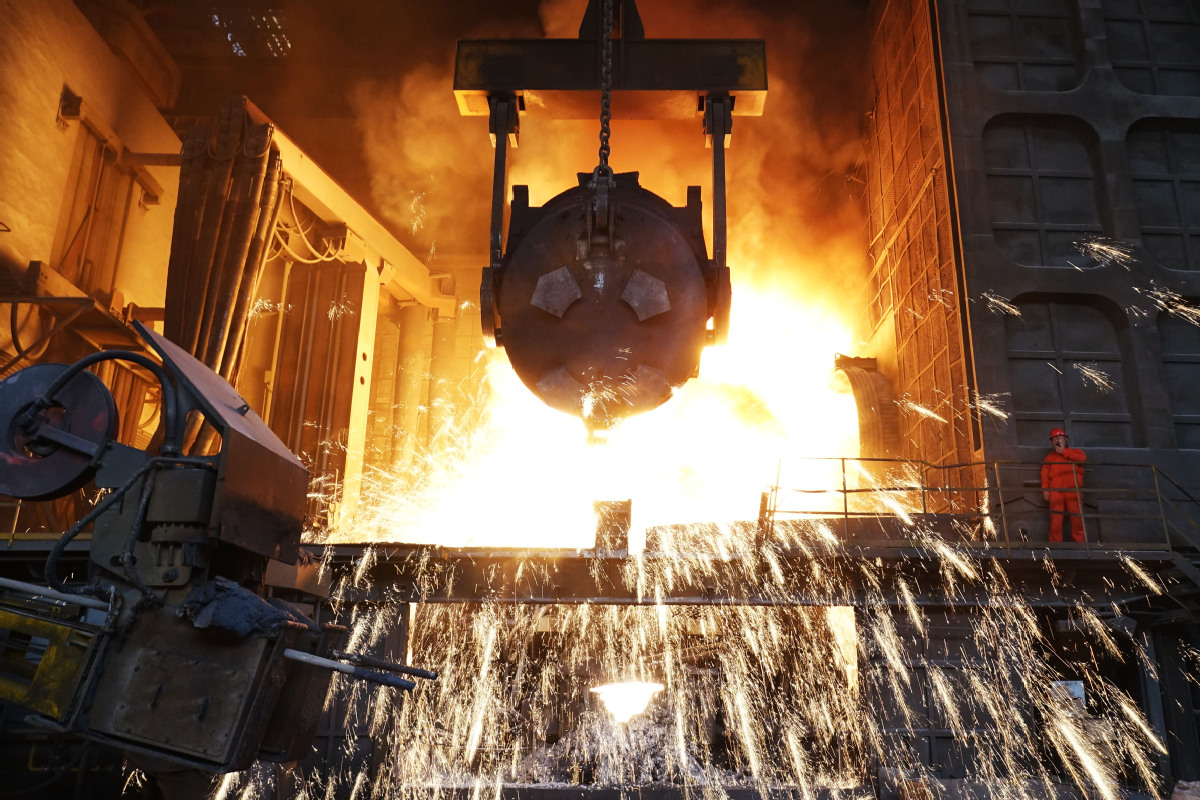
Low-carbon development is a revolutionary growth path that will have a fundamental impact on China's steel industry as the country pursues industrial upgrade and high-quality development, according to a top industry expert.
Li Xinchuang, chief engineer and Party secretary of the China Metallurgical Industry Planning and Research Institute, said the Chinese steel industry's transformation toward low-carbon development is necessary, inevitable and key for the industry's high-quality development and also key to coping with global climate change, carbon footprint control and its overall contribution to the nation's commitment to reducing carbon emissions.
His remarks came after China announced it will strengthen measures to reduce carbon and roll out action plans and roadmap for peaking emissions in key industries such as steel and cement this year-all as part of the country's promise to achieve a peak in carbon emissions by 2030 and carbon neutrality by 2060.
"The Central Economic Work Conference in December 2020 outlined key tasks in eight aspects for this year, including work to enable the peaking of emissions and carbon neutrality," said Li, who also referred to a draft guideline promoting high-quality development of the steel industry, released by the Ministry of Industry and Information Technology at the end of 2020.
"Driven by a series of policies, transformation toward low-carbon development is an urgent task for the steel industry," he said.
To achieve a peak in carbon emissions and then carbon neutrality, Li suggested the industry should curb excess crude steel output, optimize its energy mix and production process, and strengthen energy-saving efforts, as well as promote industry-centered recycling technologies.
To be specific, from the supply and demand perspective, he suggested adopting restrictive environmental protection measures, as well as those on carbon emissions and energy consumption, while implementing an information technology-empowered warning system to prevent excessive crude steel output.
He also suggested implementing policy measures to increase steel imports and discourage exports of steel billets and low-end products in order to reduce crude steel output through easing domestic demand.
The industry should coordinate with downstream industries to develop green and low-carbon products that are more lightweight, durable and resistant to reduce steel consumption and its carbon footprint in downstream industries such as construction, machinery, automobiles, home appliances and shipbuilding, he added.
From the perspective of energy consumption and the overall production process, he suggested the industry should research and apply advanced production methods such as high-efficiency pellet production technology to reduce consumption of sinter and coke.
The industry should also promote short-process electric furnace technologies and strengthen scrap steel recycling to reduce energy and raw material consumption. And steelmakers should adapt to local conditions to make full use of wind, solar and biomass modalities to further optimize energy and processing structures, he added.
He also said the industry should promote innovation and application of energy-efficient equipment, technologies and management to achieve consumption reduction and efficiency improvement, establish smart and green electric supply networks within steelmakers and industrial parks, optimize energy consumption surveillance and readjustment systems and realize coordinated traditional pollution control and carbon emission reduction methodologies.
Steelmakers and their residential environs alongside industrial enterprises should supply and share water and energy resources more efficiently, and byproducts from steel production should also be recycled to supply other industries with raw materials, he added.
The industry also needs to make breakthroughs in hydrogen-based production technologies, establish an independent intellectual property standard system and form mature commercial models for low-cost hydrogen production and hydrogen-based steel production.
According to the draft guideline on promoting high-quality development of the steel industry, the steel industry is facing issues such as excess capacity, production safety, and environmental protection, and addressing these issues is key in pursuit of high-quality development during the 14th Five-Year Plan period (2021-25).
The guideline said the steel industry must strengthen establishment of green manufacturing systems and optimize utilization of energy and resources.
It asked for the industry to have a more balanced regional layout, utilize more advanced technologies and equipment and practice high-level intelligent manufacturing to achieve sustainable growth pathways by 2025.











