



Why the G7's stance on HK is ludicrous









On Saturday, the G7 group of advanced economies led by the UK released a joint statement on China improving the electoral system of the Hong Kong Special Administrative Region (HKSAR), accusing Beijing of moving to "eliminate dissenting voices and opinions in Hong Kong" and arguing that a "discussion of differing views, not silencing of them, is the way to secure the stability and prosperity of Hong Kong."
British Foreign Minister Dominic Rabb has since argued that the improvements violate the Sino-British Joint Declaration and is accusing China of "non-compliance" over the agreement.
The countries pointing fingers at Hong Kong might want to look at the situation in context, as opposed to through the lens of ideology. The idea that Hong Kong could somehow have been better off with the status quo persisting and in a permanent state of turmoil and chaos is ludicrous.
Second, some of the above-listed countries are responsible for actively deteriorating the special administrative region's security situation.
Third, the United Kingdom does not have a monopoly over the "interpretation" of the Sino-British Joint Declaration. This never meant that other countries get to stand over China as self-appointed guardians and treat it as a one-sided restraint instead of an agreement.
"One Country" is a prerequisite to the "One Country, Two Systems" principle. And as ruled in the Basic Law, the Chinese central government has all rights of national security over Hong Kong.
It is not something distinct or different. The Sino-British Joint Declaration and the guarantee of a "high degree of autonomy" never meant that the city ought to become free game and a playground for sedition, anti-state activities and foreign interests or that the central government has no right to stop this in the interest of the country as a whole.
Other than that, Hong Kong continues to be under a model of "Two Systems" in that it continues to have a separate administration in the fields of economics, healthcare, social policy, taxation, education and in many other aspects that are different from the Chinese mainland.
However, some things have been made to change precisely because certain aspects of the pre-national security law status quo became absolutely untenable. Yet, the response of the West is simply anticipating that China does nothing.
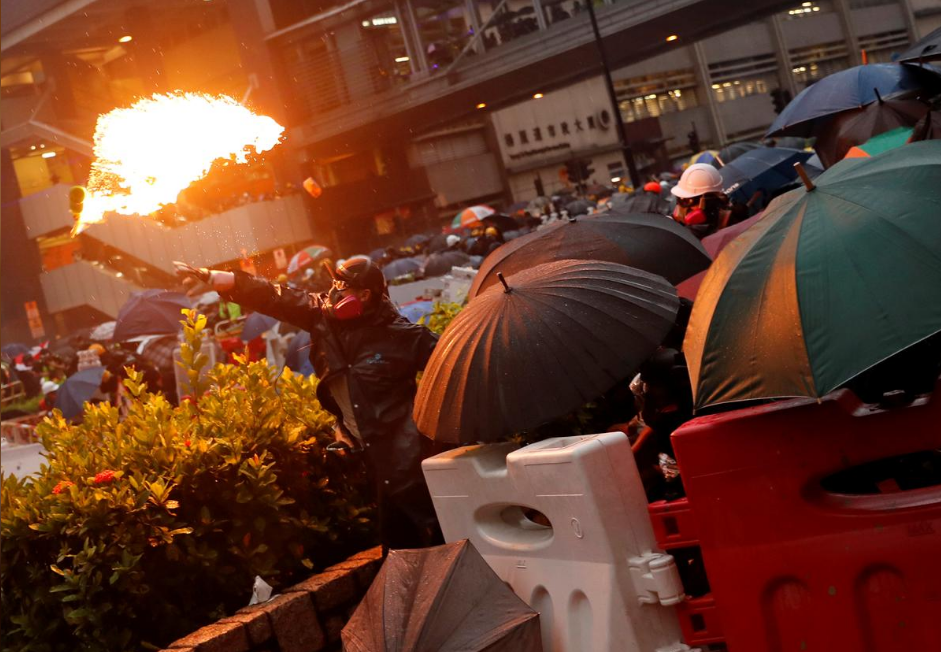
For an entire year, Hong Kong was struck with rioters who were openly backed by foreign powers, including American NGOs and politicians. They turned Hong Kong into a cauldron of chaos, instability and destruction.
Actions have to be taken by the authorities to restore stability to the city, end an endless cycle of violence and react against those who have sought to undermine the state entirely and serve foreign powers.
The rioters were the ones who forced these changes. The Chinese central government has a duty to protect the safety, stability and well-being of Hong Kong, and it has done so. Those who are advocating continued unrest are not acting in the sincere interests of the city or its people.
This is not about "eliminating dissent" or undermining the Basic Law. Just like in all the above countries, those who are "the opposition" must be loyal to the state and respect its rules accordingly.
The United Kingdom must respect China's sovereignty. It must cease acting in a parental and self-proclaimed "superior" role. The Sino-British Joint Declaration does not mean that the UK somehow has more say on the territory's future than the Chinese central government.
The British must respect that the imperial era is over and that its history in the territory was not righteous altruism but an act of aggression.
The model of "One Country, Two Systems," defined as a "high degree of autonomy," continues to otherwise exist in Hong Kong, in line with all the relevant laws and regulations. But no more can the city be utilized as a Trojan horse or an outpost to violate the national sovereignty and territorial integrity of China.
Hong Kong has its privileges, but it is also a part of the country. Under the new regulations, the HKSAR will now finally be able to return to its former prosperity and be free of chaos and mob rule.





