Six more cities reach GDP of 1 trillion yuan









Total of 23 localities can boast distinction, including 8 in key Yangtze River Delta
With China's gross domestic product having crossed the 100 trillion yuan ($15.46 trillion) threshold in 2020, more cities have made their own substantial strides in economic output.
Despite the COVID-19 pandemic, China added six new cities with GDPs of over 1 trillion yuan last year, taking the total number of such cities in the country to 23.
The trillion-yuan benchmark is often perceived as a notion of economic prowess. Shanghai was the first city in China to hit the mark in 2006.
The cities' achievements highlighted the resilience and sustainable vitality of the Chinese economy, and spearhead the country's high-quality development for the 14th Five-Year Plan (2021-25) period, according to experts.
"The national and city-level breakthroughs in GDP have injected critical confidence to both macro and regional economic prospects," said Zheng Lanxiang, an economics professor at Anhui University.
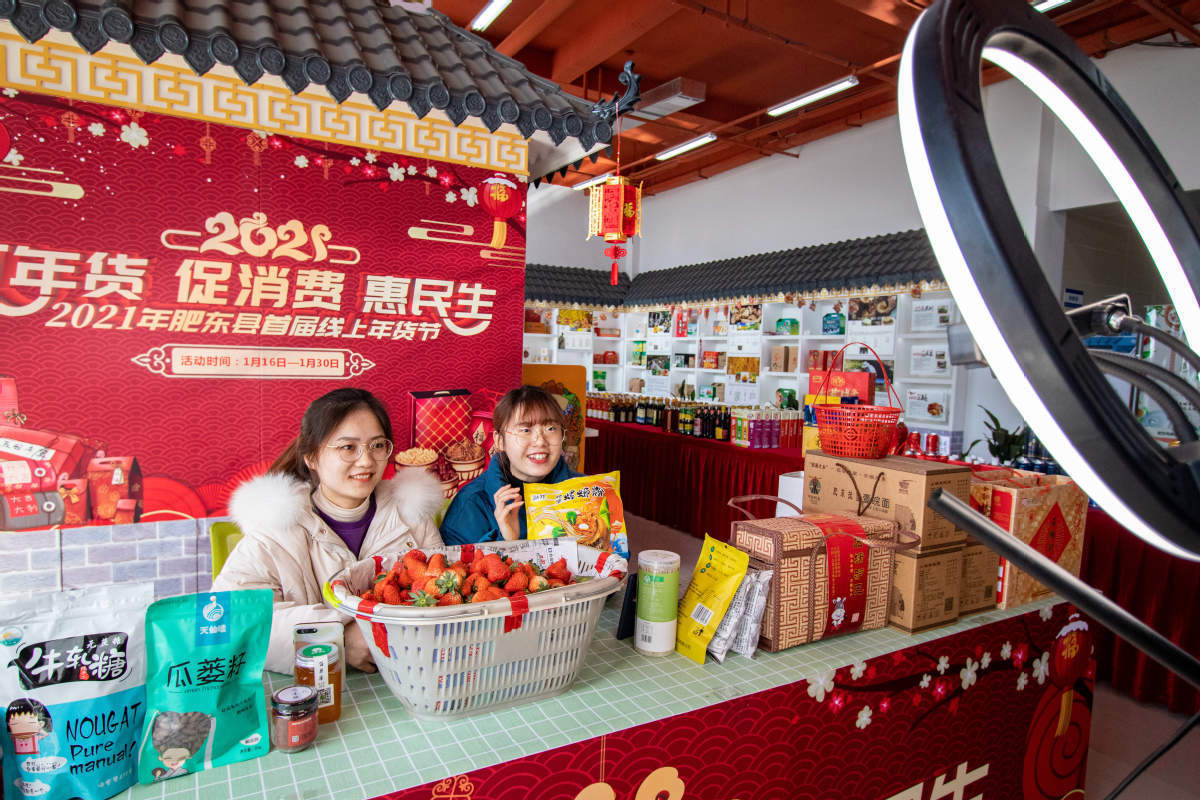
Hefei, capital city of Anhui province, was among the six new entrants to the 1 trillion yuan GDP bloc, buoyed by an 18.2 percent jump in output value of strategically emerging industries from computer displays to integrated circuits.
Also making it into the bloc is Nantong, in neighboring Jiangsu province, which recorded a year-on-year surge of 4.7 percent in GDP last year. The city leaned toward more traditional industries from shipbuilding to textiles to bolster growth.
The addition of Hefei and Nantong made the Yangtze River Delta Region-the megacity cluster encompassing Shanghai and Jiangsu, Zhejiang and Anhui provinces-the area with the highest number of cities in the nation with GDP over 1 trillion yuan. The cluster has eight such cities.
"It definitely showed the (Yangtze River Delta) integration strategy is taking shape and will continue to fuel growth under the dual-circulation paradigm," said Chen Wei, head of the Pudong Zhangjiang Platform Economy Research Institute in Shanghai.
The region has long been viewed as a jewel in the crown of China's economic transformation. It accounts for about a quarter of China's total economic output and one-third of its annual research and development expenditures. It also is a major magnet for foreign investment.
China made the delta's integration a national strategy in 2018, and has since laid out a massive road map including collaborative projects to boost the region's competitiveness on a global scale.
Pacesetter for growth
During his inspection tour of Anhui province in August, President Xi Jinping called for stronger awareness of the status and function of the delta in China's economic and social development in order to promote the region's integrated development and turn it into the pacesetter for the new development pattern.
"As such, provinces and cities in the region need to focus on their own comparative advantages so that duplication is avoided, areas complement each other and synergies are maximized," Chen said.
The collective economic robustness of the delta's cities best exemplifies how integrated development can add to stability and resistance to volatility amid uncertainties, said Ren Xinjian, founder of strategic consultancy Hualue Think Tank in Shanghai.
He cited the example of Suzhou, a city some 100 kilometers west of Shanghai that recorded GDP of more than 2 trillion yuan last year. That achievement demonstrates the city's deepened coordination and shared functionality with Shanghai in critical industries such as biomedicine, artificial intelligence and integrated circuits.
Hefei's GDP advancement is also a result of "fostering leading companies, encouraging innovation and improving business environment … which draw enormous experience from Shanghai's tech parks", Chen said.
Also, nine cities in the delta's G60 Science and Technology Innovation Corridor, a regional initiative aimed at boosting high-tech development, have contributed one-twelfth of national fiscal revenue.
Fan Hengshan, a distinguished professor specializing in Yangtze River Delta development at Shanghai University of Finance and Economics, said he believes development of the delta region should focus on three areas-integration, high-quality and opening-up.
"YRD shoulders the responsibility of providing high-quality products and high-level scientific and technological supplies, and being a role model for major breakthroughs," he said. "The current economic achievement is a reflection of how such a strategy is taking effect and will only reinforce its implementation in the long run."
While on track, the region's integration should attend to issues such as unbalanced development and better allocation of resources, experts said.
"For instance, the problem of intraregion imbalance remains pronounced in Jiangsu and Anhui provinces," said Wen Jianning, an associate professor at Shanghai Lixin University of Accounting and Finance. "And the average disposable income of Anhui represented just 39 percent that of Shanghai, which constitutes a matter of concern."
Wu Miaomiao in Shanghai contributed to this story.
hewei@chinadaily.com.cn