



Infrastructure building central to unleashing rural potential









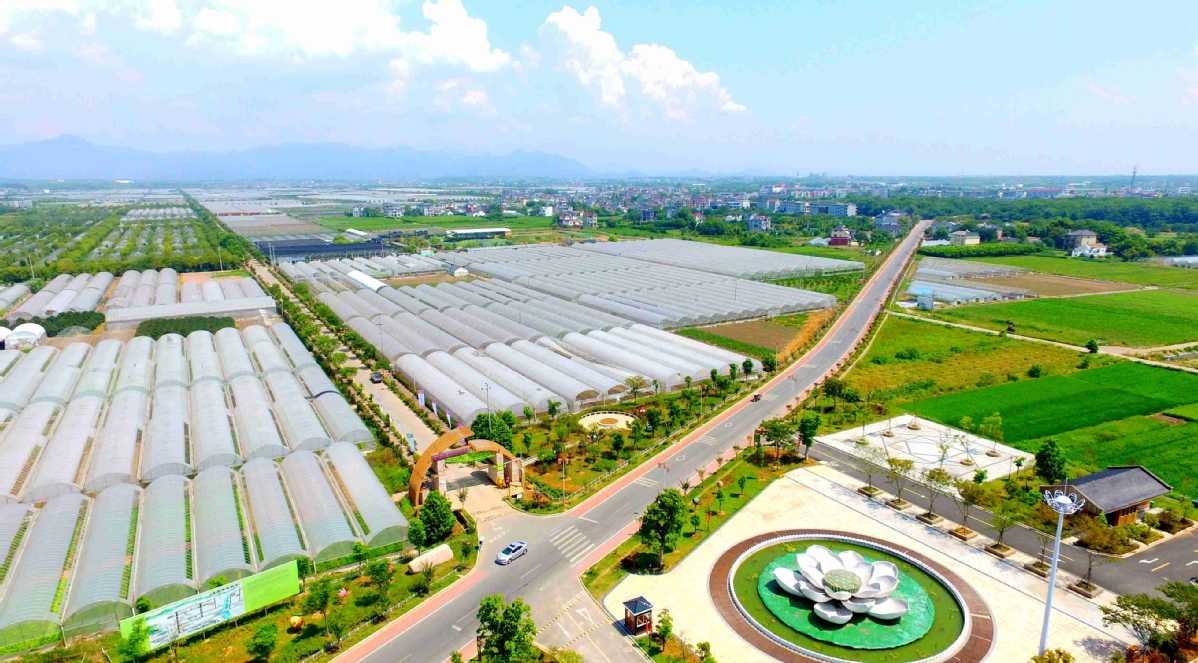
Farmers, villages and agriculture in rural areas of China are facing new challenges under a new economic development paradigm, for which policymakers should fully unleash the vitality of the vast rural market.
In 2020, the per capita net operating income of all residents reached 5,307 yuan ($821.55), up 1.1 percent year-on-year, while that of rural residents reached 6,077 yuan, up 5.5 percent year-on-year. Rural residents' incomes continued to grow faster, with their per capita disposable income being 17,131 yuan in 2020, up 6.9 percent in nominal terms and 3.8 percent in real terms from a year earlier. The per capita disposable income of urban residents was 43,834 yuan, up 3.5 percent in nominal terms and 1.2 percent in real terms year-on-year. The nominal and actual rates for rural residents grew 3.4 percent and 2.6 percent faster than that of urban residents.
Although rural residents have seen a faster income growth, the country still sees a huge gap in development and income distribution between urban and rural areas. Insufficient income and "no money to spend" continue to restrict development in the rural consumption market. In addition, under the dual urban-rural structure, farmers enjoy weaker housing, education and medical care guarantees than their urban counterparts, which means even if migrant workers save more money, most of them would want to tighten their purse rather than "spending money".
On the other hand, "hardware construction" in traditional rural consumer markets still faces bottlenecks. Statistics show 33 percent of the country's townships have no commodity market, 53 percent of the villages have no general stores, and 70 percent of the villages have no restaurants. Rural markets lack high-quality commodities and services.
To boost rural consumption, the country should improve the level of rural commerce, vigorously develop rural e-commerce, and strengthen the construction of rural commercial and logistics facilities.
It should also actively adjust and optimize agricultural structure and vigorously develop competitive and high-quality products to promote industrial upgrading in rural areas.
It is also necessary to speed up the improvement of the rural social security system, improve the urban-rural integrated development mechanism and smoothen the two-way flow of resources between urban and rural areas to further narrow the urban-rural gap.





