


An activist's art









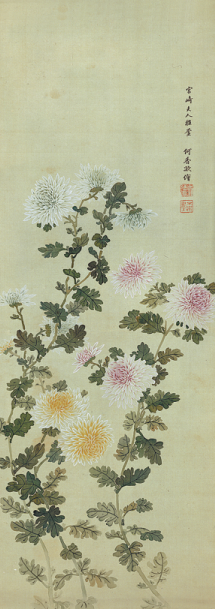
The Beijing exhibition features works by He Xiangning, including Chrysanthemums. CHINA DAILY
A girl of ideals
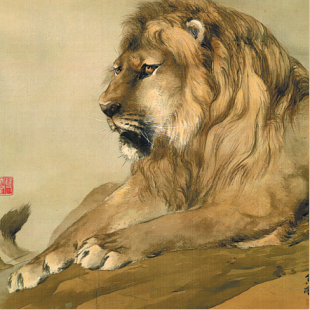
The works being exhibited date back as early as the 1910s, during which He depicted ferocious animals, such as tigers and lions, and plants that symbolize integrity in the Chinese cultural tradition, such as plums and chrysanthemums.
He's paintings convey a courageous, heroic spirit rather than the gentle, lovely feminine temperament that can be found in many works painted by women in Chinese art history.
During her girlhood, He showed intelligence, distinctive determination and a fighting spirit.
He's father, He Zai, a successful business owner and a follower of feudal thoughts, established sishu, a traditional home-schooling structure popular among well-off families more than 100 years ago. But he excluded his daughters from attending it, for he believed women were inferior to men and need not learn.
He Xiangning, who received a considerable allowance from her parents, had little interest in luxury spending. Instead, she saved the money to buy books that were used at the home school. When she had questions, she turned to her brothers for help or asked servants to seek answers from the sishu tutors behind her father's back.
Self-learning planted the seeds of He's independence and gave her the will to stand up against the oppression of women.
He was strongly opposed to foot binding, a practice in feudal China in which young girls were forced to have their feet bound so as to stop them from growing. It was a popular practice because a woman's small feet were considered a symbol of beauty and of a higher social standing.
She defied her parents, who insisted on binding her feet. Each time they did it, she would use a pair of scissors, which she had hid in the family altar, to cut the tight bandages. She was so insistent that her parents finally gave up the practice.
As He grew up, her family worried that her normal-sized feet, which were considered big and not good looking at the time, would frighten away possible suitors.
But at age 19, He married Liao Zhongkai, an American-born Chinese from the United States studying in Hong Kong who aspired for social transformation and who had said he wanted to wed a woman who was free of foot binding.
In 1902, He sold her dowry items, including jewelry and furniture, to raise money for her and her husband to study in Japan.
After arriving there, the couple met revolutionaries including Sun Yatsen and were inspired by their ideas to end feudalism in China. The couple were among the earliest members of the Tongmenghui (China Revolutionary Alliance), an antimonarchist society Sun founded in Tokyo in 1905 which became a predecessor of the Kuomintang.