



The US should change its course on China policy









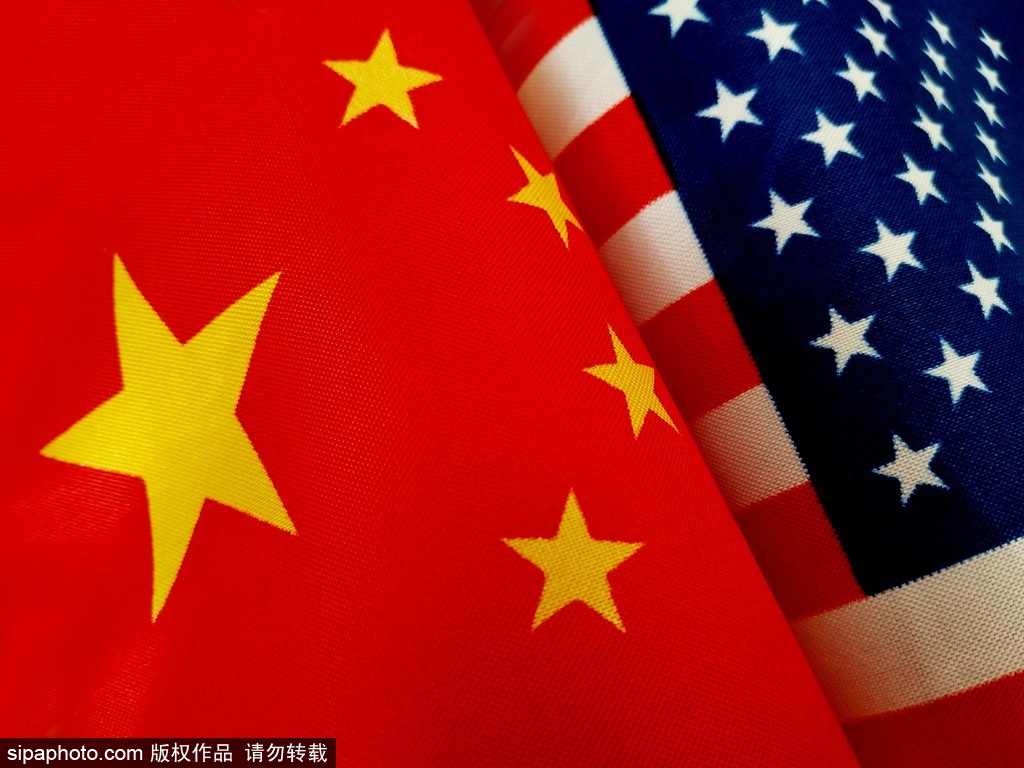
The US government is sending signals on China-US relations. Antony Blinken, Biden's secretary of state, stressed that China posed a threat to the US and he backed a tough approach to China. Speaking at a press briefing, White House Press Secretary Jen Psaki said that the administration would tackle that threat with strategic patience and take a multilateral approach to engage with China. It seems that the Biden administration's China policy may have several features.
First, China remains one of the priorities in US foreign policy, particularly in its Indo-Pacific strategy. The US will largely inherit a "free and open Indo-Pacific Strategy" and reshape its regional allies to build coalitions against China. Moreover, the Biden administration has picked Kurt Campbell, a China hand, as the National Security Council (NSC)'s Indo-Pacific coordinator, a new position dubbed "Asia czar" and arranged two senior directors on China in the NSC, all of which reflects how important the China issue is.
Second, the US will not easily alter its strategic perception of China, but will revise its strategic goals. It is almost a bipartisan consensus that it is not wrong to view China as a "strategic competitor," but the Democrats believe competition must feature vigilance and modesty, based on which America should rethink its strategic goal of "changing China" and reevaluate its concrete policies.
Third, the US will adjust its approaches of strategic competition with China and make the alliance system play a larger role. The Biden administration is more likely to establish alliances in different fields, such as inviting Australia, India and South Korea to the G7, setting up D-10 group in the field of ideology, and including Australia, India, and Japan to upgrade QUAD in the field of regional security.
Nevertheless, there is still room for the two countries to cooperate and build mutual trust. While Biden's team agrees with Trump's reflection on China-US relations, it also believes that the bilateral relations should not slide into direct confrontation, which would only hurt both sides. The US should change its course on China policy and keep the window of opportunity wide open.
The US should not discard the engagement policy that underpinned over four-decade-long diplomatic relations with China. The two sides should reestablish the high-level dialogue mechanism as soon as possible to discuss both strategic and concrete issues. China understands that the US wants the dialogue to be "results-oriented," but the US should not set preconditions, especially not taking whether China makes concessions as the only criterion for judging the efficiency of the dialogue.
People-to-people exchange should serve as a buffer zone in China-US relations, rather than be politicized. The Biden administration has the responsibility to control the damage and undo the reckless policies by reopening the consulate, easing visa restrictions, encouraging mutual study and tourism visits, creating necessary convenience for Chinese media in the US and releasing the illegally arrested Chinese visiting scholars.
In the field of global governance, the US should work together with China on tackling climate change, COVID-19 and coordinating macroeconomic policies. The two countries should strengthen cooperation under the WHO framework, facilitate the global distribution of vaccines, and actively coordinate economic policies under the G20 and other multilateral mechanisms to bolster global economic recovery.
Even if cooperation and competition might coexist and become the new normal in China-US relations, the two sides should avoid a "zero-sum" game, expand cooperation to offset the malign competition and make contributions to the world by strengthening their own capabilities rather than seeking to undermine the other.
The author is an assistant research professor at the Institute of American Studies, under the China Institutes of Contemporary International Relations based in Beijing.





