China Core Cities & Metropolitan Area Development Index 2019 released









10. Culture and education
Beijing, Shanghai and Guangzhou top the ranking of culture and education, as the top two cities' deviation values are well above other cities, showing the two cities' leading positions in culture and education. Nanjing, Wuhan, Chengdu, Hangzhou, Tianjin, Chongqing and Shenzhen rank fourth to 10th. Compared with 2018, the top six cities retain their positions, while Hangzhou, Shenzhen, Zhengzhou, Hefei, Fuzhou, Kunming, Shijiazhuang, Taiyuan and Lhasa climb up slightly in the ranking.
Culture and education reflect the spiritual side of the city. Culture and education not only focus on venues and consumption of culture and entertainment in the city, but also measure cultural performance at the national and international levels, and pay extra attention to the input of education and fostering of talents.
Thus, the major item includes three sub-items—culture and entertainment, culture and humanity, and talent training. They are gauged by 13 sets of index data, including theater consumption, museums and galleries, stadiums, zoos, botanical gardens and aquariums, collection of public libraries, top universities, cultural leaders, Olympic medalists, local fiscal spending on education, the number of kids admitted to kindergartens per 10,000 kids, international schools, higher education, and training of outstanding professionals.

(1) Culture and entertainment
Beijing and Shanghai rank first and second in the ranking, as they score much higher deviation values than other cities, showing their dominance in the culture and entertainment sector. Cities ranking second to 10th are Chongqing, Guangzhou, Shenzhen, Chengdu, Hangzhou, Nanjing and Tianjin. Compared with 2018, Beijing and Shanghai retain their positions, while Chongqing, Nanjing, Zhengzhou, Changsha, Jinan, Ningbo, Fuzhou, and Lhasa move up in the ranking.
(2) Culture and humanity
Beijing, Shanghai and Nanjing take the first three spots, with Beijing scoring a higher deviation value than other cities, demonstrating Beijing's dominance in the sub-index. Guangzhou, Wuhan, Xi'an, Changsha, Tianjin, Hangzhou and Chengdu take the fourth to 10th places. Compared with 2018, some cities among the 36 central cities, such as Shenzhen, Taiyuan, Kunming, and Ningbo, have improved their rankings remarkably.
(3) Talent training
Beijing and Shanghai rank first and second, respectively, with their deviation values much higher than other cities, showing that China's education resources concentrate in those two cities. Guangzhou, Tianjin, Nanjing, Hangzhou, Chengdu, Wuhan and Shenzhen round out the top 10. Compared with 2018, the top five cities maintain their positions, while Hangzhou, Chengdu, Shenzhen, Zhengzhou, Hefei, Shijiazhuang, Lhasa, Changchun, Dalian and Taiyuan, all among 36 core cities, fare better in the ranking.
The National Development and Reform Commission issued the "Guiding Opinions on Fostering the Development of Modern Metropolitan Areas" on Feb. 19, 2019, kick starting policies to promote metropolitan areas revolving around core cities.
"In the new phase of China's urbanization, it is urgent to put an emphasis on quality high-density population and the promotion of DID, which should come to the fore in formulating policies regarding metropolitan areas. The other focal point is to promote the interaction-based development of core cities and neighboring medium and small cities. The third focus should be placed on fostering and strengthening radiation of core functions," said Zhou Muzhi, head of Cloud River Research Institute.
He added, what is worth noting is the core functions of core cities as international exchange platforms. In the age of globalization, international competitiveness and international exchanges are key to the future of a country. Thus the country's international competitiveness and international exchanges should be reflected by the internationalism of metropolitan areas.
China Core Cities & Metropolitan Area Development Index draws on the thinking of the above issues, as well as observation and assessment of the development of core cities, and thus provide academic backing for the development of metropolitan areas.


- Dazzling Guangzhou lantern display begins countdown to Spring Festival
- Huizhou takes major step forward as petrochemical hotspot
- Beijing's Shunyi district cracks down on crimes related to public welfare
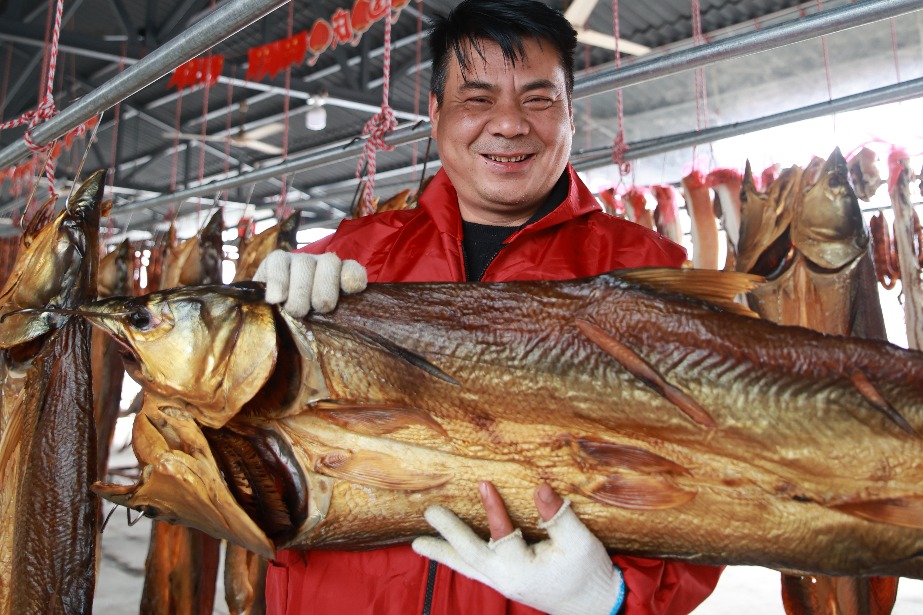
- Hunan's smoked fish and meat arrive in time for Spring Festival
- International arrivals to Guizhou skyrocket after visa-free policies
- Hubei deputy proposes museum of ancient Chinese law at Qin bamboo slip site