


A new start
In the third season, the Palace Museum, the former Chinese imperial palace often described as the Forbidden City, which celebrated its 600th anniversary last year, remains as a focus, but its "treasures" turn out to be larger. The Meridian Gate, for example, at the southern entrance to the imperial city, was chosen as one of the three treasures to show off its architectural splendor.
Moreover, the other eight sites in the third season, like the Forbidden City, are not just museums, but have all witnessed key events in the development of Chinese civilization.
They are the 3,300-year-old Yinxu Ruins in Henan province, where the earliest-known Chinese written characters were excavated; the Mogao Caves in Dunhuang, Gansu province, a group of Buddhist grottoes ranging from the fourth to 14th centuries; the Potala Palace in Lhasa, the Xizang autonomous region; the Classical Gardens of Suzhou, Jiangsu province; the 2,500-year-old Temple and Cemetery of Confucius and the Kong Family Mansion in Qufu, Shandong province; as well as the Sanxingdui Site in Guanghan, Sichuan province, which is testament to bronze-age civilization dating back to 3,200 years ago.
Also appearing in the show are the home of the Terracotta Warriors-the 2,200-year-old mausoleum of Emperor Qinshihuang, the first emperor of China-and Xi'an Beilin Museum, where over 10,000 precious stone carvings are housed, including steles, epigraphs and other engraved calligraphy, both in Xi'an, Shaanxi province.
"People love Dunhuang, and they love the Terracotta Warriors," Yu says. "But speaking of their deeper cultural meaning, the general public's understanding may be less informed, and our show explains the bigger picture by presenting the details in an approachable way."
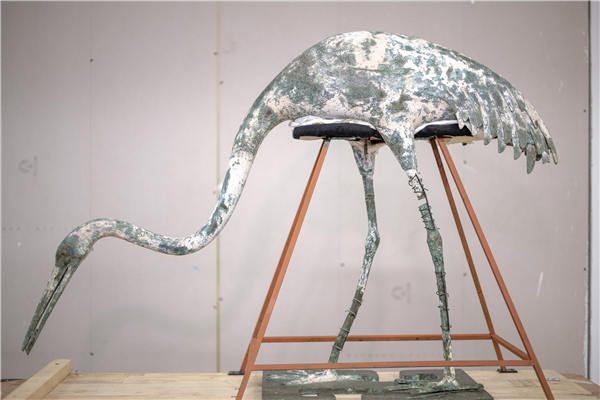
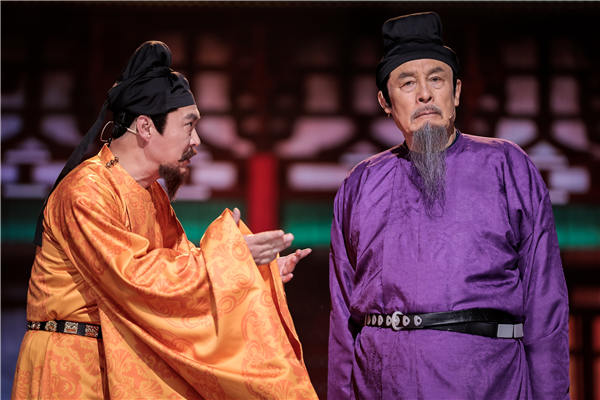
Some lesser-known pieces have been introduced to the public by familiar faces. For example, a bronze crane, covered by verdigris, from Qinshihuang's mausoleum may not be that famous compared with the world-renowned terracotta figures. However, in a stage drama produced and performed for the program, actor Fu Dalong vividly unveils a ruler's romantic and ambitious expectation for his empire through stories decoded by archaeologists and historians that are linked to the bronze crane. The actor found wide popularity in a TV drama in 2017, titled The Qin Empire, starring as one of Qinshihuang's predecessors.
Meanwhile, archaeologist Zhang Weixing, a "modern guardian" of the artifact, also shows how it is scrutinized and studied in a lab using state-of-the-art technology.
Even what might be considered mundane has the power to fascinate. A millennium-old drinks bill from Dunhuang, Gansu province, has been returned after an elaborate journey. Initially taken abroad from Dunhuang around 1900, it came back to China via a Japanese collector. Its tale is presented by actress Ning Chang with an insight that is absorbing.
The static relics can unroll a dynamic and grandiose picture of Chinese history, Yu says. For example, the bronze ritual items residing in Confucius' hometown represent Chinese people's connection with ceremonies throughout history.
A portrait of Princess Wencheng hanging in Potala Palace shows how harmonious relationships between different ethnic groups were cherished.
Yu says that the team carries out extensive research. "When we make a show about one cultural relic, it's like writing for a master's degree," she says.





