



Relocation policies move villagers out of poverty









Kuwanjang Matniyaz, Party secretary of the village, said it built a 400-hectare walnut orchard near the community in 2015, financed by the government and owned by all the families there.
In the first three years, it authorized a company to manage the orchard, and organized training classes for residents to learn planting skills. The villagers now run their own walnut business, which has become their major source of income, he said.
Aksu is located on the edge of Taklimakan Desert. For decades, locals made a living by farming, grazing or as migrant workers elsewhere. The incidence of poverty was as high as 14.2 percent.
The battle against poverty was tough, but the result was fulfilling. In 2019, Ushi and Kalpin, the two poorest counties in the prefecture, announced they had shaken off poverty, which meant Aksu had completed its task of lifting all 246,600 people from 65,400 poor families out of poverty, according to local authorities.
Ainar Musa, 26, used to be a housewife in a poor family in Yukuzis village, Kalpin county. In 2017, the village administration encouraged local women to get out of home and work.
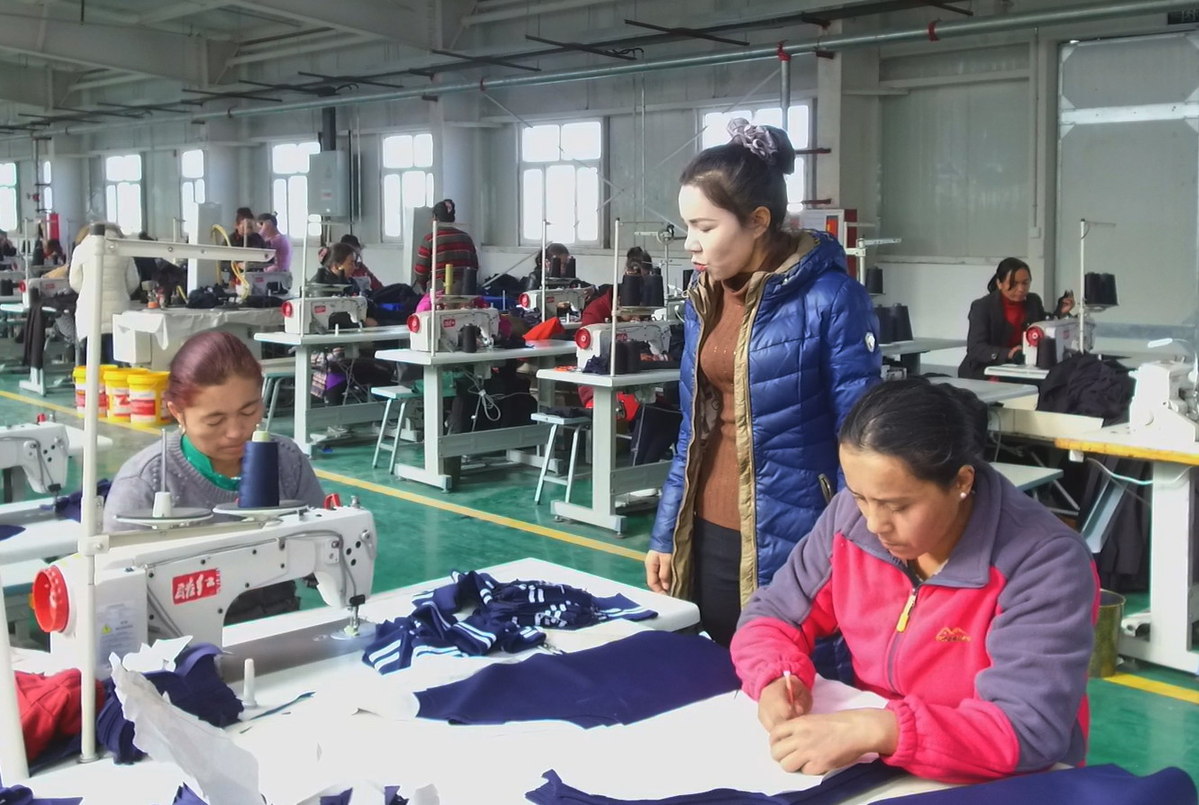
Ainar got a job at local clothes manufacturing company, Norton Clothing, and after three months of training became an apparel designer.
"I'm the only one in the factory able to use a computer in design work," she said.
Previously, her husband grew walnuts to support the family, bringing in less than 10,000 yuan a year. Now, with a monthly salary of 3,500 yuan, she is the family's biggest breadwinner.
The family escaped poverty in 2018.
Her income also changed the family, she said, as her husband "cooks three meals a day and takes over all chores".
Speaking of the future, she said she wants to buy a car and see all her children attend university.
More than 300 female workers at the factory are also from poor families. A traditional agricultural county, major industries in Kalpin include growing wheat, cotton, corn and red dates and raising sheep.
The factory is part of the local government's program to increase incomes for locals by introducing labor-intensive industries and creating more jobs for women.


- Visit to Eswatini in spite of earthquake at home criticized
- Xinjiang entrepreneur Li Jianhong killed in Albanian car crash
- Henan massage parlor fire claims six lives
- Hebei hosts unmanned flight contest
- Artisans from across Hebei gather for woodblock contest
- Intl influencers applaud Hefei's innovation prowess





