



Yangtze River Economic Belt transportation corridor advances to maturity









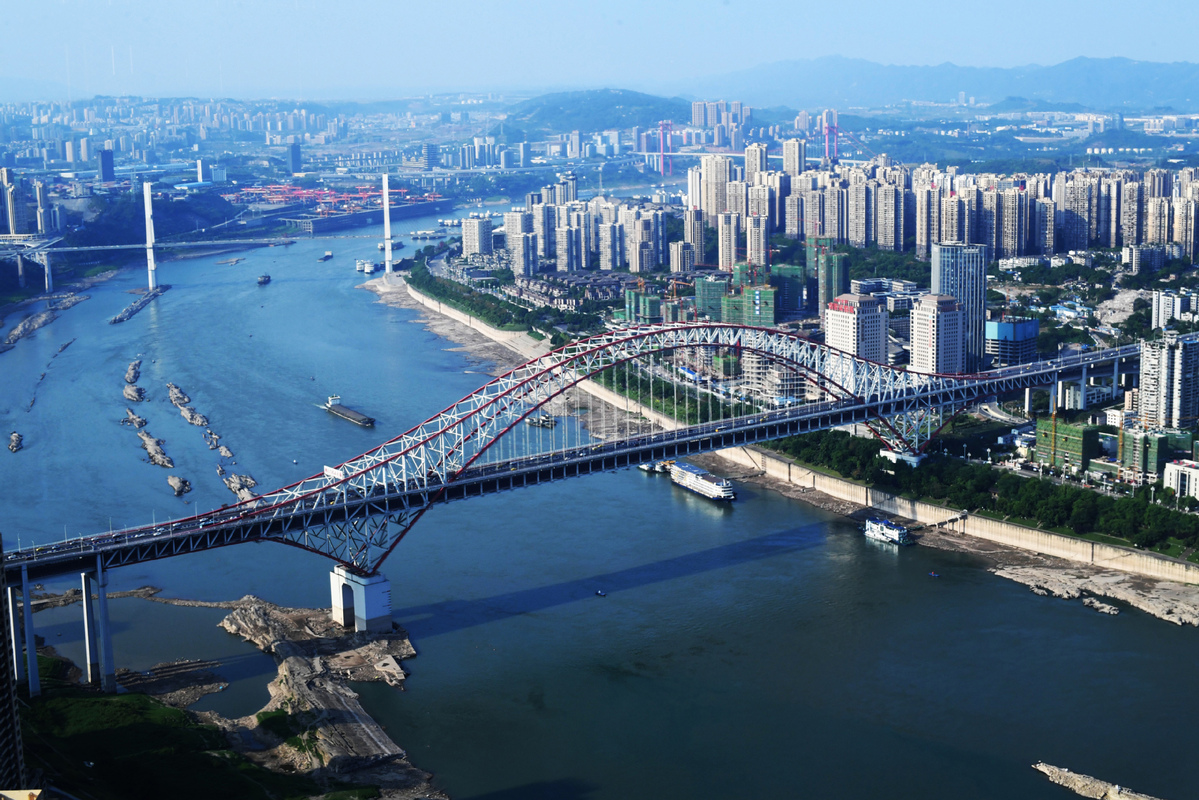
Railway construction in the Yangtze River Economic Belt, which comprises nine provinces and two municipalities in China, has witnessed rapid development in recent years.
Mileage of railways and high-speed trains in the area hit 43,700 kilometers and 15,400 km by November 2020, an increase of 9,120 km and 7,824 km, respectively, from 2015, official data from the National Development and Reform Commission showed on Tuesday.
Highways mileage also recorded 63,700 km by November, up 15,500 km than that of 2015.
The comprehensive transportation corridor along the Yangtze River Economic Belt is advancing towards maturity, said Luo Guosan, director of the commission's Fundamental Industry Department.
High-grade waterway mileage of the Yangtze River's main line and branches reached 10,000 km by the end of 2020, Luo said. Airport projects in Southwest China's Chengdu and Guiyang also accelerated construction this year.
The economic belt, including Shanghai and Chongqing municipalities, Jiangsu, Zhejiang, Anhui, Jiangxi, Hubei, Hunan, Sichuan, Guizhou and Yunnan provinces, saw population account for over 40 percent of China's total volume.
It contributed 46.5 percent of national GDP in 2019, rising from 42.3 percent in 2015, and the figure further increased to 46.6 percent in the first three-quarters of last year.
Luo also noted the belt's strategic role in boosting regional development, which is regarded as the economic center of China.
Emerging industrial clusters, especially the digital information and equipment manufacturing sectors, have been playing significant roles in driving the overall growth of the Yangtze River Economic Belt, with its scale accounting for over 50 percent across China.
Besides the manufacturing sector, the country also pays attention to the environmental protection of the Yangtze River, as the nation's top legislature adopted a law of conservation, which will take effect on March 1.
The law is formulated to strengthen the protection and restoration of the ecological environment in the Yangtze River basin, facilitate the effective and rational use of resources, safeguard ecological security, ensure harmony between humans and nature, and achieve sustainable development.




















