Factbox: Timeline of China's lunar exploration









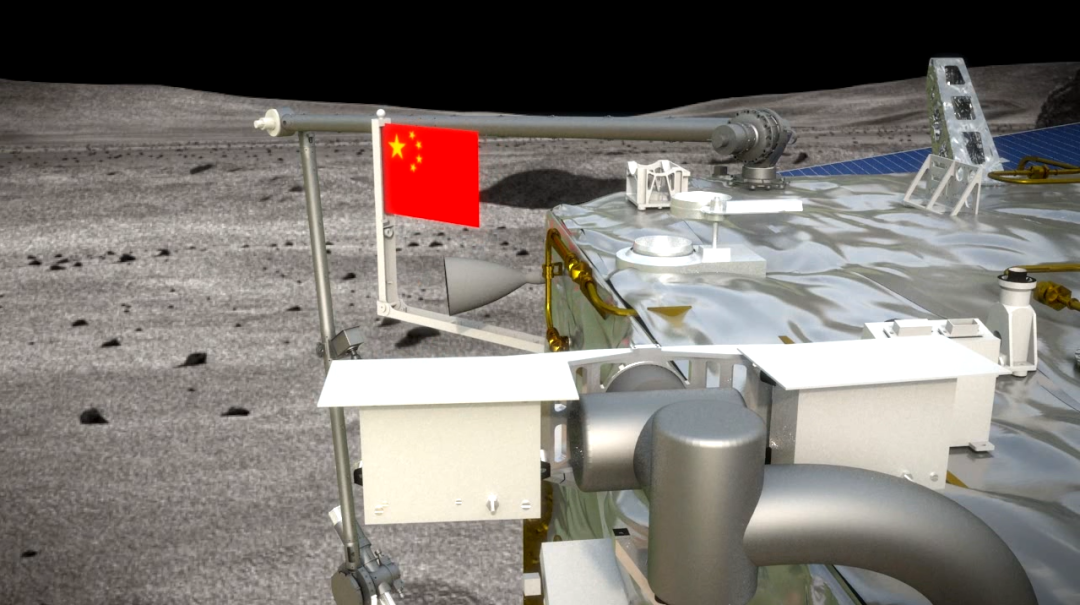
BEIJING - The return capsule of China's Chang'e-5 probe touched down on Earth in the early hours of Thursday, bringing back the country's first samples collected from the moon.
It marks a successful conclusion of China's three-step lunar exploration program of orbiting, landing and bringing back samples, which began in 2004.
The following are some key facts about China's lunar exploration.
PREPARATION
-- In 1998, the Commission for Science, Technology and Industry for National Defense began planning the lunar mission, tackling major scientific and technological problems.
-- In 2004, the lunar orbiter project was formally established, and the mission was named "Project Chang'e" after the mythical Chinese goddess who flew to the moon.
CHANG'E-1
-- On Oct 24, 2007, China launched Chang'e-1, its first lunar probe, making China the fifth country to develop and launch a lunar probe on its own.
-- Orbiting 200 km above the moon, Chang'e-1 mapped 3D images of the lunar surface, analyzed the distribution of elements, measured the depth of lunar soil, and explored the environment between Earth and the moon.
-- On March 1, 2009, Chang'e-1 made a controlled crash on the lunar surface after orbiting the moon for about 16 months.
CHANG'E-2
-- On Oct 1, 2010, Chang'e-2 was sent into space. It took pictures of Sinus Iridium, or the Bay of Rainbows, the proposed landing site of the Chang'e-3.
-- On April 1, 2011, Chang'e-2 completed all six engineering objectives and four scientific missions. Its design lifetime expired.
-- On Dec 13, 2012, Chang'e-2, in deep space 7 million km away from Earth, flew by and surveyed the Toutatis asteroid. It then continued into deep space, becoming a man-made asteroid in the solar system.
CHANG'E-3
-- On Dec 2, 2013, China launched the Chang'e-3 probe with its first moon rover aboard.
-- On Dec 14, 2013, Chang'e-3 landed on the moon, marking the first time that China has sent a spacecraft to soft land on the surface of an extraterrestrial body.
-- The Chang'e-3 included a lander and a moon rover called Yutu (Jade Rabbit), which took photos of each other. The probe acquired a geological profile of the moon, and discovered a new kind of lunar rock.
TEST CRAFT FOR CHANG'E-5
-- On Oct 24, 2014, China launched an experimental spacecraft, comprising a re-entry capsule and a service module, to test technologies to be used on Chang'e-5.
-- On Nov 1, 2014, the return capsule touched down at the designated landing area in Siziwang Banner, North China's Inner Mongolia autonomous region.
-- The service module flew back to orbit the moon for further tests and reached the L2 point of the Earth-Moon system to conduct experiments.
CHANG'E-4
-- On May 21, 2018, China launched a relay satellite named Queqiao (Magpie Bridge) to set up a communication link between Earth and the moon's far side.
-- The Chang'e-4 probe, launched on Dec 8, 2018, made the first-ever soft landing on the Von Karman Crater in the South Pole-Aitken Basin on the far side of the moon on Jan 3, 2019.
-- Chang'e-4 includes a lander and a moon rover called Yutu-2, or Jade Rabbit-2. The rover Yutu-2 has far exceeded its three-month design lifespan, becoming the longest-working lunar rover on the moon. As of Nov 23, Yutu-2 has traveled 589.6 meters on the moon.
CHANG'E-5
-- On Nov 24, China launched the Chang'e-5 probe that comprises an orbiter, a lander, an ascender and a returner.
-- On Dec 1, the lander-ascender combination of Chang'e-5 successfully landed on the near side of the moon and started sampling.
-- On Dec 3, the ascender of Chang'e-5 took off from the lunar surface and entered the preset lunar orbit with lunar samples.
-- On Dec 6, the ascender successfully rendezvoused and docked with the orbiter-returner combination in lunar orbit, and transferred the samples to the returner.
-- On Dec 17, the returner of the Chang'e-5 probe separated from the orbiter and successfully landed in Siziwang Banner, Inner Mongolia autonomous region.




- China becoming key contributor to cosmic understanding, academician says
- Xi's special envoy to attend inauguration of Seychelles' president
- Commemorating Taiwan's restoration reflects Chinese people's shared will
- China's top anti-graft body convenes to study principles of CPC plenum
- Major strontium ore deposit found in Jiangsu
- Sierra Leone hails Chinese investment as 'pivotal' to mining growth