



Unearthing the truth from the bloodied field









In the 2016 referendum, Brexit was presented as a black or white issue, and British government minister Liam Fox said a trade agreement with the European Union would be "one of the easiest deals in human history".
Four exhausting, unresolved years later, reality has turned out to be more complex.
As with so much British history, Ireland is a sticking point, so there is great symbolism in the centenary of one of the darkest days in the countries' relationship falling at this time. That day is Bloody Sunday.
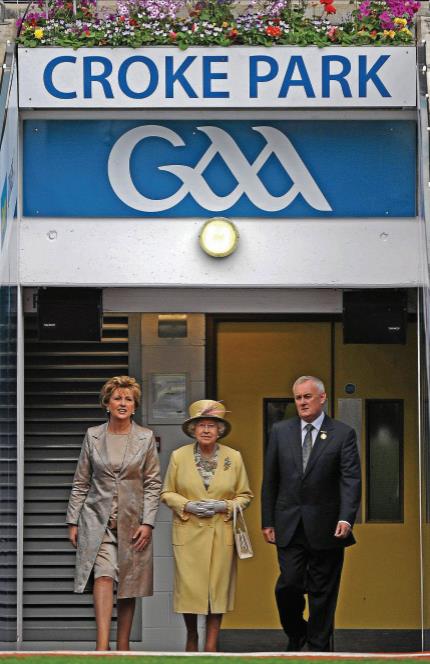
To most people, Bloody Sunday means the incident in Northern Ireland in January 1972, where British paratroopers shot dead 14 people. But there was an earlier Bloody Sunday, on Nov 21 1920, at Croke Park stadium in Dublin.
During a British military and police operation at a Gaelic football match, shots were fired, leaving 14 people dead or dying. Its impact has last for generations.
Although British imports soccer and rugby are hugely popular, in Ireland the traditional sports of Gaelic football and hurling enjoy a status far above mere games.
The Gaelic Athletic Association, their governing body, is also a guardian of traditional culture, so much so that until 1971, its constitution banned players from playing sports deemed to be British, and in 2005 rules had to be changed to allow Croke Park to host soccer and rugby.
In 1920 the Irish War of Independence was raging and on the morning of Nov 21, attacks by the Irish Republican Army, the IRA, had killed 14 British intelligence officers.
That afternoon, Dublin were playing Tipperary at Croke Park, and it was suspected that people who had helped the assassins may be in the crowd, so police intended to search spectators inside the ground, with British soldiers remaining outside, according to general historical narration.
What followed went terribly wrong and has been so mythologized that the truth has become largely lost, according to journalist Michael Foley's book and podcast The Bloodied Field, which focus on the victims, as he tries to correct a story that he thinks has been wrongly told and retold for years.
"For years we were fed a black and white narrative, but it's so much more complex," he said. "The British treated the War of Independence as a police war, not a military one, because they didn't want troops to be seen fighting empire subjects.
"The police presence was comprised of the Royal Irish Constabulary, who were regular police, supported by two groups mainly made up of former British soldiers, the Black and Tans, and the Auxiliaries, known for their brutality."










