Europe reels under second wave of COVID-19










Nations head back into different forms of lockdown
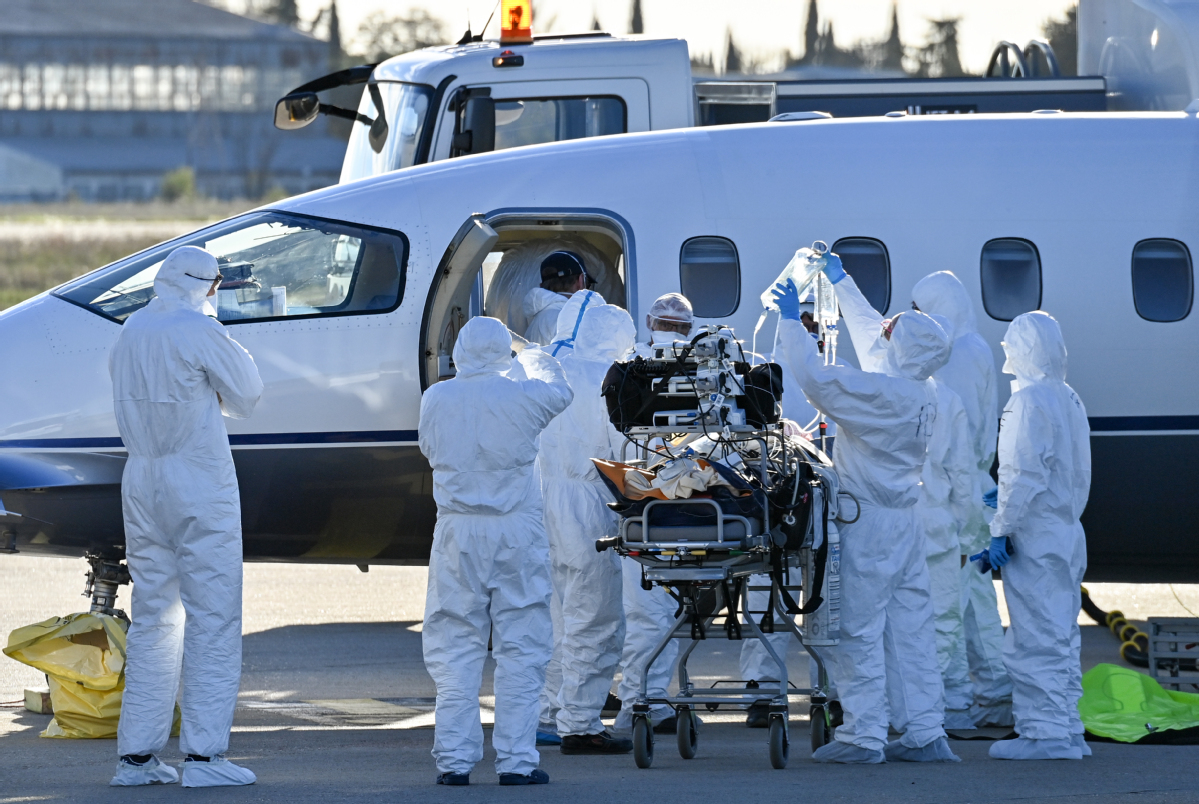
When Belgium was hit hard by a second wave of coronavirus cases in recent weeks, medical workers who tested positive but showed almost no symptoms continued their work at a hospital in Liege, about 100 kilometers southeast of Brussels.
Alexandre Ghuysen, head of the emergency department at CHU Liege, the city's university hospital, said the decision to carry on working had been a difficult one.
"It (the outbreak) is getting worse and worse. We are reaching a critical point," he told reporters, adding that there has been a struggle every day to come up with solutions to find enough hospital beds and staff members.
"I mean there's a point where there's nothing but bad solutions. It's the point we are reaching now," he added.
Belgium, with a population of 11.5 million, less than half that of Shanghai, reported more than 100,000 new COVID-19 cases in the past week, or over 15,000 a day.
The number of cases and deaths in the country have exceeded 412,000 and 11,000, respectively. In per capita terms, they are among the highest in the world.
On Saturday, 1,105 COVID-19 patients in Belgium were in intensive care units, 48 more than the previous day, according to the country's health authorities.
Before the weekend, Belgian Foreign Minister Sophie Wilmes, 45, a former prime minister, was discharged from Delta Hospital in Brussels after spending nearly a week in an ICU for COVID-19 treatment.
On Monday, the second nationwide lockdown took effect across Belgium, following a four-week shutdown of restaurants and bars ordered two weeks earlier.
Belgian Prime Minister Alexander De Croo told a news conference on Friday: "Our country is in a state of sanitary emergency. The pressure is immense, as you have undoubtedly seen in recent days.
"At the moment, there is only one choice, and that is for all of us to support our healthcare sector as much as we can. We have to limit our physical contact as much as possible," said De Croo, who took office a month ago.
He added that the sole purpose of the strict lockdown measures is to ensure that the country's healthcare system does not collapse.
The measures, which will be enforced until Dec 13, will shut down all non-essential stores. However, collections and home deliveries of products ordered in advance are allowed. Outdoor gatherings are limited to a maximum of four people, who must wear face masks and maintain social distancing.
The autumn school holidays have been extended to Nov 15, after which primary school pupils and first grade students at secondary schools will return to classes. Only 50 percent of students in second and third grades at secondary schools will be permitted to return, with the remainder having to learn remotely. All college classes will be conducted online.
Working from home, if possible, is mandatory. If this is not possible, face masks and social distancing are obligatory. Meanwhile, nighttime curfew measures imposed two weeks ago remain in place.
Meanwhile, Germany announced a partial nationwide lockdown, which took effect on Monday. The so-called "lockdown light" is less strict than that enforced in the spring.
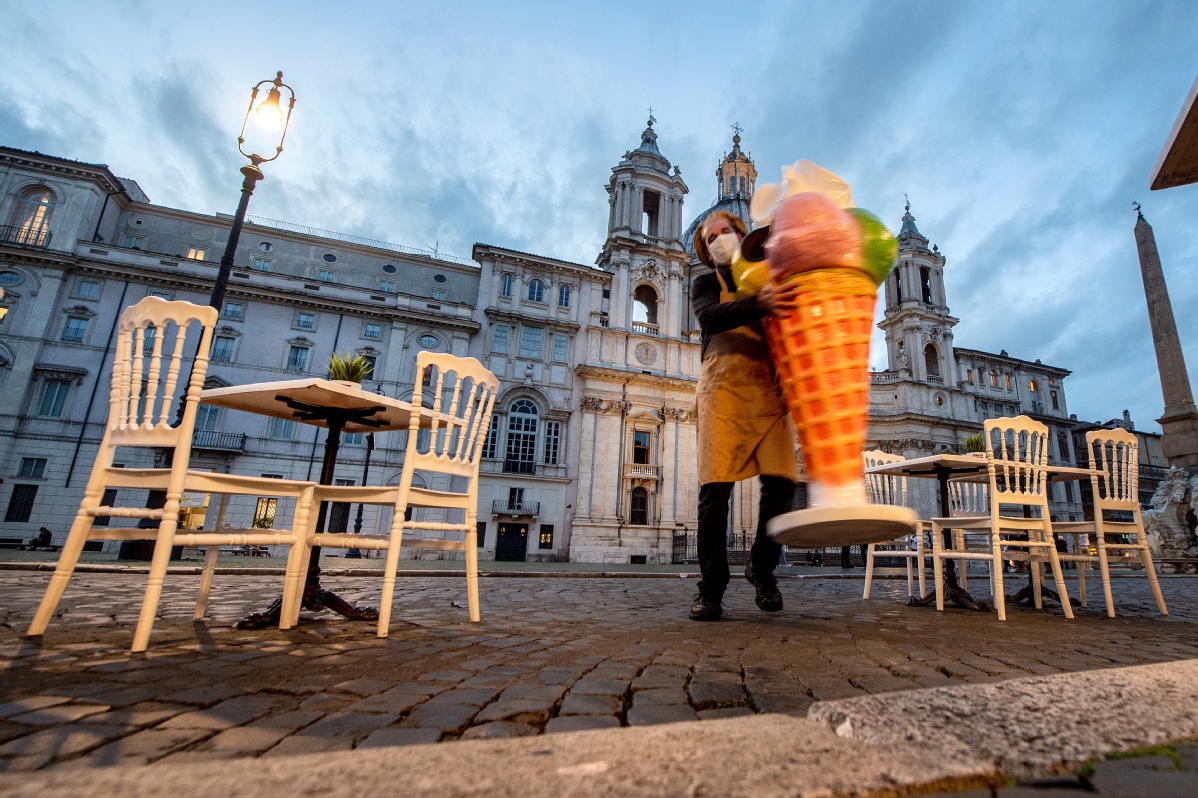
Restaurants and bars have been closed, but takeouts are allowed. Overnight stays in hotels for tourism purposes are forbidden. Theaters and cinemas are closed and large-scale events have been canceled. However, soccer matches will continue to be played behind closed doors.
People are being encouraged to work from home, but schools and kindergartens will remain open, as will shops, with one customer allowed every 10 square meters.
Announcing that the measures would remain in force until the end of this month, German Chancellor Angela Merkel told a news conference on Wednesday: "We are in a very serious situation. We must act, and now, to avoid an acute national health emergency."
Merkel indicated that the number of people in ICUs had doubled over the past 10 days and that in many areas it was not possible to track and trace chains of infection. The origin of infection in 75 percent of cases is not known.
"If infections continue at this rate, we will be at the limits of the capacities of our health system," said Merkel, whose pandemic response in the spring won her praise at home and abroad.
In the week to Oct 25, Germany recorded 67,207 new cases and 255 deaths. With a population of 83 million, seven times that of Belgium, its total numbers of cases and deaths are close to those of its neighbor.
Hours after Merkel spoke, French President Emmanuel Macron announced a nationwide lockdown, which started on Friday.
Under stringent measures that will remain in place until at least Dec 1, people in France, which has a population of 67 million, will only be allowed to leave their homes to shop for groceries, keep medical appointments and go to their jobs if they cannot work from home.
"As elsewhere in Europe, we are overwhelmed by a second wave that will probably be more difficult and deadly than the first," Macron said.
On Saturday, Greek Prime Minister Kyriakos Mitsotakis announced that bars, restaurants and other venues in the country's most populous areas would be closed for one month from Tuesday.
A week ago, Italian Prime Minister Giuseppe Conte also announced new nationwide restrictions despite opposition from regional leaders and street protesters.
Theaters, cinemas, gyms and swimming pools have been closed, while restaurants and bars must stop serving at 6 pm. Face masks are mandatory, except at home. Some regions have imposed evening curfews.
Conte said he wants to give the latest measures two weeks to have an effect before deciding whether a more comprehensive lockdown is necessary.
Italy, the hardest-hit European country by the pandemic in the spring, reported 31,000 new cases on Friday.
New measures have also been announced in other European Union countries such as Spain, Portugal, the Netherlands, Ireland, Sweden, Denmark and the Czech Republic.