



China's efforts to make sure all countries get access to vaccines









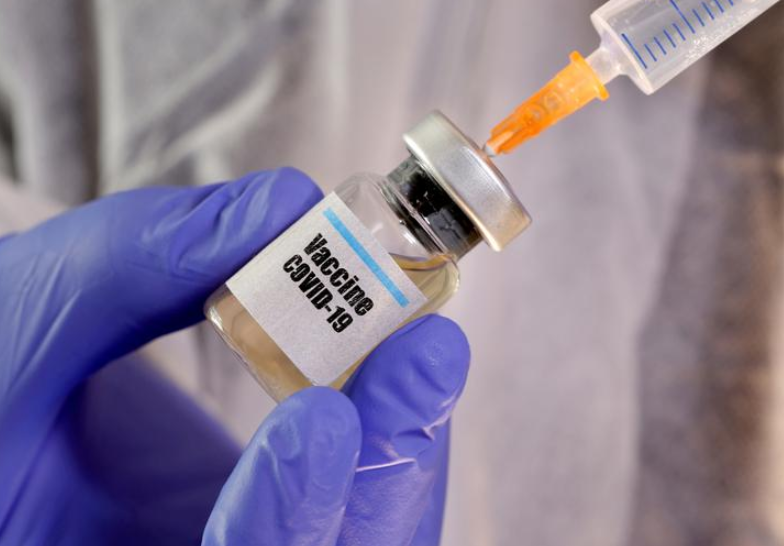
The COVID-19 vaccine race, including producing and buying vaccines, has intensified, making it increasingly important for the international community to make sure all countries have fair and equitable access to the vaccines once governments approve them for public use. China has signed an agreement with Global Alliance for Vaccines and Immunization, officially joining COVAX, an international initiative for equitable distribution of COVID-19 vaccines, and thus injected positive energy into global governance and strengthened multilateralism.
The novel coronavirus pandemic is still raging in many parts of the world. Worse, the pandemic has had spillover effects, leading to social unrest and governance crisis in some countries, and global recession, creating new challenges for the international community.
International cooperation is the only way to deal with the global health crisis. Yet global coordination has been impeded by the tide of anti-globalization, and the emergence of unilateralism and protectionism in some countries.
Brexit and the United States' withdrawal from international organizations and global and regional agreements have had a huge impact on multilateralism. While border control measures and protectionism have made global trade and investment difficult, and disrupted industrial and supply chains, some countries have resorted to unilateralism and protectionism, and thus fanning anti-globalization sentiments.
All this has created obstacles for global cooperation in the fight against the pandemic. For instance, the US has failed to properly respond to the pandemic challenge, and to cover its failure, it has been blaming other countries, especially China, and the World Health Organization, for all its ills.
If developed countries become self-centered and selfish, the pandemic will extract a high cost on less-and least-developed countries, not least because they have comparatively weak medical care systems. Without global coordination and cooperation in the fight against the pandemic, a vicious circle would be created leading to a deeper humanitarian crisis.
The world is working around the clock to develop COVID-19 vaccines. But since developed economies, including the European Union, have signed purchase agreements in advance to ensure vaccine supplies, the world needs an equitable distribution mechanism so that vaccine prices are not too high for less-and least-developed to afford. If the prices are very high, most of the vaccines will be concentrated in the hands of a few rich countries.
It is precisely for this reason that 172 countries and regions, and international organizations such as the WHO and GAVI, the Vaccine Alliance promoted the COVAX initiative, which includes joint procurement and risk decentralization of different COVID-19 vaccines. The COVAX mechanism aims to provide at least 2 billion safe and effective COVID-19 vaccines by the end of 2021, and countries that participate in COVAX will get timely access to the vaccines that are approved as safe and effective.
China has been committed to building a global community of health for all since the pandemic broke out and has actively supported international organizations including the WHO and GAVI. It is also contributing to four of the nine candidate vaccines that have entered phase-III clinical trials across the world. China was also the first country to say that its vaccines will be made global public goods, as President Xi Jinping declared while addressing the 73rd World Health Assembly on May 18.
The COVAX initiative is an ambitious multilateral arrangement to help the world defeat the novel coronavirus. For years now, China has been shouldering its international responsibilities as a major country, and has taken an important step to help build a global community of health for all by declaring that its vaccines will be treated as global public goods. And it is driving international cooperation and multilateralism at a time when the world needs more joint actions, not divisive talks and belligerent rhetoric, to contain the pandemic and boost post-pandemic global recovery.
The author is a research fellow at the Charhar Institute and a member of the Chinese Institute of Command and Control. The views don't necessarily represent those of China Daily.
If you have a specific expertise and would like to contribute to China Daily, please contact us at opinion@chinadaily.com.cn , and comment@chinadaily.com.cn





