



Cabinet boost for new energy vehicles









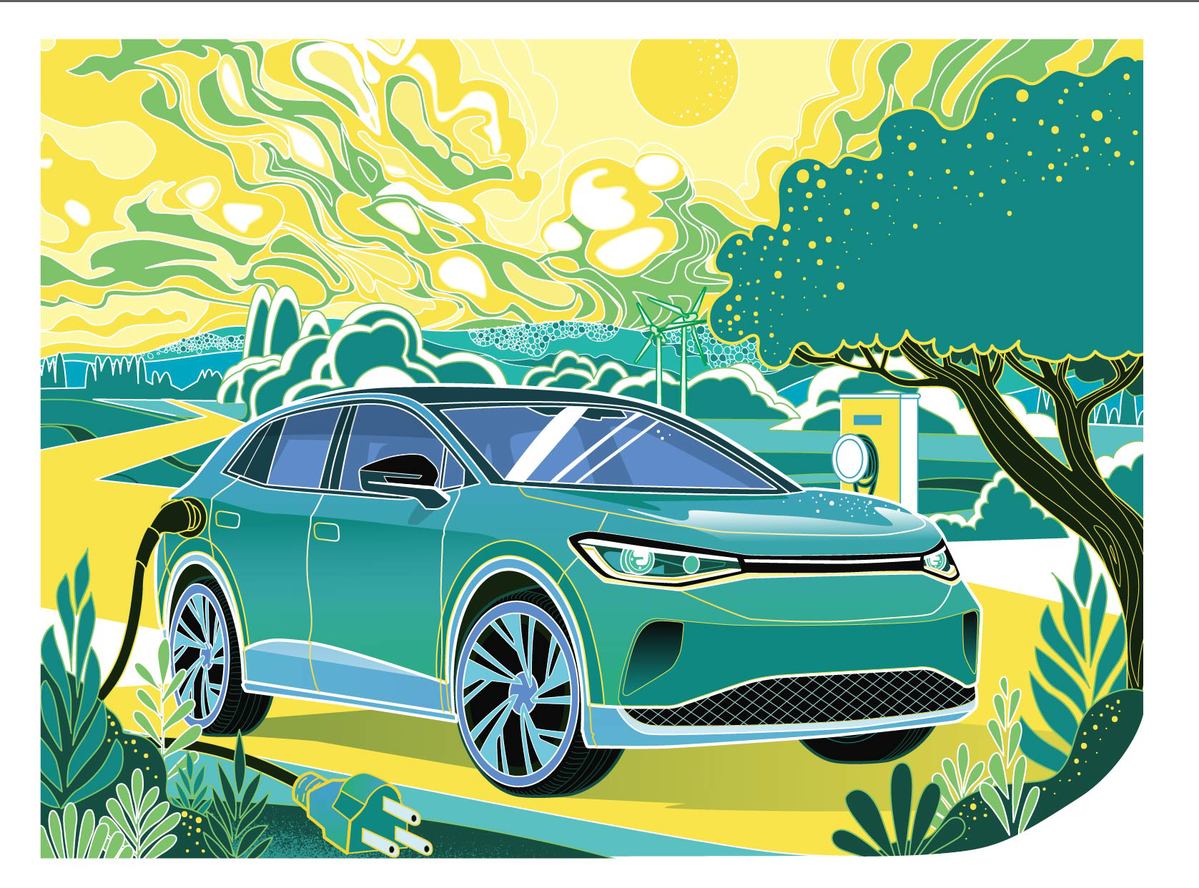
State Council issues blueprint aimed at developing unified nationwide market
The State Council has adopted a new blueprint for the growth of the new-energy-vehicle sector as it seeks to inject fresh momentum into the development of the world's largest auto market and enable breakthroughs in cutting-edge technologies.
In a statement released after its executive meeting on Friday, the Cabinet said the plan will give full play to the market having a decisive role in the allocation of resources and businesses will be encouraged to choose their own technology routes when developing their products.
The government will also improve its role in the making of regulations and standards and oversight of product quality and safety, it said.
To facilitate the orderly growth of the new-energy-vehicle sector, the government will push forward the shaping of a unified market nationwide and enable the sector to grow in a more concentrated and competitive manner.
Premier Li Keqiang said at the meeting that tackling key technologies must be the policy priority, and more emphasis will be given to the development of new-energy-vehicle infrastructure, which has not met surging market demand.
China has been the world's largest producer of automobiles and biggest auto market for the past 11 years and the country has also topped the global new-energy-vehicle market since 2015, with 4.17 million new energy vehicles sold as of June, according to a report by the China Society of Automotive Engineers.
However, the sector has been hit by weakened demand as auto sales dropped by 9.7 percent year-on-year to 14.55 million units in the first eight months of this year. Sales of new energy vehicles reached 596,000 during the period, down 26.4 percent year-on-year, according to the China Association of Automobile Manufacturers.
However, the downward trend reversed in April, with the automobile market posting positive year-on-year growth in the five months to August.
To further unleash the growth potential for the new-energy-vehicle sector, Friday's meeting highlighted the need to bolster development and innovation in car operating systems and power cells and support more in-depth integration between the new-energy-vehicle, energy, transport, information and communications sectors.
The coordinated and integrated development of electric technology, the internet and smart technologies will be pushed forward, with measures to enable synergies in standards and data sharing.
The construction of infrastructure such as charging and battery swapping stations will be stepped up, and the development of a public charging network featuring fast charging services along highways and in urban and rural areas will be sped up, the Cabinet said.
It also pledged to encourage more international cooperation in the new-energy-vehicle sector, saying that public service use of new energy vehicles will be boosted.
By next year, at least 80 percent of all public sector vehicles-including buses, taxis and mail trucks-operating in ecological pilot zones and areas with high levels of air pollution will be powered by clean energy, the Cabinet added.
Wan Gang, chairman of the China Association for Science and Technology and an expert on electric vehicles, said in a speech last month that the rise in new-energy-vehicle ownership has raised safety requirements for the vehicles.
Improving the level of safety for new-energy-vehicles will require the establishment of a control and prevention system that covers the full life cycles of vehicles-from design and manufacturing to recycling, he said.
Cui Dongshu, secretary-general of the China Passenger Car Association, said the blueprint rolled out by the Cabinet is intended to maintain the new-energy-vehicle sector's growth momentum.
He said China's new-energy-vehicle market has been segmented by different subsidy policies and standards imposed by local authorities, and the establishment of a unified national market will enable growth of the sector to be driven by the market rather than government subsidies.
"Only by establishing a unified market can businesses attain large-scale sales," he said.
By emphasizing the need to achieve breakthroughs in key technologies, the government is seeking to break bottlenecks in industry chains and guard against the threat of external technology blockades, he added.
Greater opening up of the sector and more international cooperation will usher in greater strides in its development, especially in high-end vehicles, Cui said.
"The government's decision to promote the use of new energy vehicles in public services is also an indicator of its commitment for the sector," he said.


- 5.4-magnitude quake hits waters off China's Taiwan region: CENC
- Shanghai offers 'first cup of coffee' to May Day arrivals at airports
- China predicts over 344m inter-regional trips on first day of holiday
- Enjoy the May Day holiday
- Authorities warn of heavy rain, flood risks during holiday
- China launches immersive aerospace science center for kids, teenagers in Beijing





