


Handicrafts help rural areas weave greater prosperity










Although we live in an age of machines that have taken over most of the manual work required for production, handicrafts that embody cultural and artistic values continue to gain popularity.
They retain their significance not only because they preserve "the warmth of the humankind", but also because they contribute to poverty alleviation and rural revitalization, according to Pan Lusheng, the chairman of the Chinese Folk Literature and Art Association.
Pan has spent years visiting towns and villages that boast rich folk art and crafts. He says developing the market of handicrafts is a major way for art to participate in social changes.
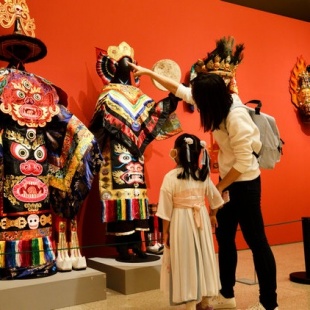
People can see a selection of such examples at Support Education With Art, an ongoing poverty reduction-themed exhibition that runs through Sunday at the National Art Museum of China in Beijing. It displays hundreds of artworks which reflect the country's efforts and progress in improving the livelihood of people in remote, underdeveloped areas during the past seven decades.
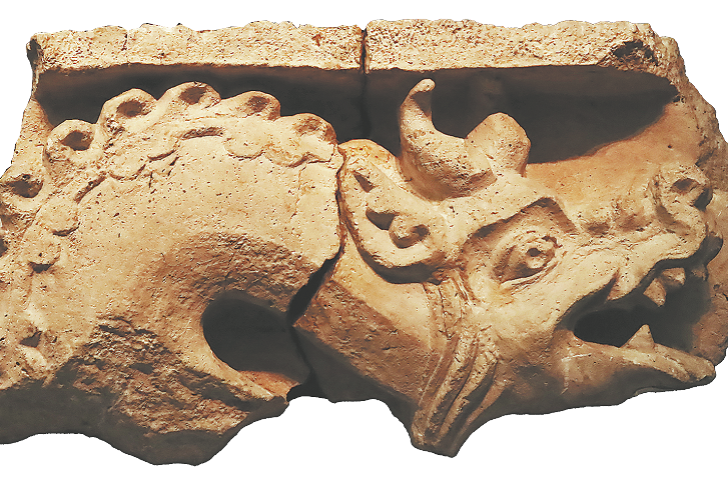
Also, the exhibition has a special section dedicated to a variety of handicrafts which have come from across the country to enter the collection of the National Art Museum through the decades since it opened in 1963.
These objects present a cultural diversity, as they were used by various ethnic groups in China for centuries, showing "the wisdom and creativity of the grassroots", says Pan.
The handicrafts become a channel for the outside to know about the life of these communities, many being economically deprived. And making and selling handicraft have helped lift people out of destitution in the areas.
For generations, women in villages in Shaanxi province used paper-cuts, many cut with intricate detail, to decorate their humble homes. These days, their works that feature their patterns and use of imagination attract a much wider audience and are highly valued as collectibles.
Folk artist Liu Jieqiong hails from a family that produced several generations of paper-cutting artists in Yan'an, Shaanxi, including her late mother Gao Fenglian, a State recognized master of handicraft whose arresting works are exhibited both at home and abroad.
Gao donated hundreds of her works to the National Art Museum of China in 2014, some of which are on show at Support Education With Art exhibition.
"Mother often said fine paper-cutting requires not only dexterous hands but also a kind heart," Liu says. "She told us children and grandchildren that a paper-cut shows what one is thinking and whether he or she achieves spiritual harmony with the world."
Making paper-cuts was an obvious professional route for Liu and her daughter Fan Rongrong, and it also provides means of independence to many other women in their villages.
In 2014, three years before Gao died, the National Art Museum mounted an exhibition to show the works of her, her daughter Liu and granddaughter Fan.
It was not the first time the National Art Museum highlighted the appeal of folk art. In 2011, an exhibition was held at the museum to show examples of how handicrafts in Shandong passed on cultural values and were merchandised to promote the rural economy. Pan was the curator.
"It was well-received among people. Many primary and secondary school heads contacted me. They wanted their students to see the exhibition," Pan says.
"It is an encouragement that the most important spaces of the National Art Museum are saved for not only preeminent artists but also folk artists from the countryside."
Wu Weishan, the director of the National Art Museum, says that it is more than enough for people to know about and fall in love with the artistic value of handicrafts. He says showing folk art is also an invitation for people to contribute ideas on the franchise of these objects, and further boost rural development.
Developing and marketing handicraft brings means of independence to women, the elderly and people with disabilities who remained in the countryside while the young labor force went into the cities.
Pan says handicraft cooperatives have been established in many poverty-stricken counties to play an important role in improving income.
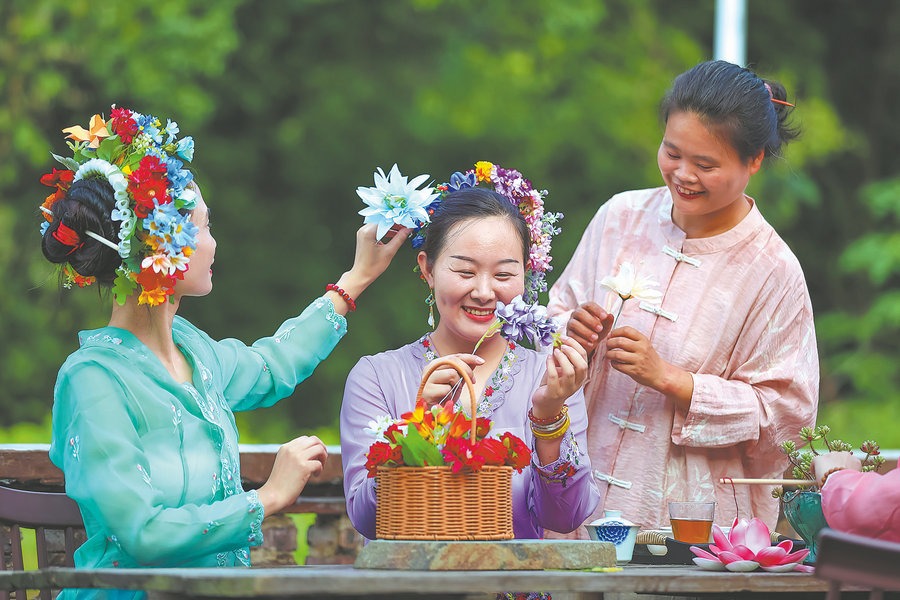
"For example, Liping county in Guizhou province is plagued by rocky desertification. In recent years, handicraft cooperatives have been founded to train local women to make plant-dyed clothing-an old technique in the county-and to use the clothing to produce handwoven commodities, such as bags and scarfs. The products bring to the cooperatives and villagers considerable earnings," he says.
Pan says it is why old crafts need to be preserved or revived: not only because they embody the cultural DNA of the nation, but also because they help people to make a living.
linqi@chinadaily.com.cn