



The EU-US dialogue on China is 'dead on arrival'









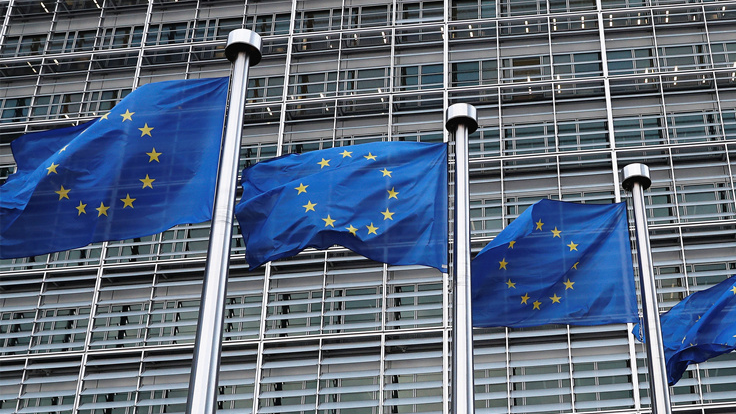
European Union (EU) foreign policy chief Josep Borrell proposed the EU-US dialogue on China in June to check the Asian nation's rise and growing influence in Eastern Europe. Borrell criticized China of using "debt trap" diplomacy when 17 Central and Eastern European countries (CEEC) signed the "17+1" platform with China to enhance their economic development in 2012. Borrell again complained that China was employing "mask diplomacy" when the Asian power sent medical equipment to some of the countries to deal with the coronavirus pandemic.
However, Borrell's proposal did not get much attention on either side of the Atlantic until recently. Some Western politicians are using "illiberal" developments in China to rally support in stifling China's growing power.
The dialogue's revival gained currency in the EU, probably because some of its members are losing competition and influence to China. The Asian economic powerhouse is able to produce advanced machinery and other equipment, reducing its dependence on those produced in Europe, particularly in Germany. For example, German companies such as Siemens are losing market share not only in China but elsewhere because of competition from Chinese manufacturers. In this sense, reviving the dialogue might be an attempt to slow down China's advance in high-end manufacturing.
The US might be motivated by Donald Trump's falling behind in the polls to Democrat nominee Joe Biden as a result of the president's mishandling of the COVID-19 pandemic, calling soldiers killed in wars "losers and suckers" and a sinking economy.
Trump's complacency and inept management of the pandemic caused the infection of over seven million and the death of over 200,000 Americans. On top of the loss of human lives, the US economy contracted by over 32 percent in the second quarter of this year. Playing the "China card" was an effective way of deflecting attention away from the president's failed policies.
However, the EU-US. dialogue on China might not gain traction because of the world's economic reality.
European Commission President Ursula von der Leyen, European Council President Charles Michel and German Chancellor Angela Merkel, whose country currently holds the rotating presidency of the EU, held a virtual summit with Chinese President Xi Jinping only days before the news emerged about the dialogue's revival. The meeting would suggest the EU and China are embarking on the path of cooperation rather than confrontation.
EU probably has more in common with China than with the US, in that both champion globalization, desire to address climate change and other issues that the US shun. For example, Germany and France sided with China in opposing the Trump administration's "snapback" to force the return of sanctions on Iran.
Size and money also matter. The EU and the US recognize that China might be the only country that could lead them and the world out of the COVID-19-induced recession. China's huge domestic market of 1.4 billion could buy huge quantities products from and invest massively in the EU and the US
Judging from news reports on US Secretary of State Mike Pompeo's visit to Italy, the Holy See, Greece and Croatia from September 27 to October 2 thus far, his anti-China message did not gain traction, nor should it for good reasons.
The Pope refused to meet with him because, in part, he does not want to jeopardize rapprochement with China.
According to the September 22 Diplomat report, China and the Holy See could establish diplomatic ties as early as at the end of this year because the two sides have reached a deal on some sensitive issues (i.e. Pope Francis approved the appointment of seven bishops by the Chinese government).
Portugal, while not on the list of countries Pompeo is to visit, told the US ambassador to the country to mind his own business regarding Chinese investment. Portuguese President Marcelo Rebelo de Sousa said his country can decide for itself with which nation it wants to do business. Indeed, the tone of the US ambassador's message of "you are either with or against us" was threatening and condescending.
Italy and Croatia are participants of China's Belt and Road Initiative; it would not be a surprise if they, too, reject Pompeo's pressure to de-couple from China if the matter comes up. Walking away from China would cost the countries much needed investment funds and trade, particularly when neither the EU nor US is able and willing to come to the rescue.
Pompeo's visit to Greece was to defuse Greek-Turkish tensions and not necessarily about China. But if Pompeo does demand Greece to "divorce" China, the Hellenic state would likely push back because China is a big investor in Greece.
Last but not least, the EU does not have the final word on foreign policy; the individual member countries do. Borrell is clearly not speaking for most of the EU's members.
Against this backdrop, the EU-US dialogue on China would likely be "dead on arrival" because joining the US to counter China is harmful to most, if not all, EU member countries' national interests. As the 18th Century British statesman Lord Palmerston observed, nations have no permanent friends or foes, only permanent interests.





