



West still coming to terms with loss of its ascendancy









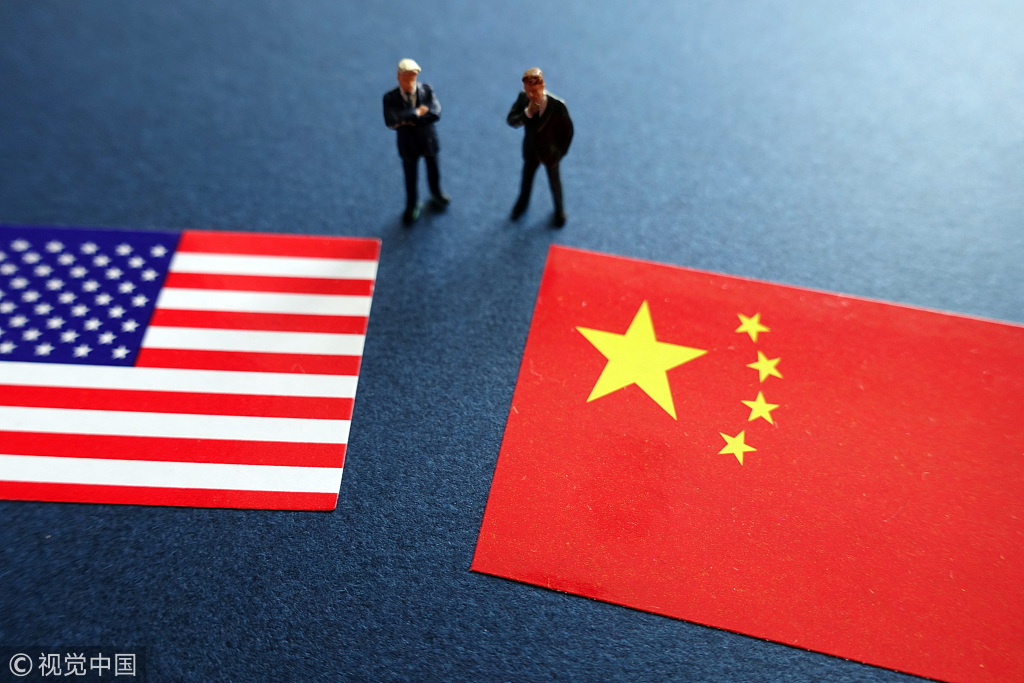
In his grandstanding at the 75th Session of the United Nations General Assembly on Tuesday, the US leader made clear that he considers the cornerstone of his presidency to be his administration's attempts to contain China.
While it is obviously tempting to him to present these efforts as particular to his presidency given his support base, they are a manifestation of a broader historical trend.
The US' concerns are not really about what China is doing, or even what it has done, but about how far it has come in such a short period of time. That it is now able to compete with the US in many fields, notably the new technology frontiers, an area to which the US had become accustomed to its ascendancy, has caused the US and its acolytes great anxiety.
Until 12 years ago, the relationship between the United States and China was relatively benign. Policymakers in the US believed that China lagged so far behind the US economically that the preeminence of the US was assured. They also believed that in the process of modernization China would become more Westernized, and thus it would be subsumed within the US hegemony.
The turning point came in 2008 when the financial crisis took its toll on Western economies. China was able to withstand the shockwaves, which resulted in a shift in the global economy's center of gravity toward it. This caused growing anxiety in the West, and, as China has assumed a higher profile on the world stage, growing hostility toward it.
The West has grown accustomed to ruling the world, first through its colonialism, then through the postwar system with its in-built bias in favor of the Western developed countries. The rise of China and its championing of developing countries, many of which had to free themselves from the shackles of colonialism, heralds the demise of the West's dominance and the partiality favoring it within the global system.
As such, the US president's speech should perhaps be placed within the framework of the five stages of grief that the US and the other Western countries are working their way through as they come to terms with this.
The words of the US president and other US officials show that the US has been in shock and denial about what is happening, stage one; they have even expressed guilt at what they see as US enabling of China's development, stage two; progressing to displays of anger and bargaining in the process of negotiating the "phase one" trade deal, stage three. And in his remarks on Tuesday, the US president gave voice to the depression and loneliness the US is feeling at the present moment as it works through the fourth stage of grief.
While he tried to portray China as a malevolent participant within the existing global system, the country has played a positive role in the United Nations and the other institutions and platforms for global governance. In a video conference with President Xi Jinping on Wednesday, UN Secretary-General Antonio Guterres spoke highly of China's consistent and resolute support for multilateralism and the UN.
Xi on his part, reiterated China does not seek to tear down the UN-centered international system and it views the UN Charter as the basis for the norms of international relations.
However, he made clear that China is pursuing reforms to make the system fairer and more democratic, and he called for all parties to think about how to improve it.
Since, the US is now coming to the point in the fourth stage of grief where it is the time for reflection, perhaps the US will look back at the past 40 years with a less chauvinistic mindset and so embrace the fifth stage of grief, the upward turn to acceptance.
The author is a senior writer with China Daily. The views don't necessarily represent those of China Daily.





