



Lakeside villagers make move for better









Relocated residents benefit from fresh start
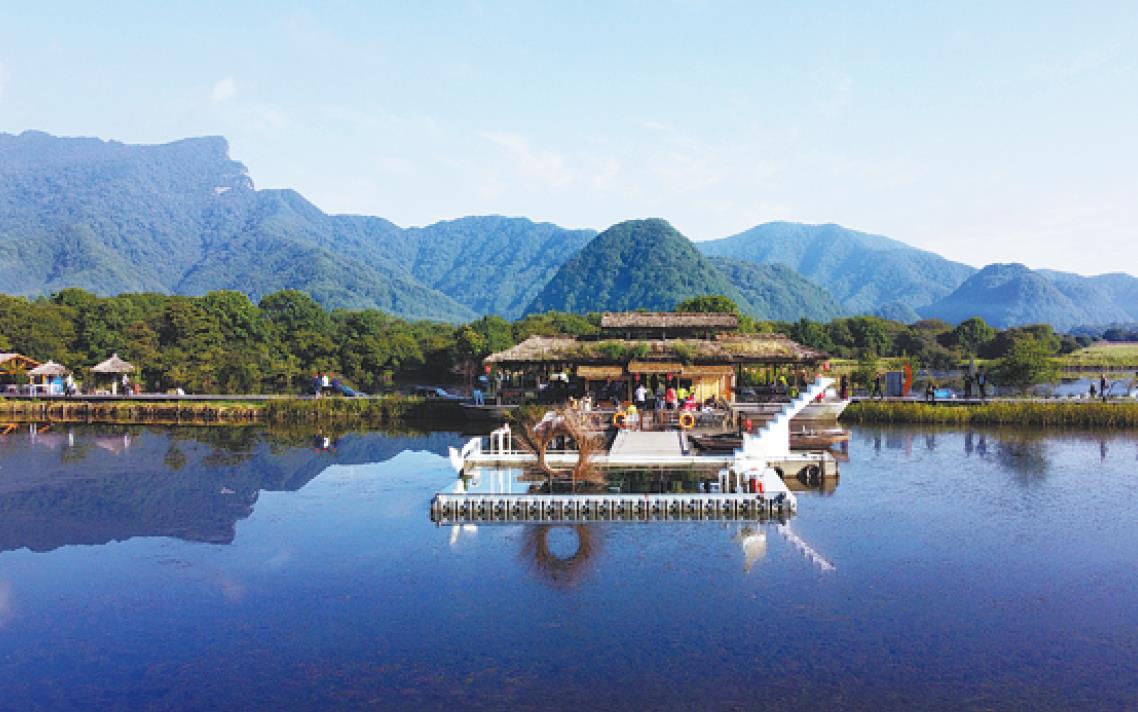
When Lu Deyan was born more than 50 years ago in a remote village in Hubei province, his family lived in a lakeside home amid beautiful scenery.
However, the stunning views in Dajiuhu, which translates as "nine big lakes" and is located in the Shennongjia forestry area, failed to bring local people good fortune. Life was hard and the villagers, including Lu's family, were poor.
Lu toiled many hours, both day and night, as a lumberman, migrant worker and farmer, but struggled to make ends meet. "I worked hard but made little money," he said.
His fortunes finally turned when he saw tourists flocking to the area who were willing to spend money on overnight stays just to watch the sun rise over the lakes.
Sensing an opportunity, Lu opened a homestay in 2010. It was quite a small business, with only a few beds and tables for meals. However, launching it saw the annual income of Lu's family reach 70,000 yuan to 80,000 yuan ($10,340 to $11,320)-enough for him to pay for his son and daughter to go to college.
Lu was happy with his new life and thought he had "turned the corner".
However, in 2013, a restoration project was announced, and villagers living in Dajiuhu National Wetland Park in the Shennongjia Nature Reserve were required to relocate to a township 20 kilometers away.
Launched by the Hubei provincial government, the project was aimed at eliminating pollution, minimizing human impact on nature, and ultimately restoring the ecosystem in forests and wetlands.
In the 1960s, development work began in Shennongjia, an important logging area in Central China, but this resulted in environmental problems.
Trees were felled for use as railroad ties. Although a logging ban was introduced in Shennongjia in 2000, which closed timber businesses, it failed to stop environmental damage.
To benefit from higher prices, villagers began planting out-of-season vegetables around the lakes. They dug trenches to drain water from the soil to plant radishes and cabbages, severely damaging the wetland.
Since 2010, the number of homestays and restaurants around the lake had grown considerably, with domestic sewage and waste being directly discharged into the wetland.
The Dajiuhu wetland, northwest of Shennongjia, features nine different-sized lakes, which are surrounded by mountains.
In 2006, Dajiuhu became the first national wetland park in Central China, and four years later a provincial nature reserve. In 2013, it was recognized as an important area by the Convention on Wetlands of International Importance, also known as the Ramsar Convention, an intergovernmental treaty for the sustainable use of such areas.
Zhang Zhiqi, deputy director of the Shennongjia National Park Science Academy, said, "Wetlands are the 'kidneys of the earth', as they can restore natural functions and are very important for ecosystems.
"But when the villagers dug trenches to make the soil more suitable for farming and to plant their vegetables, they destroyed the wetland environment.
"The homestays also produced a large amount of domestic waste, which was directly discharged into the lakes," Zhang said, adding that it took time to restore the lakeside environment.
"Shennongjia covers 3,253 square kilometers-just 1.7 percent of the total area of Hubei, but it is home to more than 90 percent of the plant species in the province," Zhang said, emphasizing the importance of the area, not just to Hubei, but the whole country.
In 2016, the authorities decided to close businesses in the Dajiuhu National Wetland Park to "return the lakes to nature". A township was built at the foot of the mountains to accommodate tourists and for villagers to run tourism-related businesses, including hotels and restaurants.
Although officials and scientists were aware of the urgent need to relocate residents to protect the lakes and forests, villagers such as Lu Deyan were reluctant to move.





- PLA Daily: China resolute in winning anti-graft war
- China unveils regulations on Party organization elections within armed forces
- Pick your own cherished flowers in downtown Shanghai
- Liangjiang New Area of Chongqing inaugurated
- 17 rescued Filipino crew members transferred
- Team of Chinese, US scientists identifies key tumor cell state driving cancer growth, drug resistance














