



Hefei eyes prosperity as it looks to become an AI industry hub









A moderately prosperous society, or xiaokang, has more implications than just the increase of people's incomes. It also means people in such a society have access to more facilities and products that can make their lives happier and more convenient, officials said.
Ling Yun, mayor of Hefei, capital of Anhui province, said development of the high-tech industry will be increasingly important in efforts to improve society there. As many resources have been put into the industry, Hefei is gradually becoming a hub for emerging technologies, including artificial intelligence.
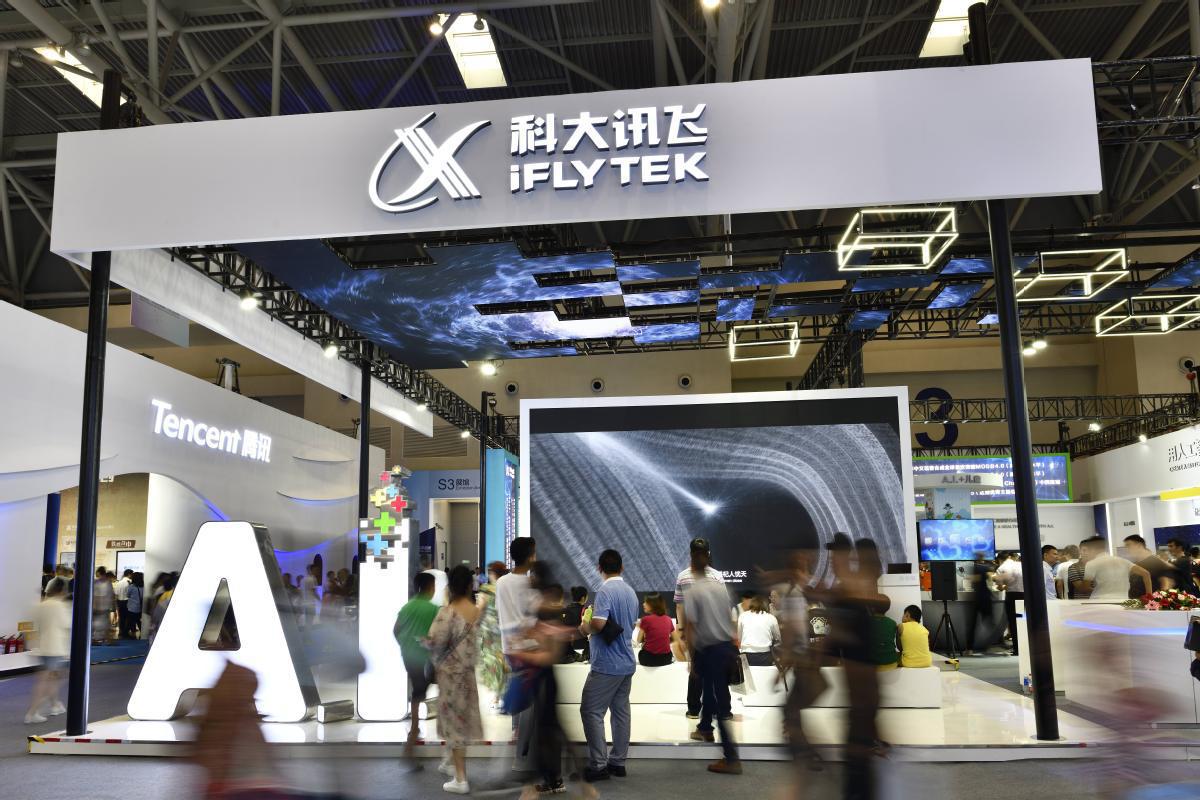
Hefei is home to iFlytek, the country's leading AI company that is best known for its voice recognition technology.
To date, its open-access platform has served more than 1.42 million entrepreneurs and third-party developers who use the AI and speech recognition technologies to do business, according to the company.
The firm is a big creator that can spur on smaller creators.
Since 2013, the Ministry of Industry and Information Technology and the Anhui provincial government have been developing China Speech Valley, a high-tech industrial park, into a major hub for the AI industry.
Living up to its name, in the valley, the human voice bears new technological fruit that can be consumed in people's daily lives. The products span from robots used for different purposes and computer mouses with convenient speech input function-for Mandarin, English and even some Chinese dialects-to various smart, wearable devices.
"Intelligent voice interaction only comprises a small part of AI, but it can play a key role in displaying the achievement of scientific research for the public," said Mao Yuanyuan, vice-president of China Speech Valley.
In 2017, the provincial and municipal governments set up a fund with over 5 billion yuan ($732 million) for Hefei's long-term development. From 2017 to this year, the Hefei government has annually allocated 600 million yuan to further develop the park.
By June, 910 enterprises were operating in the valley. The total output value of the park last year reached 80 billion yuan, according to Mao, who is also the administrator of the valley.
"We've formed a dynamic model to incubate and encourage the growth of enterprises, going through the whole process from the birth of an idea to the manufacturing of products," Mao said."The University of Science and Technology of China and some institutes of the Chinese Academy of Sciences based in Hefei have offered fruitful achievements for our creativity."
Thanks to developed online channels, despite the impact from COVID-19, the total output value of the valley in the first six months of this year reached 45 billion yuan, and Mao said she expected the total value to surpass 100 billion by the end of the year, with over 1,000 enterprises stationed there.
Huami, a leading tech company that is based in the park and develops wearable devices, serves as an example. Despite initial setbacks earlier this year, shipments made by the company, which is listed on the New York Stock Exchange, quickly rebounded in the second quarter of this year.
Over 8.9 million devices were shipped-about half domestically and the other half abroad-in the second quarter, a 7.2 percent increase from the same period last year. In addition, its revenue in the second quarter was nearly 1.14 billion yuan, up 9.5 percent compared with the same period in 2019.
As the coronavirus pandemic continues, China Speech Valley is not only surviving, it is thriving and contributing to the fight against the disease.
Infervision, a company that develops medical-related AI technology in the park, created an auxiliary diagnosis system and equipped dozens of hospitals nationwide with it to aid the fight against COVID-19. It later exported the system to multiple countries, helping medical workers to confirm over 300,000 cases.
"Speaking of a prosperous life, it must give people a sense of gain, and these products can make people directly feel that life is getting better," Mao said.






- China's Global Governance Initiative receives positive feedback at forum
- China's Xizang sees steady tourism growth in 2025
- First-of-its-kind pearl auction held utilizing Hainan FTP
- Agarwood exhibition steeps Shanghai museum in fragrance
- The Fujian Coast Guard conducts regular law enforcement patrol in the waters near Jinmen
- IP protection for new fields to improve














