



Sichuan village on road to better life









On the journey to prosperity, no one is left behind. In this series, China Daily tells stories of achievement and triumph as the final 52 counties in four provinces and three autonomous regions rise from poverty.
On Aug 30, it was again the time of year for students in Liangshan Yi autonomous prefecture in Sichuan province to return to school, one day ahead of the beginning of the new semester. But the journey to school was no longer an odyssey for Ah'emezi Ahmu and Ahdame Sen-iu, two 14-year-old students in Abuluoha village in the prefecture's Butuo county.
"We used to walk for nearly four hours along the cliff to reach Wuyi township, where a bus took us to school in another township. Now a minivan in Abuluoha takes us directly to school in about two hours," said Ah'emezi Ahmu.
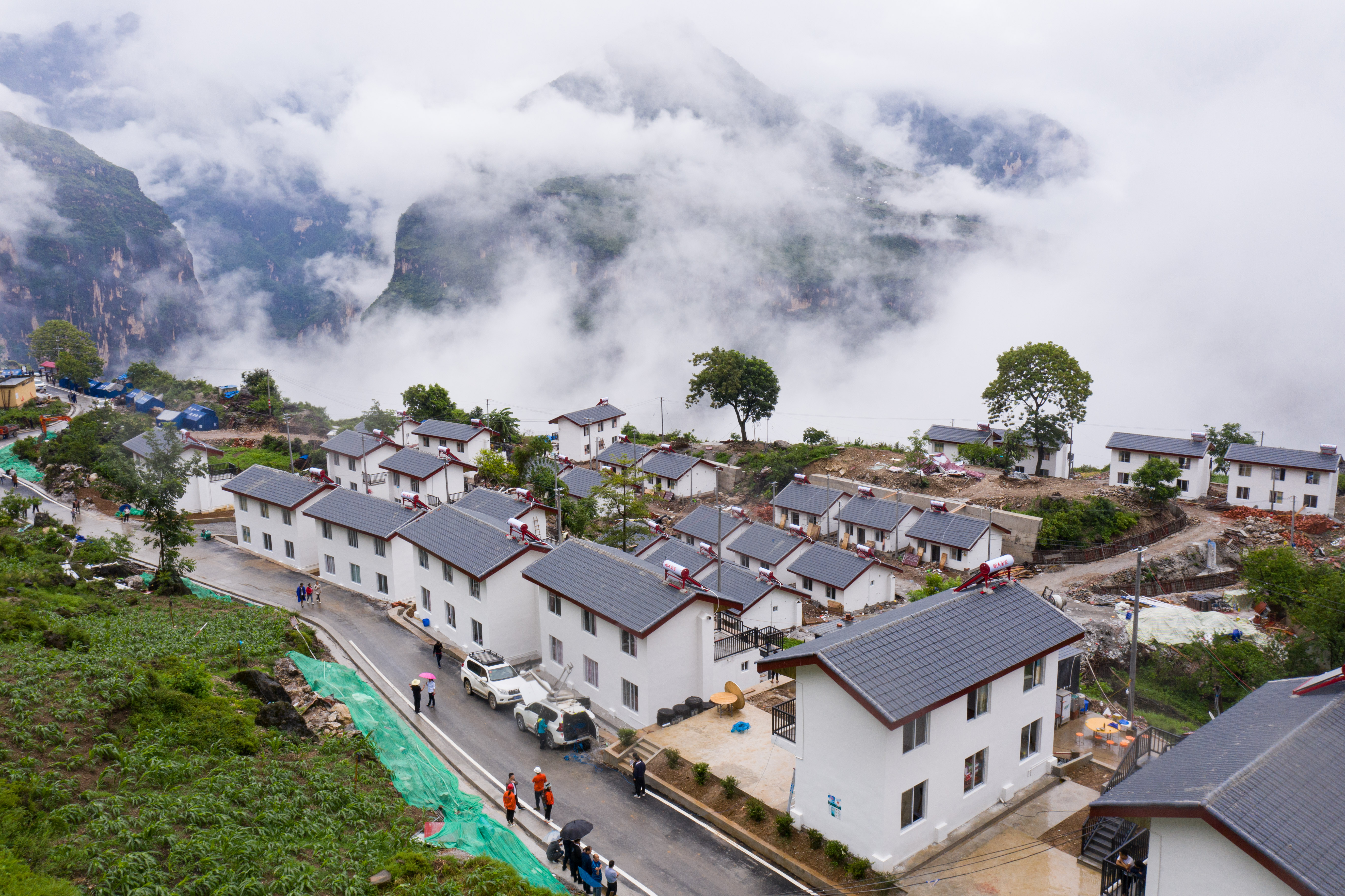
The dramatic change took place thanks to the recent opening of a road, bringing to an end to Abuluoha's status as China's last village without a road.
Abuluoha, meaning a valley surrounded with rolling mountains and a less-traveled place in the language of the Yi ethnic group, is in a deep valley of the Jinsha River in the upper stretches of the Yangtze River. It is surrounded by mountains some 3,000 meters above sea level on three sides and cliffs on the other.
In the 1960s, leprosy was prevalent in the prefecture, and Butuo arranged for more than 300 leprosy patients in the county to live in a concentrated area in the village. It was commonly known as the leprosy village and was named Abuluoha only in 2007. The overwhelming majority of its residents are descendants of leprosy patients.
When the construction of a road linking the village to the outside started in 2018, villagers in Abuluoha were still spending nearly four hours walking along the cliff or more than three hours down the valley to go to the county seat through another village.
Liangshan, home to the country's largest number of Yi people, is one of the least developed areas in Sichuan.
Local authorities started building the road to alleviate poverty in Abuluoha-which has 253 people and is 60 kilometers from the Butuo county seat. Due to the village's inaccessibility, a giant M26 helicopter was rented to transport eight large excavators and other equipment.
Because the construction site was very narrow, the excavators could not be used at the same time and the pace of construction was very slow. One excavator fell off the cliff, instantly killing its operator and breaking into three pieces, a Wuyi township official said.
Sometimes only five meters of the road were built on a single day, said Hu Wei, an official in charge of the construction site.
The new road has changed villagers' lifestyle.
Qiesha Secong, a 30-year-old villager, sold his family's only horse and bought a motorcycle. The pony was valuable to the Yi man, who had relied on it to carry home seeds, fertilizer, salt and rice along the mountain path. He parted with the pony, which was not tall but could carry more than 200 kilograms, because it was much faster to ride a motorcycle.
Jinie Ziri, 25, the village Party chief, is one of only a few local villagers who have studied in a college in Xichang, the capital of Liangshan.
He said to increase their income, villagers had started to cut back on their cultivation of less lucrative corn, which they still grow for their own use. They have expanded areas used for two, more expensive local specialties: seedless peppers and konjac, a herb with a starchy, tuber-like edible stem that grows underground.
"They can transport specialties to the outside thanks to the road," he said, adding that the average annual income for villagers has increased to more than 4,700 yuan ($688) from less than 200 yuan before 2006.
"We have more confidence in embracing a promising future," he said.


- Ten photos from across China: April 24 - 30
- Seven dead, 12 hurt as vehicle rolls over in Yunnan
- Purple sea of?catnip flowers?blooms in Shandong town
- 'Blue tears' turn Fuzhou's beaches fluorescent
- China-made marine-derived antitumor drug to begin combination therapy trials soon
- Wild apple trees create a poetic spring landscape in Xinjiang





