Village prospers after restoring 'lucid waters and lush mountains'









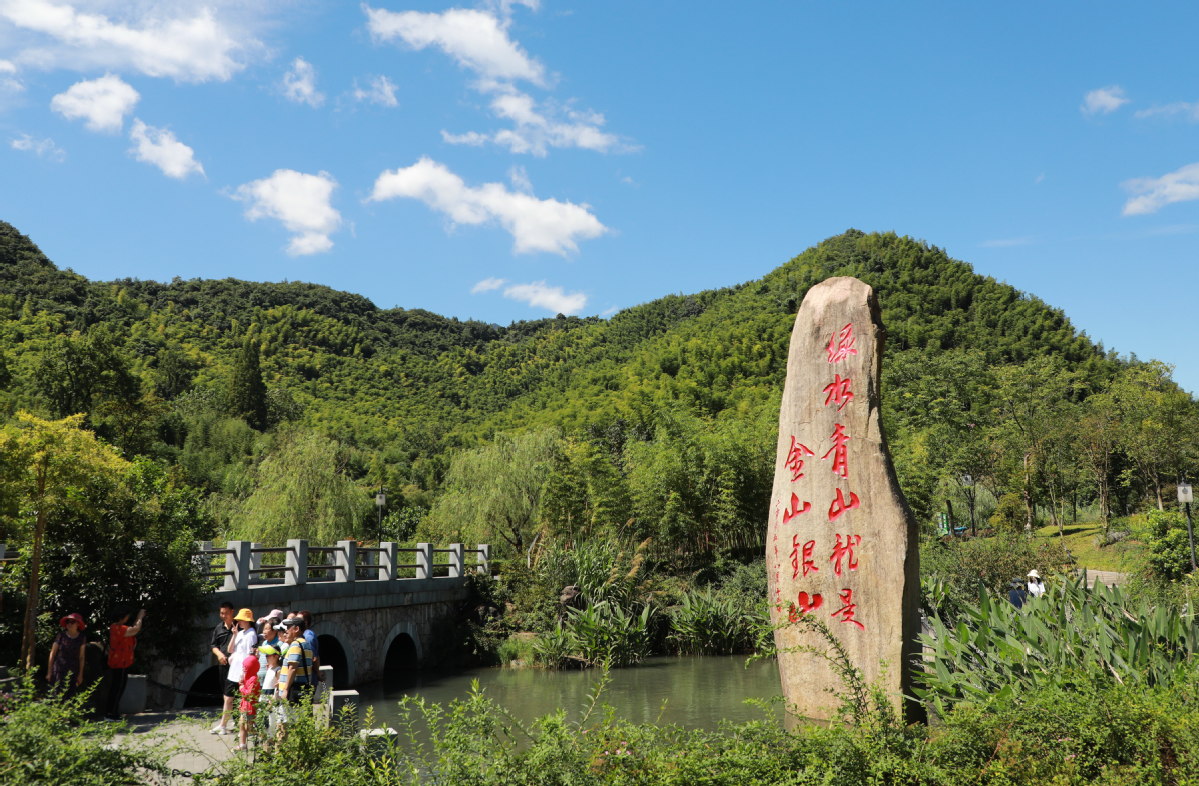
On the hills around an old kiln in Yucun village grow tall groves of bamboo, covering the gray mine site and putting a green "coat" on summer in Anji county, Zhejiang province.
With more than 1,000 residents, the picturesque village welcomed 900,000 tourists to enjoy the mountains, water and fresh air last year. The annual income per capita was nearly 50,000 yuan ($7,200), according to the local government.
Standing beside the mouth of the kiln site marking the beginning of the local mine industry in 1977, Bao Xinmin, former Party chief of the village, recalled decisions that resulted in the great changes from mines to mountain views over the past 20 years.
Not long after the reform and opening-up policy of the 1970s, the village took advantage of its rich limestone resources and started to build three mines and a cement plant.
About 10 factories were opened afterward in the village, and about half the 200 households worked in the mine industry.
The average monthly salary of each villager two decades ago was 1,000 yuan, Bao said, but exploiting the mines brought an annual profit of 3 million yuan to the village, which was famous in the county for its wealth.
"Stones were treasure while mines were gold mountains at that time," the 64-year-old added.
However, the environment paid the price.
"In the 1990s, the sky was dusty here. Even families couldn't recognize villagers working the whole day with dust sticking to their faces," Bao said.
Yu Xiaoping, now deputy Party chief of the village, also remembered how the environment was damaged by flying gravel from the open mine.
"When I was a child, bamboo could rarely be seen on the hill in front of us because the gravel from the explosions knocked them down," Yu recalled.
Waste water produced by factories polluted land and water as the village that once relied on its natural resources seriously destroyed the environment.
In 2003, as the provincial government proposed to build a "Green Zhejiang", then village head Bao and other policymakers decided to shut down all mine factories in the village to save the local environment.
Though water and air quality improved along with the closure of factories, many villagers lost their jobs and blamed Bao.
"They came to the office and questioned why we officers still got paid but they had nothing to do," Bao said.
Bao also doubted their decision and strove to ensure employment for local people. In 2005, he finally determined to keep the development model after he was supported by Xi Jinping, then Party secretary of Zhejiang province.





- China hands over 17 Filipino sailors from shipwreck to Philippines
- Topography, extreme rainfall causes of Guizhou landslide, report says
- Various activities held to welcome upcoming Laba Festival
- Beijing plans further expansion of its world-class metro network
- Xi leads China's diplomacy to usher in new chapter in turbulent world
- NEV surge contributes to record air quality improvement in Beijing