



Beijing could take a leaf out of Shanghai's book on sorting waste









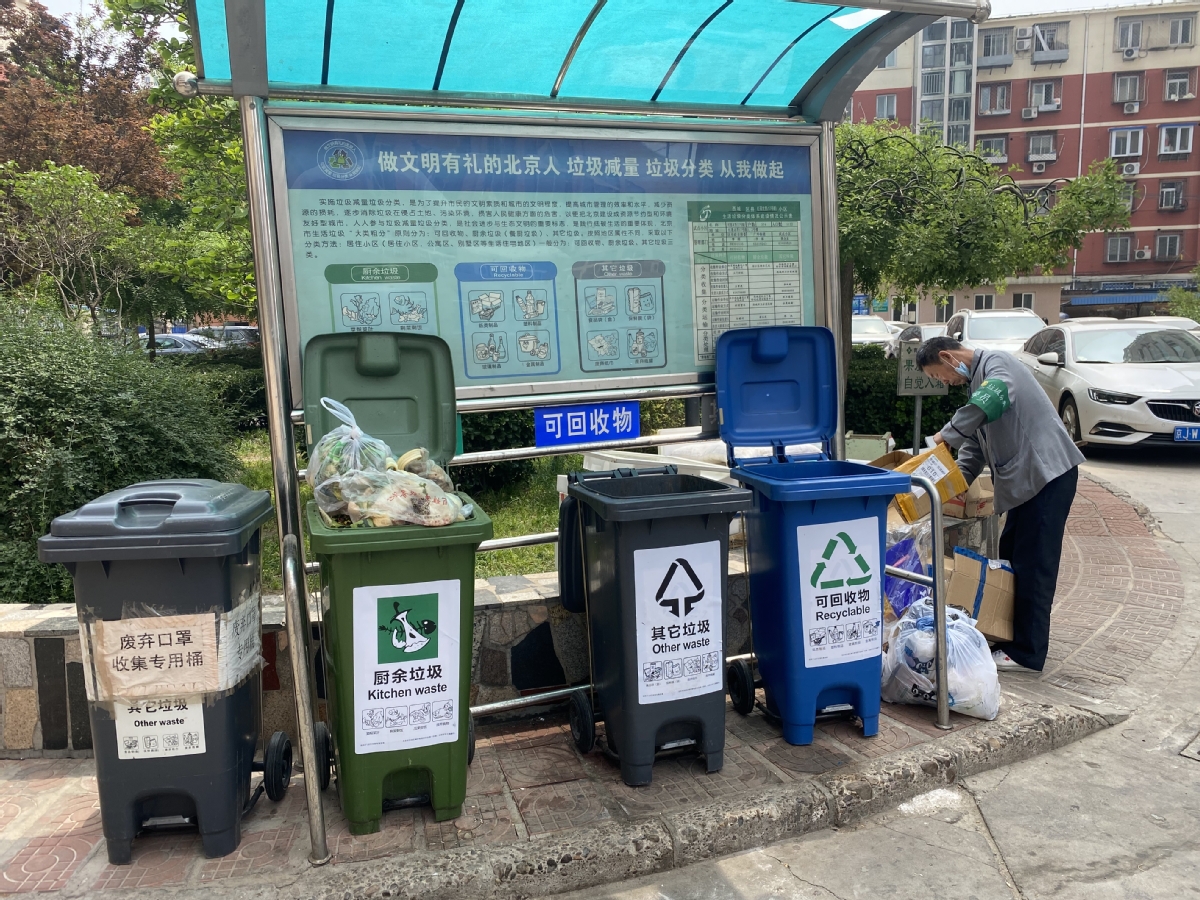
Shanghai has been sorting household waste for a full year now. Statistics presented by the municipal government indicate that more than 90 percent of residential communities and office buildings in the city have done a good job of sorting waste.
In the first half of June, for example, the amounts of recyclable materials, hazardous items and wet garbage separated from Shanghai's domestic waste increased 71 percent, 11.2-fold and 38 percent respectively from what it was during the same period last year, helping reduce the amount of disposed dry refuse by 19.7 percent year-on-year.
Shanghai has set a good example of transforming a public consensus into concrete action, attaching significance to law-based implementation while engaging all residents.
Much efforts have gone into creating awareness about the urgency of sorting waste and there is adequate and compulsory punishment for violators in the form of fines.
All the stakeholders-grassroots governments, waste disposal companies, property management companies, community workers, social organizations and residents-must work together to transform such ideas into actions. That involves the promulgation of relevant knowledge, timely renovation of neighborhood household garbage stations and related facilities, and the formation of an effective supervisory mechanism.
Shanghai's experience should prompt other cities to plug the loopholes in their promulgation of the same practices.
For instance, although Beijing is among the first cities to advocate sorting of household garbage, way back in the 1990s, it has lagged far behind Shanghai, as neither has it arrived at a public consensus on waste sorting nor made punishment compulsory for violations. The wait-and-watch attitude of many government departments is also responsible for Beijing missing the bus.
In this backdrop, even if some residents want to sort their household waste at home, they will lose the motivation after seeing that after all their painstaking efforts, their garbage ultimately shares space with their neighbors' unsorted waste in the same garbage bin.





