Food markets to get greater scrutiny









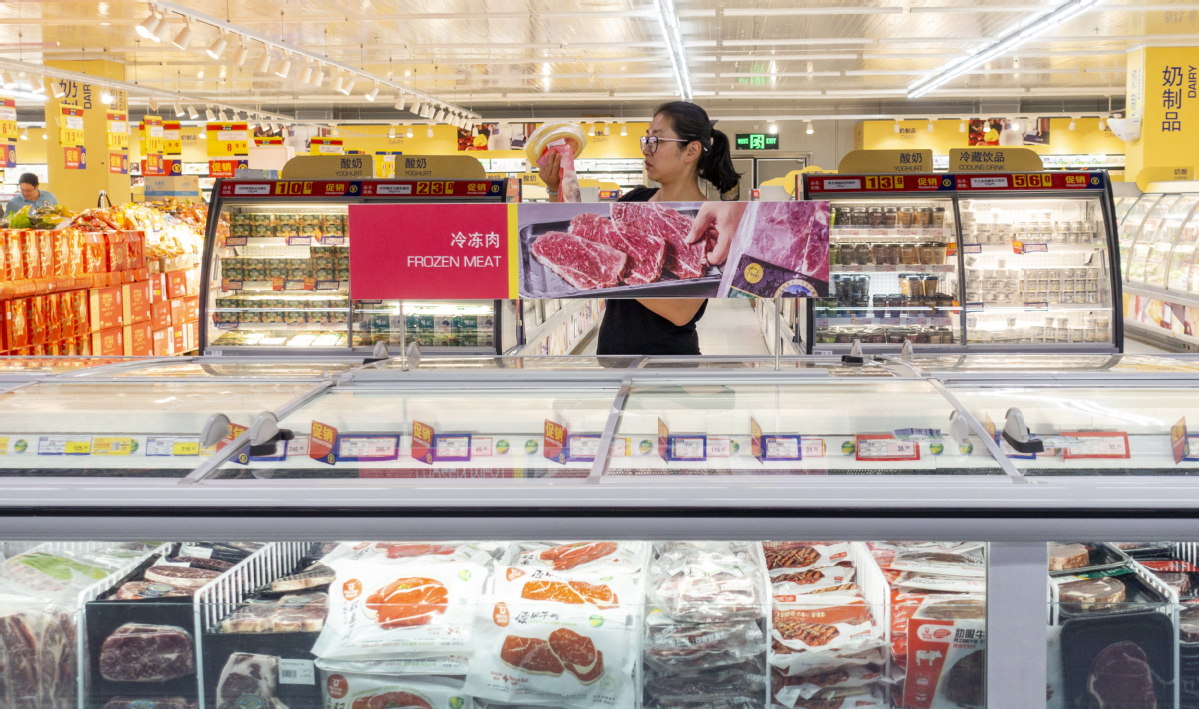
Wholesale food markets across China will be put under stricter scrutiny to minimize risks to food safety and transmission of the novel coronavirus, officials with the country's top market regulator said on Friday.
The State Administration for Market Regulation will urge its branches across the country to intensify efforts in epidemic control and prevention, focusing on key venues such as wholesale markets selling agricultural products, Chen Xu, an official for market inspection with the administration, said at a news conference.
"The regulators will step up efforts to fight the illegal trade of wild animals, and ban eating such animals. Restrictions will be imposed on the trade and slaughter of live poultry, and the live poultry trade will be gradually banned in such markets," he said.
Market regulators will guide and supervise vendors to strictly follow regulations such as keeping purchase records to ensure all products are traceable, Chen said.
They will also intensify inspection over products sold in wholesale food markets, and ban the sale of suspicious products such as aquatic products from unknown sources, he said.
Wholesale markets that sell agricultural products are an important channel for the food supply in urban areas in China, contributing to more than 70 percent of the total supply of meat, poultry, aquatic products, vegetables and fruits. However, the latest COVID-19 epidemic in Beijing has raised an alarm on food safety and epidemic risks of such markets, Chen said.
The epidemic was first reported on June 11, and 331 cases had been confirmed as of Thursday by Beijing's health authority. The great majority of the confirmed infections were related to Xinfadi, the biggest wholesale food market in Beijing.
The novel coronavirus was found in many samples collected from the market in June, including cutting boards for salmon sold in the market.
Many scientists believe the novel coronavirus that caused the global pandemic originated from a wild animal. China's top legislature adopted a decision in February to comprehensively ban illegal consumption and trade of wild animals.
By mid-June, market regulators across China had handled 450 cases involving illegal trade of wild animals. They had inspected business venues of various types, including wholesale food markets, and suspended the business of more than 12,000 markets and other business owners for violations in wild animal trade, according to Chen.
Zhang Zhiqiang, deputy chief for food safety monitoring and evaluation under the National Health Commission, said the commission will release a technical guide soon on protection against COVID-19 by employees engaged in the food business, such as those in wholesale food markets and restaurants, who are exposed to greater infection risks.
The guide will recommend detailed epidemic control and prevention measures for the group, including training, health management and handling of emergencies, he said.




- Authorities urged to prepare as cold wave hits Central China
- Explosion at Baotou steel plant kills 2, 5 missing
- Multiple injured rescued after factory explosion in China's Baotou
- Beijing activates emergency responses to ensure safety
- Beijing witnesses snowfall
- Tongji University's Wu Jiang assumes presidency of architects' Asia council