



Villagers' prosperity grows from old tea trees









KUNMING-Row upon row of modern multistory villas seem radically out of place in Laobanzhang, a remote mountain village surrounded by vast swaths of ancient forests in Yunnan province.
The houses embody the prosperity brought about by the hundreds of thousands of ancient tea trees growing under the forests' canopies.
The centuries-old tea trees produce sought-after pu'er tea, a fermented variety prized for its pleasant aroma, initial bitter flavor burst and sweet aftertaste.
"Growing, processing and drinking pu'er has always been a family tradition for me and my fellow villagers," said He Sen, 42, a villager who owns a 6.7-hectare tea garden.
"But none of us expected that the tea could make such a big difference in our lives."
Laobanzhang boasts a long history of tea cultivation.
For generations, its 600-plus villagers, most of whom are from the Hani ethnic group, have grown over 640 hectares of tea trees on the mountain slopes. But poor transportation infrastructure and the low price of pu'er last century hindered Laobanzhang's development, leaving the villagers scrambling to make ends meet. "In the late 1990s, my family's pu'er was sold at less than 10 yuan per kilogram to the Menghai Tea Factory," said He, referring to the then State-owned company that monopolized the sale of pu'er in Laobanzhang.
He recalled that his family of seven, as well as their pigs, chickens and cattle, crowded into a thatched adobe house during his childhood and they led a meager life growing rice and corn. He had to walk for five hours on difficult mountain roads to attend primary school.
Things started to turn around for He and other tea growers in Laobanzhang when Menghai Tea Factory was restructured in 2004. Tea traders and connoisseurs from other parts of China began to pour into the village, leading to a meteoric rise in pu'er's popularity and price.
"The price of pu'er jumped to 50 yuan per kg in 2004. Despite a slump in the market in 2007, it has continued to rise until this day," He said. "Generally, the older the tea tree is, the higher its price will be. The tea harvested in spring will be more valued than that reaped in fall or during the rainy season."
As the pu'er craze sweeps across the country, Laobanzhang has become a mecca for pu'er traders and aficionados, who swarm to the village during harvest season.
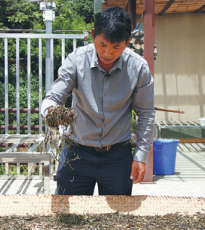
In 2010, He followed in the footsteps of other villagers to build a large two-story villa. The house is "a necessity", because he needs the spacious second floor to air-dry the tea leaves.
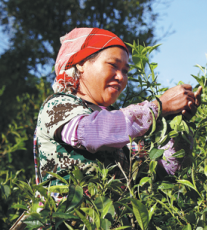
Yang Junwei, the village's Party chief, said the tea trees have become a cash cow for Laobanzhang villagers and the impoverished residents from nearby villages and townships. "This spring, over 70 poor residents from nearby were hired as tea pickers to work in Laobanzhang and earn extra money," Yang said.
Xinhua


Today's Top News
- US should reciprocate China's readiness to work to stabilize and improve relations
- Regulatory overreach masks EU's malaise
- China, US can work together for mutual benefit: Wang Yi
- China's top diplomat meets US Senator Steve Daines
- Ecology and economics are allies, not rivals
- Lai's stowaway trip slammed as a scandal, farce





