



Indian govt's decision to block Chinese apps draws concerns









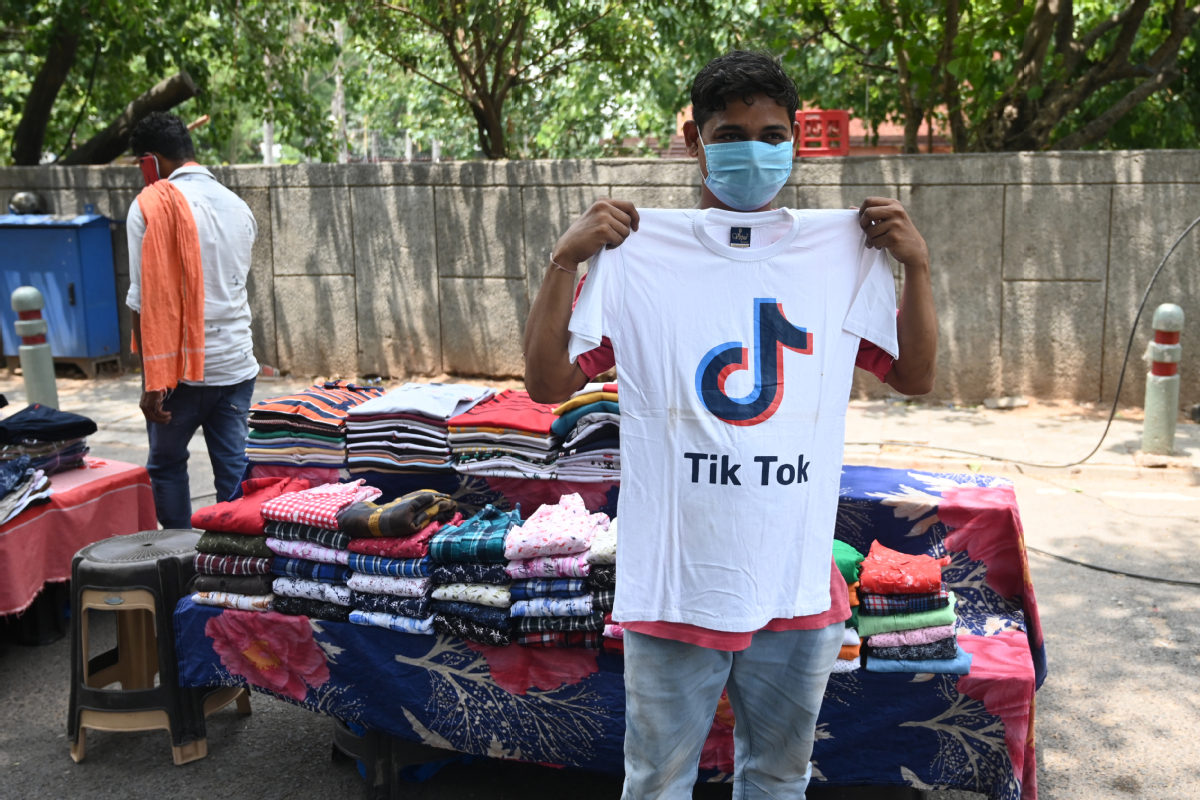
The Indian government's decision on Monday to block a number of Chinese mobile apps might incur short-term revenue losses and propel Chinese tech firms to recalibrate their overseas expansion strategy in the long term, industry experts said.
The ban cites "sovereignty and integrity" concerns, and Chinese companies subject to the policy include short video app TikTok operated by ByteDance, the WeChat messenger from Tencent, Alibaba's UC News and Xiaomi's Mi Video Call.
It is expected to pose "a big stumbling block" for Chinese internet powerhouses, which bank on sheer user numbers and online traffic to gain a market position overseas, said Raymond Wang, a global partner at consultancy Roland Berger.
"India, the market with the second-largest population worldwide, is definitely lucrative for sectors that compete for market scale and share," Wang said. "That advantage could be wiped out in the foreseeable period of time."
Chinese tech products and services have a solid fan base. For instance, India claimed roughly 30 percent of TikTok's 611 million downloads, according to analytics firm Sensor Tower in April. Counterpoint, another technology research house, said Chinese smartphone makers, represented by Xiaomi, Oppo and Vivo, currently claim more than half of India's smartphone market.
Ant Financial, Alibaba's financial arm, has even brought its technological prowess and business model to India, helping to incubate the indigenous digital wallet Paytm, which draws experience from Alipay, its Chinese equivalent.
China is deeply concerned about India's statement banning Chinese apps and is checking the facts, Foreign Ministry spokesman Zhao Lijian said on Tuesday.
China and India have both benefited from their pragmatic cooperation, Zhao said, adding that undermining such cooperation goes against India's own interests.
The Chinese government has always asked Chinese companies to conduct international cooperation on the basis of obeying international rules and local laws, Zhao said. The Indian government has an obligation to follow market rules and protect the lawful interests of international investors, including Chinese ones, he said.
ByteDance didn't reply to calls from China Daily on Tuesday. But a CNN report cited a company statement as saying that the ByteDance team of around 2,000 employees in India "is committed to working with the government to demonstrate our dedication to user security and our commitment to the country overall".
Tencent, whose QQ messaging app services were also on the list, declined to comment. Other Chinese tech firms subject to the new policy were unavailable for comment.
Wang said Chinese tech companies' initial success in India is largely due to the similarity of the Indian and Chinese markets, as both nations are developing markets with a huge population and both have customers pursuing cost-effective goods, and their geographical proximity.
Chen Guoli, an associate professor of strategy at global business graduate school INSEAD, attributed Chinese firms' success in India to "value for money" offerings, product development pinpointing a precise target group and innovative apps such as TikTok.
"It seems unclear how this ban will be implemented, whether it means banning new downloads or influencing existing users of these apps," Chen said. "Besides, it's still unclear to what extent the government is determined to implement it."
While a short-term blow is inevitable, the impact is unlikely to be sustained as technology companies tend to have lower costs when doing business overseas, meaning they have the ability to diversify their footprint should a crisis occur, said Wu Xiaole, a professor at Fudan University's School of Management in Shanghai.
The other reason is due to the dominant position Chinese tech apps hold in the local market, which is set to help them weather the storm given the core technologies that make their products a must-have for local users.
Nevertheless, the ban is still a signal that overseas investors, especially Chinese companies, have received, and it is certain to increase the firms' operating costs, said Chen from INSEAD.
"These Chinese firms need to think how to enter, who to partner with, and how to localize," he said.




















