Economy opening further to foreign investors









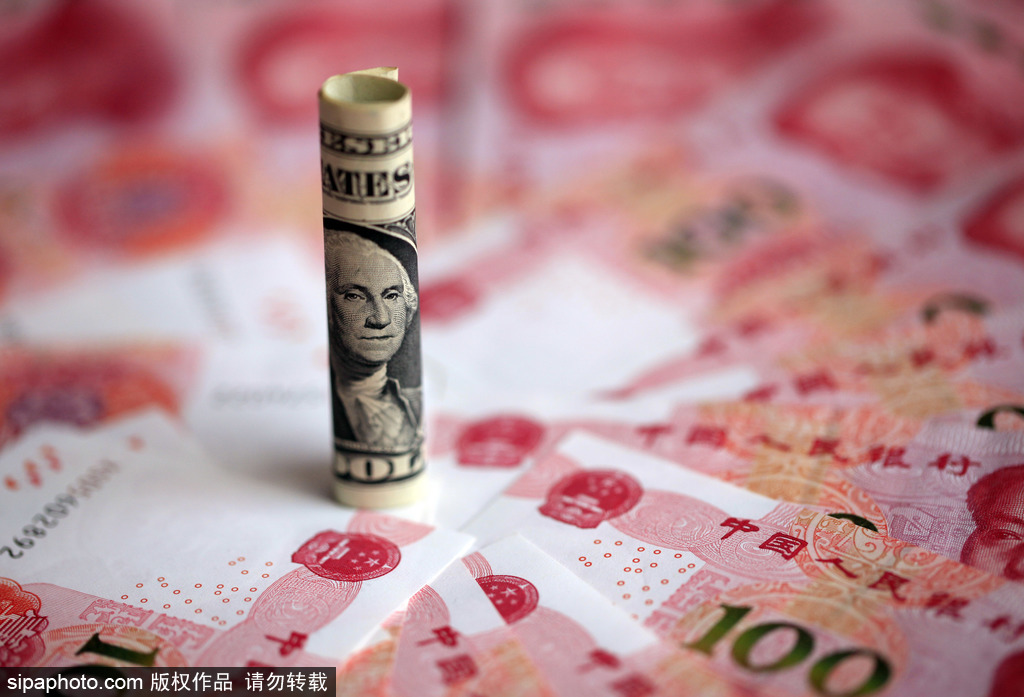
China is opening more industries to foreign investors with the release of new shortened negative lists, as part of the country's effort to spur the coronavirus-hit economy and create more opportunities for foreign investors, said the country's top economic regulator.
Negative lists indicate areas where investment is prohibited or restricted, and all other areas are presumed to be open. Experts said the updated negative lists for foreign investment access will help bolster foreign investment, create a better business environment and foster high-quality development.
The National Development and Reform Commission and the Ministry of Commerce have jointly released two updated negative lists for 2020, which will take effect on July 23. The number of items on the nationwide list has been cut from 40 to 33, while the one for free trade zones has 30 items, down from 37.
Amid the disruption surrounding cross-border investment and the global economy due to the COVID-19 outbreak, China's policy remains unchanged with respect to opening wider to the outside world and the country will continue to improve market access for foreign investment, said a statement from the NDRC.
The new move demonstrates China's firm attitude to support economic globalization and cross-border investment, which will further improve the business environment for foreign enterprises and promote high-quality growth through greater openness, according to the NDRC.
"Shortening the negative list for foreign investment access is a key move to further opening-up and ease market access. And it is conducive to stabilizing and bolstering foreign investment amid the globally spreading coronavirus outbreak and mounting downside pressure," said Cui Fan, a professor at the School of International Trade and Economics of the University of International Business and Economics in Beijing.
"Predictably, China will continue to shorten the negative lists in the next few years," Cui added. "Pursuing greater openness will not only increase Chinese firms' international competitiveness, but also helps deepen reforms of the mechanism and enhance the country's governance capacity. In this way, China will be able to continuously optimize the business environment, enhance the influence and cohesiveness of its ultra-large market and cultivate a large number of internationally competitive enterprises."
According to the NDRC's announcement, the shortened nationwide list further improved the level of openness in the services, manufacturing and agricultural sectors. The new list lifted restrictions on foreign investment in commercial vehicle manufacturing, and the maximum stake foreign investors can hold in wheat breeding and seed production was raised to 66 percent.
Foreign ownership caps on securities firms, futures companies and life insurance companies were removed. Restrictions on the construction and operation of urban water supply and drainage pipeline networks in cities with a population of more than 500,000 were also eliminated.
Based on the nationwide list, 2020's version of the FTZ negative list abolished restrictions on foreign investment in prepared ready-for-use traditional Chinese medicine, and foreign investors are also allowed to run wholly owned vocational education institutions.
"This is the fourth consecutive year that the Chinese government has reduced the negative lists for foreign investment access, which is of great significance to bolster cross-border investment and stabilize the global supply and industrial chains," said Li Dawei, a researcher with the Institute of International Economic Research at the Chinese Academy of Macroeconomic Research.
"The new move demonstrated China's firm stance on aligning with high-standard international economic and trade rules, and is conductive to further opening-up," Li said.
"It will help us introduce more foreign investment, technology, management methods and talents, which will help upgrade China's value chain position and enhance the country's capability to withstand external risks in the industrial, supply and value chains."





- Emergency Management Minister Wang Xiangxi under investigation
- Overseas-Chinese group tours Xinjiang as special guests
- China launches satellite for Algeria
- Capital accelerates humanoid robot mass production
- Video series unveils Hebei's breathtaking ecology, landscape
- PLA conducts combat readiness patrols around Huangyan Island