



Canberra should consider cost of decoupling: China Daily editorial









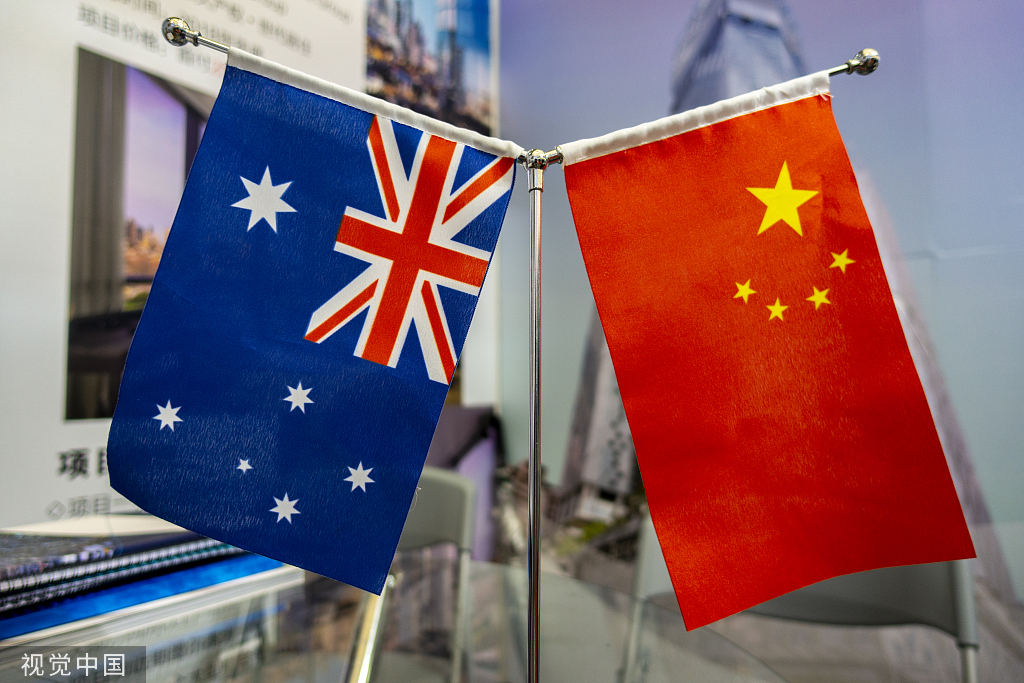
China-Australia ties are in trouble. And against the backdrop of Australia's rising hostility toward China, few would expect any news from there to be positive at the moment. Hence, when it was reported on Sunday that Australia's federal government will stop funding the think tank China Matters, it was naturally perceived as signaling Canberra's unwillingness to support studies on the betterment of Australia-China ties.
Considering that China Matters is a think tank dedicated to advancing Australia-China ties, it also makes sense if some choose to interpret the move as Canberra's intention to distance itself from a think tank that advocates stronger Australia-China ties, rather than decoupling with China.
Yet even those in Canberra who may feel obliged to pander to the rampant anti-China sentiment in their country with hard-line rhetoric cannot possibly deny the significance of Australia-China ties. Statistics from the Australian side show over the past decade the annual value of Australia's exports has increased by a net $117.5 billion, and that China contributed 60 percent of it.
Which is why China Matters' sponsors include Australian companies that have been conducting long-time and thriving cooperation with China. These Australian companies clearly know the price of decoupling with China.
And there is no need to talk at length about how much Chinese tourists and students contribute to Australian coffers as that is evident. Otherwise, when the Chinese authorities this month cautioned Chinese tourists and students against visiting or studying in Australia, citing Australia's rising racism against Chinese and other Asians, the Australian side would not have responded so strongly.
It is no exaggeration to say China-Australia ties have taken a turn for the worse and that they will continue to worsen unless Canberra looks at its interaction with Beijing from a long-term perspective. And since that seems unlikely to happen at present, worse is probably yet to come.
According to a study by KPMG and the University of Sydney, Chinese investment in Australia fell from $8.2 billion in 2018 to $3.4 billion in 2019, a decrease of almost 60 percent and its lowest level since 2007, with Australia's tighter scrutiny over Chinese investment partly to blame. But with the impact of the COVID-19 pandemic, coupled with Australia's anti-China sentiments, the chances are Chinese investments in Australia will continue to dwindle this year.
Hence, Canberra should ask itself whether it is really prepared to pay the price of decoupling its economy with China's. If not, it should refrain from making any irresponsible move that would accelerate steps in that direction.





