



Marketers hoping to avoid new platform pitfalls









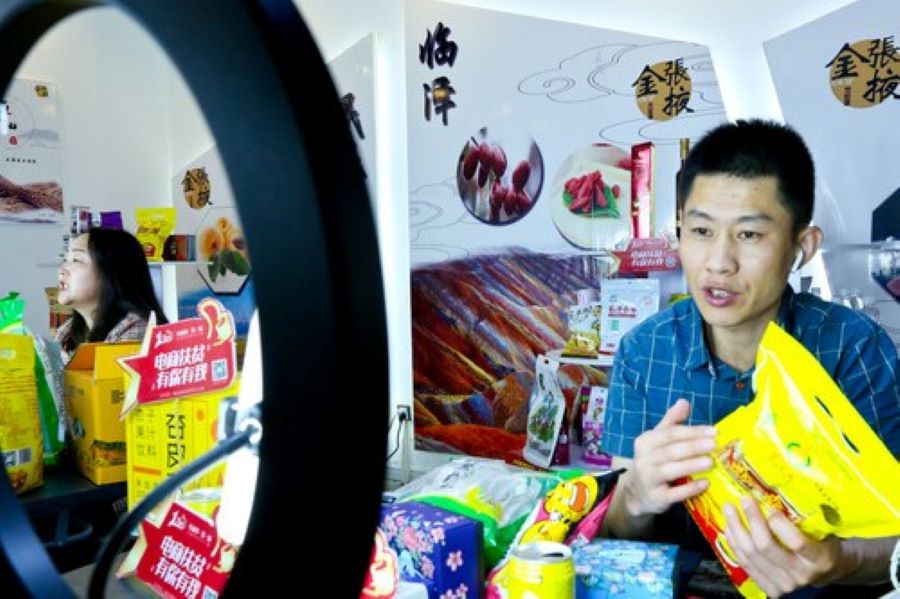
As livestreaming increasingly becomes the new darling of digital marketing in China, brand owners and marketers are hoping to avoid some of the common pitfalls experienced amid the growing trend.
Market participants point to the changing function of platforms, choices of key opinion leaders and returns on investment expectations as pressing questions needing answers before devoting marketing budgets to the practice.
Livestreaming sites abound, but the choice of platforms requires more than intuition or pure preference. Taobao Live, the livestreaming unit of Alibaba Group, pioneered the practice almost five years ago, and its strength is clearly linked to its parent company's gargantuan e-commerce market connecting some 700 million users.
But according to several seasoned livestreaming experts, the platform's elusive algorithmic logic has made it literally impossible for smaller brands or individual sellers to become visible to consumers. The price tag is usually too costly to obtain traffic support from the platform.
Highflying short video site Douyin has also delved into the livestreaming territory, banking on its 400 million users who spend at least one hour a day consuming rich video content on the platform. The recommended motivation here seems simple as the practice pushes similar or relevant content based on one's recorded preferences (e.g., videos that one has 'liked'), thus providing users with more useful and quality content.
But the kind of investment in time, creativity, personnel and of course, money, requires serious consideration, especially at a time when economic pressure is mounting amid unfavorable macro conditions and every marketing dollar counts. And to build up from zero has become increasingly difficult given an army of brands that crowd the market.
Choosing the right influencer is no small feat. As the industry expands, the legion of KOLs cannot be easily reached by brands directly. Instead they are often employed by so-called multichannel networks, or MCNs, which work as agencies optimizing influencer resources, negotiate on behalf of the majority of these influencers and take a cut from agreed-to deals.
While promising influencers access to these followers and promising brands access to the influencer talent-thus creating more boon for advertisers-many are starting to wake up to the fact that MCNs rarely have access to the library of content that was being generated by all of their creators. Market participants can also choose to work with top-tier celebrities as well, but endorsement costs are often too prohibitive to make it worthwhile.
Some also complain that even the most sought-after influencers often simply don't understand the brand sufficiently, and are merely going through the motions to get another paycheck, and then quickly go on to promote rival products in some cases. Brand owners typically are not big fans of such one-off deals. Also, a majority of KOLs don't have the actual follower numbers that MCNs claim.
Last but not least it's about ROI expectations. Initially, brands flocked to livestreaming to boost sales. But to entice a critical mass of customers, brands typically must offer steep discounts and pay top-tier influencers exorbitant endorsement fees. These all inevitably take a big chunk out of profits.
Companies are thus beginning to treat livestreaming as a way of building brand awareness and bonding with customers. But the limited number of viewers, sometimes just a dozen or two, often leaves all parties somewhat disappointed.











