



Policy on Chinese students insensible: China Daily editorial









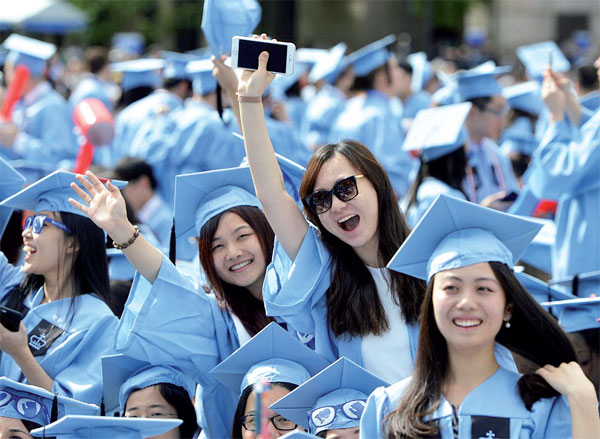
In a proclamation issued on Friday, the US president announced the United States is imposing entry restrictions on students and researchers from China, including those who have already received visas, as apparently they pose a threat to the long-term economic vitality of the US and the American people.
The justification for the move was the claim that Beijing "co-opts" some Chinese students, mostly postgraduate students and postdoctorate researchers, to act as "non-traditional collectors of intellectual property" that can contribute to China's "military-civil fusion strategy".
The move calls into question the credibility of the US leader and how much he can be trusted to keep his word, as he promised his Chinese counterpart in a telephone conversation two months ago that the US would protect Chinese students.
The pretext that Chinese students are an essential part of China's military-civil fusion strategy may sound reasonable, but even if some technologies in civil industries are used in the military industries, so what?
Is there a clear and strict boundary between civilian and military use of technologies? Like the US, and other countries, China seeks to transfer technologies developed for the military to the manufacturing of civil products to promote economic development and improve people's lives.
And as far as the allegation that Chinese postgraduate students and postdoctorate researchers acquire US technologies is concerned, it is not just narrow-minded but insensible of the policymakers to think so. They have turned a blind eye to what Chinese postgraduate students and researchers have contributed to the progress of science and technology in the US.
Are the entry restrictions on Chinese students in the best interests of the US, either in the short term or the long term? Definitely not.
Chinese students' spending on their studies contributes $16 billion to the revenue of the US, one-fifth of its surplus in its trade of service industries with China.
Although the new policy does not involve Chinese students pursuing undergraduate studies, it will undoubtedly dampen some Chinese students' enthusiasm to study in the US. Many Chinese families will have second thoughts before making the decision to send their children to US universities.
So US universities will suffer from this policy.
And blocking the exchanges between scientists and researchers of the two countries will not halt China's progress in science and technology; it will only do a disservice to the global advancement of science and technology.
Indeed, the policy, which is revealing of the Cold War mindset that now prevails in the White House, is simply part of the "persistent pressure" the US is putting on China. It is not really in the interests of any party.





