Quality infrastructure more crucial than ever









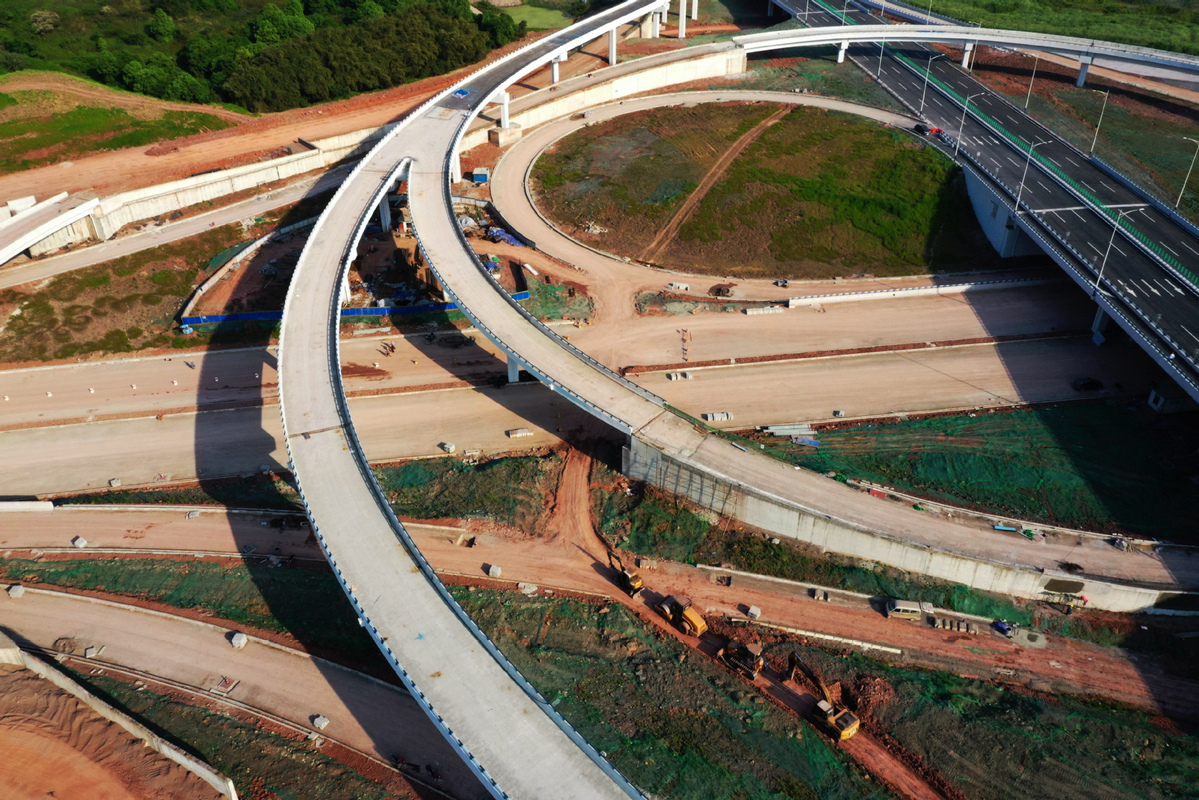
Infrastructure development has been a cornerstone of the Asia-Pacific region's successful growth and development strategy. A preview of what will follow the COVID-19 relief and recovery efforts can locate opportunities out of the crisis.
Infrastructure has served to strengthen income per capita, improve livelihoods and lower poverty through investment-led growth. In parallel, it has supported sustainable development goals.
High-quality infrastructure is crucial to continue to deliver on these gains. In China, the Measures (Regulations) for the Administration of Concession for Infrastructure and Public Utilities took effect in 2015. These measures enabled competition for public-private partnerships between private and State-owned bidders, and encouraged bankable projects and risk transfer over the project's life cycle.
The Quality Infrastructure Investment (QII) Partnership, established by the World Bank Group and the Japanese government, was also central to the deliberations of the G20 finance ministers and central bank governors, which endorsed the new G20 Principles for QII at their meeting in Fukuoka, Japan, in 2019.
This comprises a robust approach to sound project preparation practices over the project life cycle, including the adoption of innovative technology, environmental and social sustainability, resilience against natural disasters, and governance for procurement transparency and robust institutions.
Investments aligned with these principles will support the value for money proposition, help extend the life of the infrastructure asset and increase the returns on investment.
The preparation phase in the project cycle includes appraisal of fiscal affordability, social and environmental assessment, risk identification, financial viability, comparing public and private options, and sounding out the market.
Asia has some work to do on this score. The Procuring Public Private Partnerships in Infrastructure Report by the World Bank found that, based on an index from 0 to 100, in global best practices for project preparation, East Asia and the Pacific scored 40 compared with an average 65 for Organization for Economic Cooperation and Development countries with high incomes.
This demonstrates the need for more work in Asia to bridge the gap between theory and practice when it comes to implementing project preparation practices associated with the quality infrastructure principles.
There is no greater compelling case for quality infrastructure than now. All countries will come out of the crisis with larger public debts. Infrastructure investments will have to meet three key indicators: efficiency, affordability and sustainability.
On efficiency, considerable progress is needed. In a review of the public investment management frameworks of 30 emerging low-and middle-income countries, the International Monetary Fund concluded that 30 percent of potential economic benefits of public investments are lost due to inefficiencies in the public investment process.
On affordability, COVID-19 has led to the further widening of inequalities across this region.
From a public policy perspective, greater attention to financing will be required. For example, tariffs should be part of a wider package of financing-and not the driver-including tax revenue and returns from land value capture to ensure wider infrastructure service availability.
On sustainability, there is no greater threat than climate change and natural disasters. Addressing these threats requires innovative and inclusive solutions to foster new technologies that enhance resilience and boost green investment in a decarbonized economy, and to leverage innovative technology throughout the project's life cycle.
Economic and financial sustainability and strengthening of institutions will be equally important in the pandemic's immediate aftermath.
A recent survey of finance ministries, central banks and academics in G20 countries found that green investment has a positive impact on the speed with which the stimulus delivers economic impact for every dollar invested.
The question is how to effectively internalize future returns on an infrastructure project against upfront construction costs exacerbated by the pressing fiscal constraints caused by COVID-19.
Emergency financial support should be integrated into a fiscal framework that does not jeopardize debt sustainability.
In the medium to long term, however, a sound fiscal framework should be combined with increased investment in high-quality infrastructure that provides direct positive social and economic impacts, climate resilience and more effective delivery of public goods and services.
Bruno Carrasco is chief of the governance thematic group, sustainable development and climate change at the Asian Development Bank. Hanif Rahemtulla is a senior public management specialist at the ADB. The views do not necessarily reflect those of China Daily.