Country will carry on intl science, tech cooperation









China will continue to conduct international cooperation in science and technology regardless of the global situation, and it hopes other countries can work jointly to improve scientific capabilities for the benefit of mankind, a top science official said on Tuesday.
"Only through cooperation can scientists facilitate scientific development and ensure that science and technology can benefit people's lives and livelihoods in a positive manner," Wang Zhigang, minister of science and technology, said at a news conference organized by the State Council Information Office.
"China will adamantly seek out international science cooperation. This position has not changed regardless of the international situation," he said, adding that exchanges and collaboration are the basis of new scientific discoveries and breakthroughs.
He said that China hopes to deepen cooperation and dialogue with other countries to produce more scientific output that can support socio-economic development.
"China's development cannot do without the world, and the world's development cannot do without China," he added.
More specifically, Wang said China will continue to enhance bilateral and multilateral government-level scientific collaboration by building new platforms and communication channels. Basic research, environmental science, agriculture, green and sustainable development are some of the fields discussed by science ministers from various countries.
China also hopes to build more joint laboratories and science parks and train more science talent under the framework of the Belt and Road Initiative. "This is a key part of our scientific outreach," Wang said.
In addition, China will proactively participate in the global governance of new technologies and innovations, such as the ethical design of artificial intelligence or genetic engineering. This will require various government agencies and scientific communities to work together and learn from each other, he said.
"We hope other countries will work alongside China to facilitate international collaboration in science and technology, and improve scientific capabilities together for the benefit of mankind," he said.
In the next five years, China will strive to become an innovative country through talent training and policy support, with science and technology playing a key supporting role in the nation's economy, society and security, Wang said.
According to the 2019 Global Innovation Index, China's innovation performance ranked 14th among nearly 130 economies around the world. China was also the 15th most innovative country in the world last year, according to the Chinese Academy of Science and Technology for Development.
High-speed rail, 5G telecommunication and new energy are some high-tech fields that China excels in, Wang said. However, China is still lacking in terms of breakthroughs in basic research.
"Basic research is the master switch for scientific innovation," he said. As a result, basic research will be "a very important focus that deserves more support and planning".
In 2019, China's research and development budget for basic research saw a year-on-year increase of over 10 percent, according to the ministry.
Wang said the foundation of basic research is asking the right scientific questions. "If we can find a good research question, then we will have a clear direction and scientific values, and then half the battle of basic research is finished," he said.
"This is a very difficult task, and we need to enhance dialogue with scientists and the international scientific community," he said. China will also improve its research capabilities in mathematics, physics and other basic fields, which are crucial for a range of high-tech fields from artificial intelligence to big data.
Finding multiple sources of funding for basic research will also be a priority, Wang said, adding that the government should encourage companies and society to invest more in science, and allow scientists to freely explore basic sciences without worrying about application and commercialization.




- Aircraft carrier Fujian, commissioned
- Erdos offers 10,000 yuan subsidy for families having third child
- Qingdao conference promotes fair and rational global economic order
- China commissions CNS Fujian in Hainan province
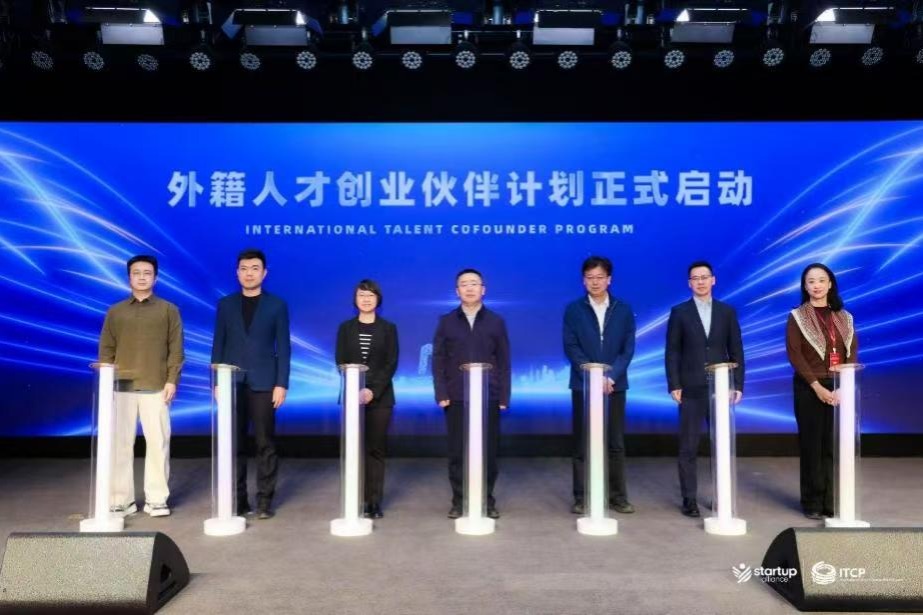
- Beijing launches program to foster international entrepreneurship
- China starts construction of water diversion project to quench thirst of metropolis