'Innovation magic' helped beat virus









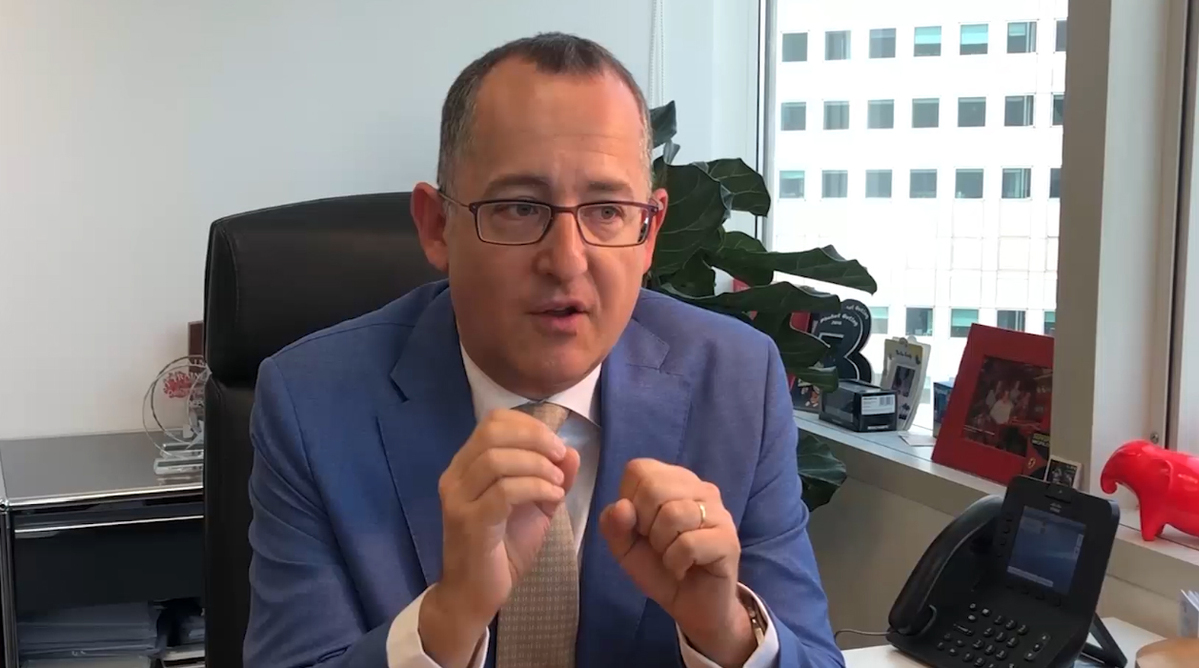
China has been flexible and speedy in using technology and innovation to respond to the novel coronavirus crisis, said Denis Depoux.
Chinese technologies in areas such as connectivity and development of mobile applications played a big role in powering the fight against COVID-19, he said at the Vision China event on Sunday.
The aftermath of the pandemic, which has included travel restrictions, economic and social uncertainty and business disruption, has also stimulated digitization and ideas to minimize physical contact. More new ideas will be needed to resume "normal order", he said.
Depoux said China had used its "innovation magic" to cope with the outbreak.
As the cradle of design thinking and inventing practical solutions to problems, China accelerated innovation during the crisis. Depoux said this was nothing new as similar efforts were made in 2003 in the fight against the severe acute respiratory syndrome outbreak. For example, at the time Taobao, the country's biggest e-commerce platform, started to grow rapidly.
Depoux said Chinese innovation is about "connection, flexibility, concrete tooling, speed, churn and growth" and its success was driven by several key players.
To spur innovation, Chinese governments at all levels have provided funds and incentives, made data available and eased administrative procedures for production of healthcare equipment, protective gear and new drugs.
Internet giants also accepted their responsibilities and created applications, such as the Suishenban health code app, to facilitate services for residents. "The internet giants had the ability to provide not only their traditional services, but to 'connect the dots' … to use their supply chains and ability to connect companies and individuals to fight the crisis," he said.
Business such as telecommunications company Huawei and Mavic drones repurposed their delivery and service robots to put them into use in hospitals or contactless elevator systems. Small and medium-sized enterprises, as well as startups, were also innovative in the provision of services such as registration, travel history monitoring, healthcare system administration and insurance.
Depoux said all the innovative measures, whether powered by low or cutting-edge technologies, proved to be useful, smart, agile and efficient. Telecommunication companies, for example, used simple technology to make tracking travel history possible by simply scanning a QR code. Sensetime, a leading artificial intelligence company, developed a solution to check people's temperature and make sure they wear masks properly. Depoux called it a "very interesting face-recognition development", considering people were wearing masks.