


Ancient craftsmanship brings modern life to rural residents









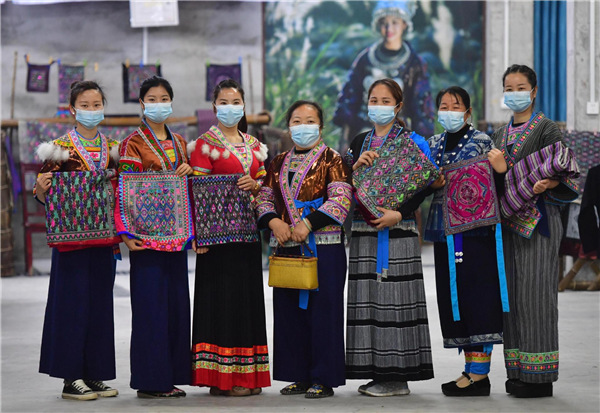
DYING EMBROIDERY BACK TO LIFE
The Shui ethnic minority often raises horses to transport goods, which gave birth to a traditional skill -- horsetail embroidery.
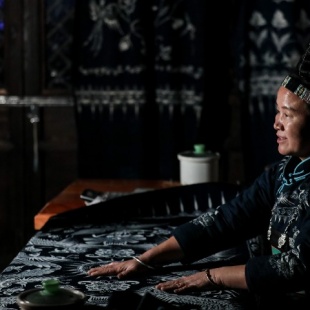
Horsetail embroidery is a traditional embroidery style using horsehair and silk thread as the raw materials for the handicraft. The skill of weaving horsehair into thread and sewing traditional patterns have been passed down by Shui women for generations.
The art was listed as one of China's first intangible cultural heritages in 2006 and is called the "living fossil" for embroidery.
"In the past, horsetail embroidery was mainly used to stitch shoes, hats and bamboo baskets for newborn babies and the dresses for brides," said Wei Yingli, an inheritor of horsetail embroidery.
Wei Yingli said that for a long time, horsetail embroidery was unknown to the outside world. In addition, as the production process is complicated, time-consuming and laborious, the inheritance of the ancient technique once fell into a low ebb under the impact of machine embroidery.
With infrastructure improved and tourists flooding in, many marveled at the exquisite craftsmanship hidden deep in the mountains.
Wei Yingli initiated a horsetail embroidery association in Zhonghe Township, which has now hired more than 900 experienced seamstresses. An average of over 300 horsetail embroideries are sold every month, bringing in more than 100,000 yuan.
"Our seamstresses also receive training to innovate in patterns and our embroideries are now used in clothes, bags, sheets and sofa covers," said Wei Yingli.
Stitching horsehair is not easy, even for an experienced seamstress. Sometimes a piece of complicated embroidery work can take over a year to finish. "So we mainly target the middle and high-end market," she said.
In 2013, Guizhou initiated a project to revive traditional artistry and so far the project has produced an output value of more than 6 billion yuan, benefiting over 500,000 women in the ethnic minority areas. It has also been helpful to solve other social issues such as left-behind children and empty-nesters.
But the sudden hit of the coronavirus epidemic has cast a shadow over the burgeoning industry.
"We basically had no customers and tourists during the epidemic. So far, we have only received two orders this year, and I hope the epidemic will end and the flow of people, passengers and logistics will resume as soon as possible," said Wei Yingli.
The local government has earmarked a 4-million yuan fund to support the industry and help them sell products via livestreaming, trade fairs and the Internet to tide over the difficulties.