



Delayed real estate demand stages return in Chinese market









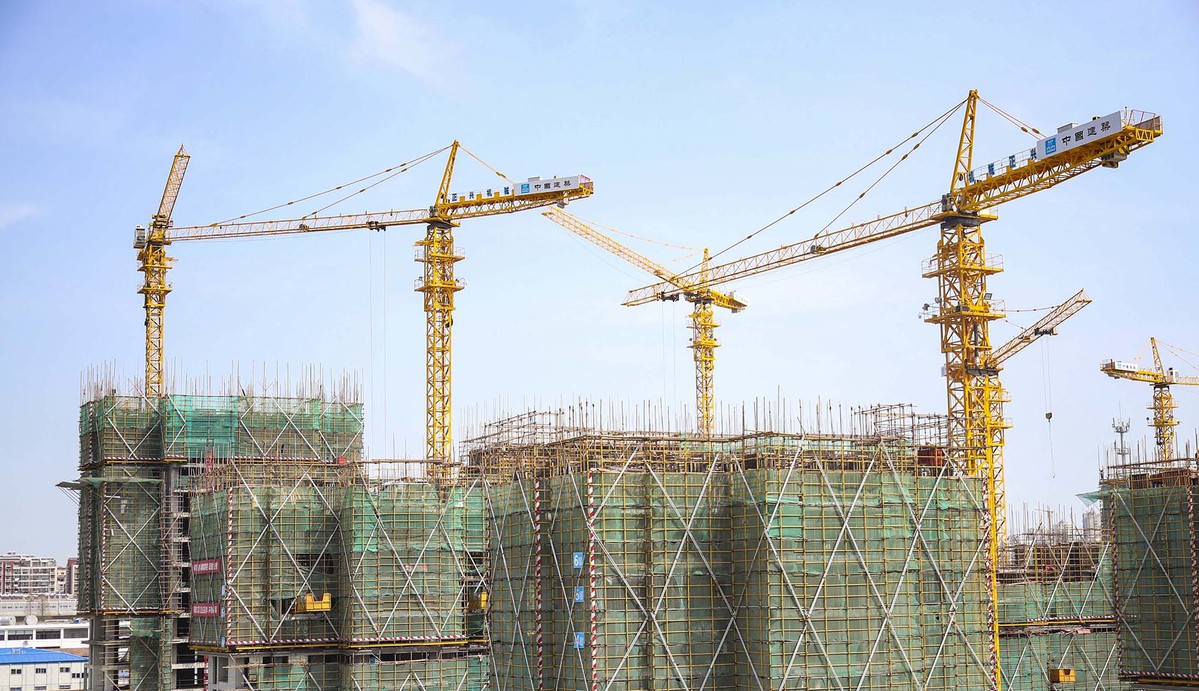
New home sales are recovering faster than expected in China. This has big implications for the macroeconomic outlook as well as investment opportunities.
While at the height of the coronavirus lockdowns in February, residential sales volumes in China's major cities were down 90 percent year-on-year, they have more recently recovered to around 30 percent below normal levels.
Housing demand that was pent up for months is now slowly starting to be released. The dream of home ownership is alive and well in China.
As the middle-income group grows and people seek better job opportunities and medical facilities, the long-term population growth of higher-tiered cities will likely continue. Companies are responding by turning their attention to cities like Shenzhen, Nanjing, and Hangzhou. Despite the COVID-19 pandemic, new project launches in these cities were recently sold out in half a day.
There are signs some developers are acting to bet on the next upcycle. At recent land auctions in Chengdu and Beijing, developers paid high premiums over the starting bids.
We expect higher-tier cities to recover first, as their markets are performing much better than lower-tier cities, which are doing price discounts of 20 percent to 30 percent. Although large stimulus and a sharp upcycle is unlikely, marginally improving sector performance can be expected.
Policy environment faced by the property sector is expected to be supportive but prudent. We have seen some incremental support measures which were targeted mostly for the supply side. For instance, previous tight restrictions on banks' proportion of loans given to developers have been deemphasized to alleviate liquidity stress after the coronavirus outbreak.
Rates on new mortgages have also been lowered slightly. We expect more demand side loosening to come on a city-by-city basis as the export slowdown intensifies.
Yet, against the improving backdrop for the sector, we see little incentive for the government to unleash larger-scale easing measures (unless the outbreak worsens). Small and medium-sized companies and manufacturers will be favored for new loans, as the top regulatory guideline of "houses are for living in, not for speculation" remains in place.
There is low systemic risk around mortgages, despite rising pressure of economic slowdown and unemployment due to the COVID-19 outbreak. China's household debt is relatively low at 56 percent of GDP, and in the event of rising unemployment, mortgage repayments have less credit risk than things like credit cards and other consumer loans.
A rebound in property could benefit other parts of the economy. While its relative contribution has been declining over the years, property still accounts for roughly 7 percent of China's GDP, and 17 percent when related investments are included.
For example, China's steel demand is the highest in the world, and property accounts for roughly a third of that.
For investors, we see a supportive environment for China's property sector stocks this year. The expected prudent policy loosening to counter exports slowdown and accelerated market consolidation should let the winners in the sector grow their sales. While we expect nationwide sales should fall around 10 percent this year, the stronger companies should be able to grow 5 percent to 10 percent.
This environment favors strong, defensive State-owned developers that have abundant liquidity, high operating efficiency, low leverage, low financing cost, alternative land resources, and land banks that are focused on higher-tier cities.
At the same time, valuations in the bond market are starting to look attractive. Chinese real estate developers make up about half of the Asian high yield universe. As at the end of March, China property high yields had risen by 500 basis points on average this year for credit rated BB, and 700 basis points for Bs, as global liquidity dried up and caused significant price dislocations.
By contrast, in the China onshore market, property bonds have been trading at historically tight levels. This means, there are huge yield differentials between onshore and offshore, even from the same issuer, which could signal a rare opportunity for investors.
We recently saw onshore/offshore differentials of around 500 basis points for a high-quality BB-rated issuer, and 1300 basis points further down the credit curve, albeit these gaps have since narrowed a bit.
Meanwhile, from an issuer's perspective, developers may use the low-cost funding environment onshore to replenish their liquidity reserves, which should ease concerns for offshore bondholders.
For the rest of this year, offshore maturity is pretty much pre-funded, onshore funding access is improving, and policy remains supportive. Based on the fundamentals, current valuations provide attractive opportunities.
In general, we see the sector as neither overly-leveraged nor at risk of widespread defaults. In both the onshore and offshore markets, quotas for incremental fund-raising have been strictly regulated in recent years, in line with China's deleveraging campaign.
Another supportive catalyst is bond buybacks by the companies themselves, which signal abundant liquidity and a faith in the market's fundamentals. Several issuers have already announced bond buybacks, and more are likely to come. These have been mostly in short-term debt, where the issuer can buy back their bonds at a discount and book a profit now, rather than repay at full value a few months later.
The key risks to watch include extended COVID-19 outbreaks in other countries, or a second wave in China that requires more lockdowns. Also, there can be a lag in policy response given the leadership's cautious tone toward the property sector. If policy loosening does not come as expected, the fundamentals may slump again.
Despite the macro challenges, there are still plenty of opportunities for developers with strong balance sheets, access to low-cost funding, high operating efficiency, and a focus on higher-tier cities. In the coming months, we're likely to see a normalization of pent-up demand that could help such companies outperform.
Ming Gong and Karen Zhou are analysts for China property at Fidelity International, a global asset manager.











