



Duty-free stores take drubbing amid epidemic









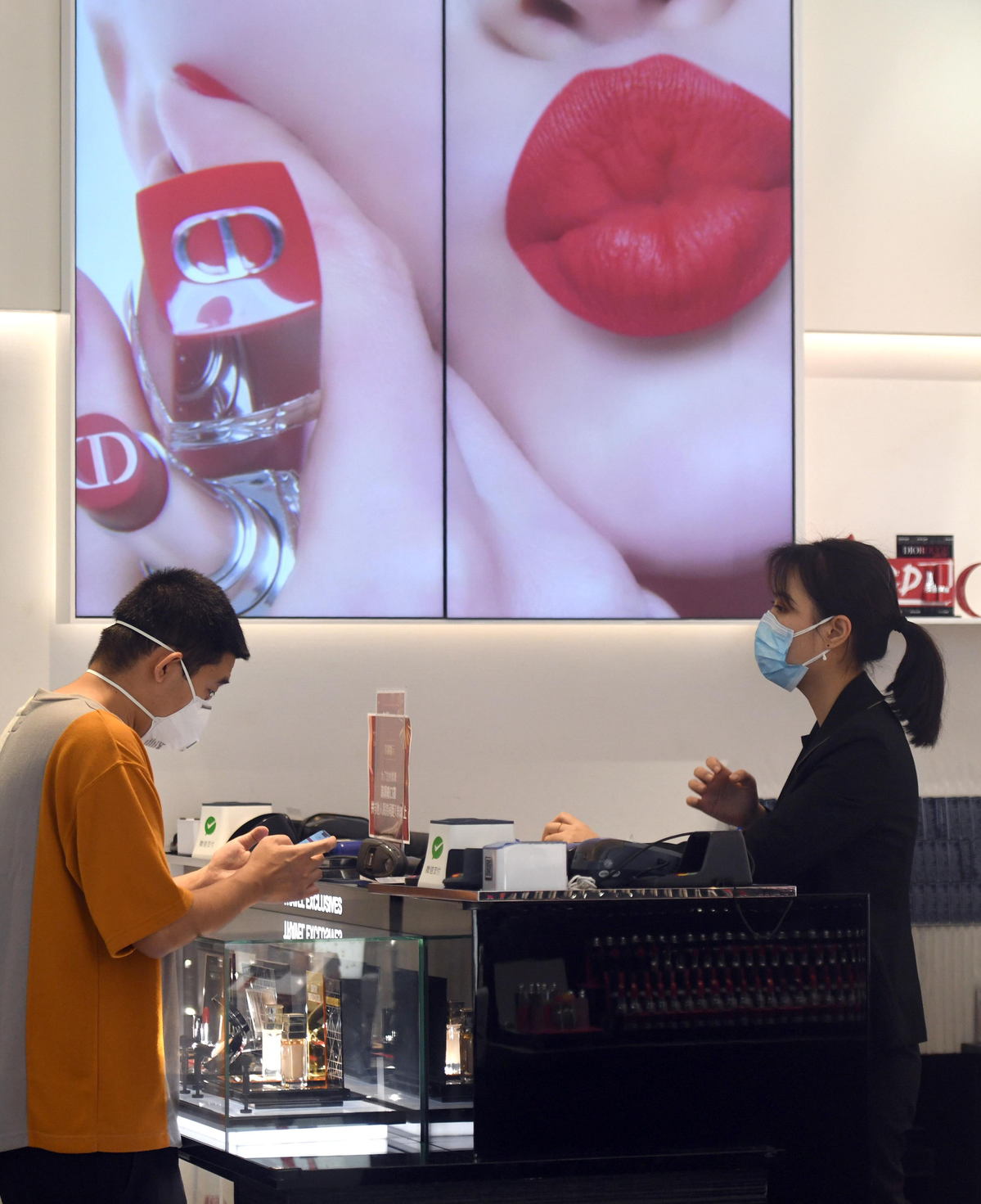
Airport passengers averse to crowds, handling merchandise for safety sake
The duty-free retailing sector, which has netted significant revenue in recent years, has nevertheless been suffering in the wake of the novel coronavirus epidemic. The decline of flights has caused a huge drop in international passenger flow at airports in China and elsewhere.
Chinese international travelers, who usually spend big on products like cosmetics, perfumes, bags and accessories from airport duty-free shops, have largely canceled trips or opted to avoid shopping as they try their best to steer clear of crowds and the risk of infection.
US cosmetics brand Estee Lauder Companies Inc, which owns top brands such as La Mer, Jo Malone, Clinique and Tom Ford, launched promotional sales at some duty-free airport venues in China last month. Consumers will be able to enjoy up to 40 percent discounts off original prices.
The steep discounts are a self-preservation strategy of sorts for duty-free stores in the country.
On the official website of China Duty Free Group, which owns four duty-free stores in Hangzhou International Airport, Xi'an Xianyang International Airport, and in two terminals of Guangzhou Baiyun International Airport, a group of products under Estee Lauder now offer discounts.
For example, an Estee Lauder lipstick product, which pre-contagion sold for 220 yuan ($31.7), now goes for 132 yuan after a 40 percent discount. Customers need to order online first before picking up goods at the airport.
"The gross profit of high-end perfumes and cosmetics is usually around 80 percent to 90 percent. Deducting 40 percent for rental costs, brands can still make substantial profits," said Yu Zhanfu, partner and vice-president of consultancy Roland Berger China.
"Considering the gradual recovery curve and the recent global outbreaks in multiple countries,-which will hold back Chinese travelers' willingness to go abroad-the loss of airport retailing business during the whole epidemic period could be as high as nearly a quarter of the annual income of duty-free stores," Yu said.
The impact on the airport retailing business will be much heavier than severe acute respiratory syndrome in 2003. Besides slumping customer traffic, many companies have cut or stopped payments to employees and encouraged them to take annual leave, and this will result in less money and less holidays taken by consumers. Once the crisis is over, the travel demand rebound may not be strong enough, he added.
Meanwhile, at some major airport hubs in Asia, sales at duty-free stores have shrunk 60 percent to 70 percent compared with recent comparative periods, according to information from the London-based Moodie Davitt Report.
The report said this has been the most significant crisis in recent times for the global tourism industry, as Chinese international travelers have become the core of the sector and many retailers rely heavily on them.
L'Oreal Group said sales from the travel retail sector maintained strong momentum last year. In 2019, it posted growth of 25.3 percent year-on-year, accounting for 9 percent of global sales revenues, according to its earnings report.
On March 6, 13,150 flights departed from and arrived at Chinese mainland airports-equal to 2009 figures. On March 7, about 8,000 flights were canceled out of 14,300 scheduled domestic flights, and 1,295 flights were operated out of 4,022 scheduled international flights, according to VariFlight, one of China's top air-data services firms.
"With the gradual increase of flights at a later time, passenger flow at airports and duty-free stores is expected to resume. But the impact on the economy may affect consumers' willingness to go shopping," said Lin Zhijie, an aviation industry analyst.
Over one third of more than 1,000 international traveler respondents from Asia, the United States, the United Kingdom and Australia said they now spend less time at airport duty-free stores and prefer to go directly to their boarding gates, according to a recent report from UK-based travel research firm Pi Insight.




















