



Mitigating the impact of COVID-19 on global economy is an urgent call









The spread of COVID-19 worldwide is causing growing concerns. Governments in Japan and Republic of Korea have ramped up emergency response measures. In Europe, the number of confirmed cases in Italy has exceeded 220 and is likely to rise further. Iran has become the most vulnerable country in the Middle East. Due to longstanding sanctions by Western countries, its poor medical facilities and conditions will inevitably lead to a higher mortality rate.
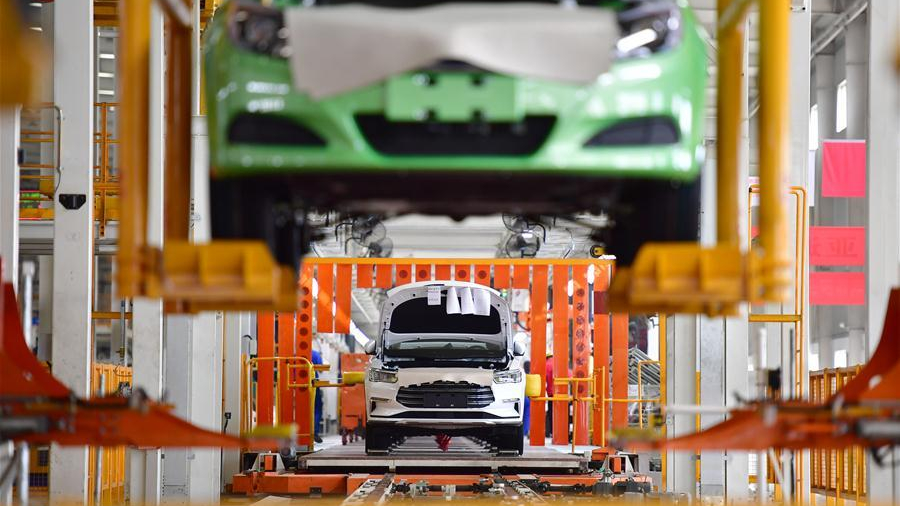
Beijing is aware that an important prerequisite for effective response to the epidemic is to maintain economic and social development, and coordinated efforts are needed to address the two major challenges, simultaneously. Except for Hubei Province, other provinces in China have seen tens of millions of factories resuming work and production. As a result, important medical supplies such as masks can be produced in full capacity.
The Chinese government is also working to reduce the negative impact of the epidemic on the economy through measures such as crisis management, additional liquidity and more proactive fiscal policies. Local authorities have also adopted a series of measures to help companies, especially small and medium-sized enterprises, to survive the crisis. China's economic activity is recovering significantly.
In fact, a strategy to run the epidemic control and economic growth in parallel is also urgently needed by the entire world, and international cooperation should be carried out on the two aspects. During the just concluded G20 meeting, Kristalina Georgiyeva, managing director of the International Monetary Fund (IMF), said that the IMF predicts that the global economic growth rate will be 3.2 percent in 2020, emphasizing that if the spread of COVID-19 continues globally for a longer time, the consequences will be much more severe.
As COVID-19 hits the US economy, Goldman Sachs downgraded its Q1 growth forecast for the US economy from 1.4 to 1.2 percent. In addition, experts of the White House National Economic Council suggested that COVID-19 might drag US GDP growth down by 0.2 percent, basically in line with market forecasts.
Some other major economies are also increasingly concerned. According to a recent report released by the Deutsche Bundesbank, Germany's Q1 growth will continue to be sluggish. In Asia, Singapore also downgraded its 2020 growth forecast from 1.5 to 0.5 percent.
From an industrial perspective, the trade of commodities, such as energy products and minerals is particularly sensitive to the epidemic.
Due to the outbreak of COVID-19, the global demand for energy has decreased sharply. The IMF recently cut the 2020 growth forecast for Nigeria, Africa's largest oil exporter, from 2.5 percent to two percent. Oil prices have fallen by 13 percent this year. According to a study by the Overseas Development Institute, a five-percent drop in oil prices over one year could mean four billion US dollars in lost export revenue for sub-Saharan Africa, or the equivalent to 0.3 percent of its gross domestic product. Besides, Australian mining giant BHP Billiton has begun to consider tuning down market demand expectations.
What deserves more attention is the profound impact of COVID-19 on the global supply chain. At present, the global manufacturing inventory has fallen to its lowest level since 2012. In particular, when most of the world's electronic products and their parts are made in China, the shutdown of Chinese factories may cause shortages across supply chains. Global manufacturers are highly dependent on intermediates and finished goods from China.
Although so far most American companies can still live off their inventory and the hiccup to supply chains is yet to cause an adverse impact on the production outside China, if the epidemic drags into the second quarter, a large number of American companies will have to halt production, based on a report of Goldman Sachs.
If the Chinese economy slows sharply, the US economy will also take a hit, as the supply of parts and materials needed by the US for making electronics, automobiles, home appliances and medical equipment will be affected, and it will be difficult for American companies to find alternative suppliers in the short term.
It can be said that economic globalization is facing the most important test since the 2008 financial crisis. If countries opt for more protectionism and adopt excessive travel bans as the response, the global economy will inevitably be more adversely affected.
As the epidemic escalates, global coordination and cooperation become more important. On the one hand, the role of the World Health Organization (WHO) and the UN agencies needs to be given full play. They need to assess the global impact of the epidemic in a timely manner and try to mobilize global scientific talents to speed up vaccine development for prevention and control. However, it is worrying that the Trump administration has cut funding for the WHO in its 2021 budget. But the good news is that the White House is asking Congress for 2.5 billion US dollars in funding to fight the outbreak, which may give international organizations the necessary support.
On the other hand, countries must step up the alignment of economic policies. Protectionism is not a good way to revitalize the economy, nor is it good for fighting the epidemic.
G20 countries should play an important role in this regard. Perhaps a special summit on how to maintain economic development under the epidemic can be convened to boost market confidence. Preventive measures need to be taken on several key issues affecting the global economy, such as maintaining the stability of global supply chains and reducing the cost of trade under the epidemic.
There is no doubt that China and the United States will play a particularly crucial role in responding to the epidemic and cushioning its global impact. As the world's two largest economies, the United States and China should pull themselves out of the "trade war" and think about how to carry out more substantial cooperation in fighting against the COVID-19.
Zhao Minghao is a senior research fellow at Charhar Institute and an adjunct fellow at Chongyang Institute for Financial Studies, Renmin University of China. The article reflects the author's opinion, and not necessarily the views of CGTN.





