More efforts needed to promote responsible application of AI tech, say experts









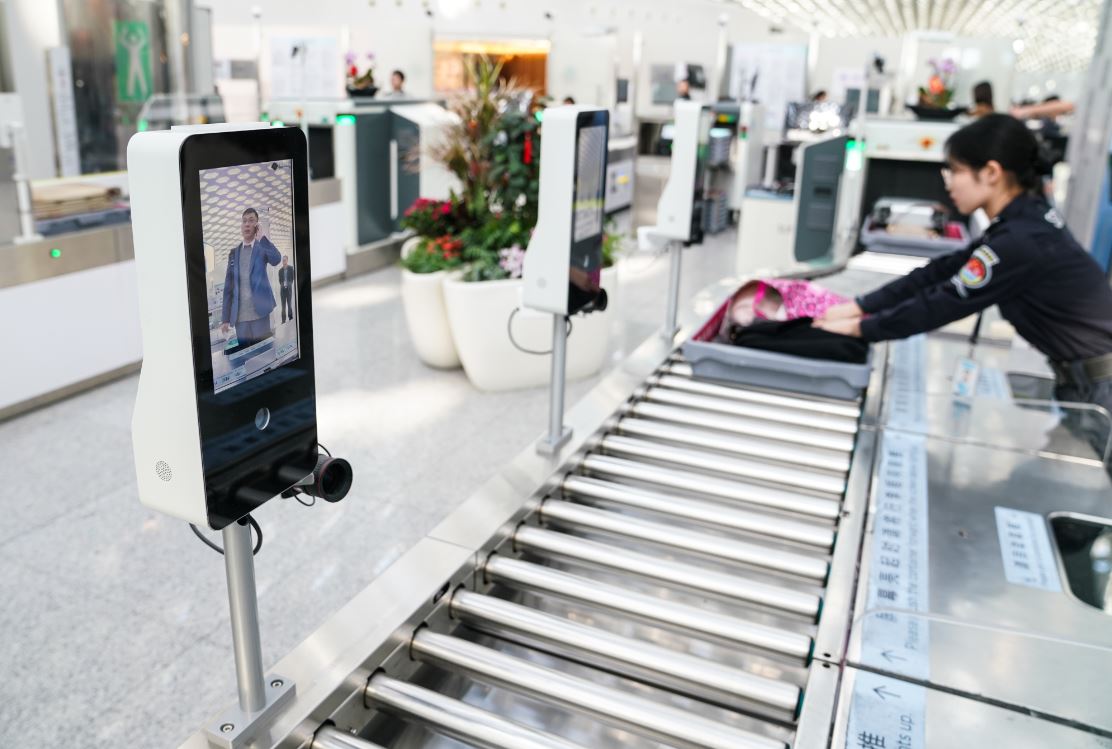
As artificial intelligence is evolving from a fancy concept into an integral part of people's daily lives, industry experts called for more efforts to promote responsible AI practices through better measures in protecting privacy and data security.
Xiang Yang, an AI expert at the China Center for Information Industry Development, said AI is being used in more scenarios so consumers are giving serious attention to how their biometric information, especially facial information, is used.
"Compared with ID card and fingerprint information, facial recognition can help identify a person more accurately," Xiang said. "If such information is collected improperly or leaked, the risks will be considerable."
The comments came after a rash of AI-related controversies that have occurred in China and the rest of the world. In October, the first lawsuit against the use of facial recognition technology in China was filed by a professor who sued a wildlife park in Hangzhou, Zhejiang province.
Guo Bing, an associate professor at Zhejiang Sci-Tech University, sued the Chinese wildlife park for making it mandatory for visitors to subject themselves to its facial recognition devices to collect biometric data. The park had upgraded its system to use facial recognition for admission. Currently, the lawsuit is going through the courts.
The case occurred just one month after a face-swapping app went viral in China and triggered heated online debates about its possible violation of user privacy.
China's top industry regulator, the Ministry of Industry and Information Technology, later summoned social networking firm Momo Inc. The company powers ZAO, which lets users superimpose their faces onto those of celebrities and produce synthesized videos and emojis.
The ministry asked the company to collect user information by abiding by relevant rules and regulations, revisit the respective user agreements and protocols, and strengthen the protection of internet data and individual user information.
The pictures uploaded to ZAO are categorized as "personal sensitive information" that should not be leaked, illegally provided or abused. Some clauses in the app represent a violation of a national standard on personal information and impeachment of user privacy, said Wang Zheng, a lawyer at Zhejiang Taihang Law Firm.
In November, China's social media went into overdrive again after videos emerged showing some students in a primary school wearing AI headbands designed to track their attention levels. Many netizens expressed concerns the product would violate the privacy of students. Others doubted whether the bands would really improve learning efficiency.
"AI has the potential to enhance learning and students' academic performance, but a prudent approach would be desirable. It is the responsibility of schools to enhance teaching quality. Students' privacy should not be sacrificed or compromised," said Xiang Ligang, director-general of the telecom industry association Information Consumption Alliance.
On top of data leak risks, some profound problems emerged that posed questions about how human beings can co-exist with AI peacefully in the future. In one terrifying incident, an unregulated smartspeaker advised its user to commit suicide "for the greater good".
A UK student from Doncaster, Yorkshire, named Danni Morritt, said she was terrified when she asked the smart speaker to tell her about the cardiac cycle as part of her revision to become a paramedic.
The smart device advised her to stab herself in the heart for the greater good and to protect the Earth.
Li Deyi, an academician at the Chinese Academy of Engineering, said there was no need to exaggerate one AI incident as a serious threat to mankind. Many tech companies are also using AI to prevent suicide.
AI as a technology is not a problem, but its adoption must be regulated before a special law is introduced, Li added.
As AI gets increasingly smarter, some discussions have also emerged about whether the technology deserves some legal rights.
In January, the European Union's Patent Office rejected applications submitted on behalf of AI programs, sparking debates on whether AI can hold a new patent.
Some believe that AI should be regarded as an inventor that can hold its own patents to promote progress in societies. But others said AI is just a tool and it should not be granted the same rights as human beings.
"The increasing penetration of AI into more areas will pose more challenges to existing laws and regulations, which will require more efforts to pre-think about how to deal with such legal and ethical issues," Li added.