



Bans on plastic must be enforced: China Daily editorial









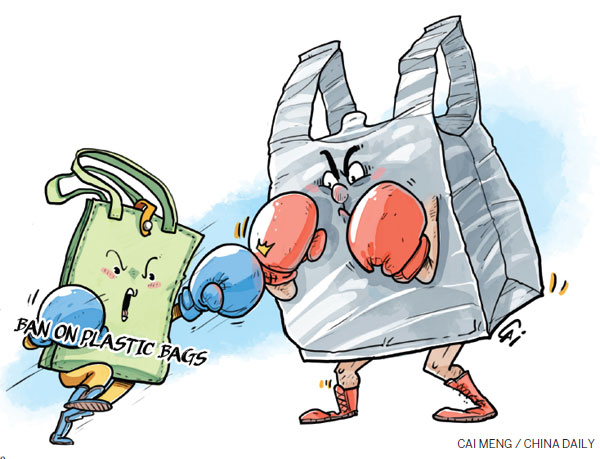
Although modern life would be unrecognizable without plastics, the dark side of the convenience they bring must not be ignored. It is estimated that the global production of plastics will hit nearly 1 billion tons by 2050, double that of 2015. And after being used for a short time — to be precise, 12 minutes on average for each of the 5 trillion single-used plastic bags consumed each year — most of the plastic products will be dumped and persist in nature for years before breaking into granules and entering the food chains.
That's why the document on curbing plastic pollution that China issued on Sunday is a welcome one.
According to the document, the country will ban imports of plastic waste, as well as the production and sales of single-use foam plastic tableware and plastic swabs by the end of this year. For daily chemicals containing plastic microbeads, production will be banned this year, while sales must stop by 2022.
But the fact that the document is the latest in a series of similar documents issued by China, dating back to 2007 points to the fact that previous efforts to curb the use of plastic have not realized their purpose.
Because of the lack of supervision particularly in the vast countryside, the production and sale of banned plastic products, such as thin plastic bags and agricultural films, have largely remained undisturbed.
The rapid growth of the fast delivery industry in China, a proud testimony to the rise of new economy in the country thanks to the popularization of e-commerce, has also stoked the production and consumption of plastic packing materials — the number of express packages rose from 20 billion in 2015 to 63.54 billion last year, with the huge number of take-away food deliveries excluded.
The annual output of plastic products in China has rocketed in the past half century from around 400 tons to about 70 million tons, about 15 percent of the global total, and only 20-30 percent of its plastic consumption is recycled, with the rest buried in landfills or finding its way to the sea.
As the largest producer and consumer of plastics, China is obliged to breathe life into its documents that are made to check the fast increase of plastic waste.
These documents, rather than being issued as particular ones in their field, must be incorporated into the making and implementing of comprehensive industrial and social development policies, so that an effective mechanism can be established that engages all relevant parties in the common battle against plastic pollution.
Otherwise, one man's pride will continue to be the shame of the other.





