



Smartphone vendors raise their game in India









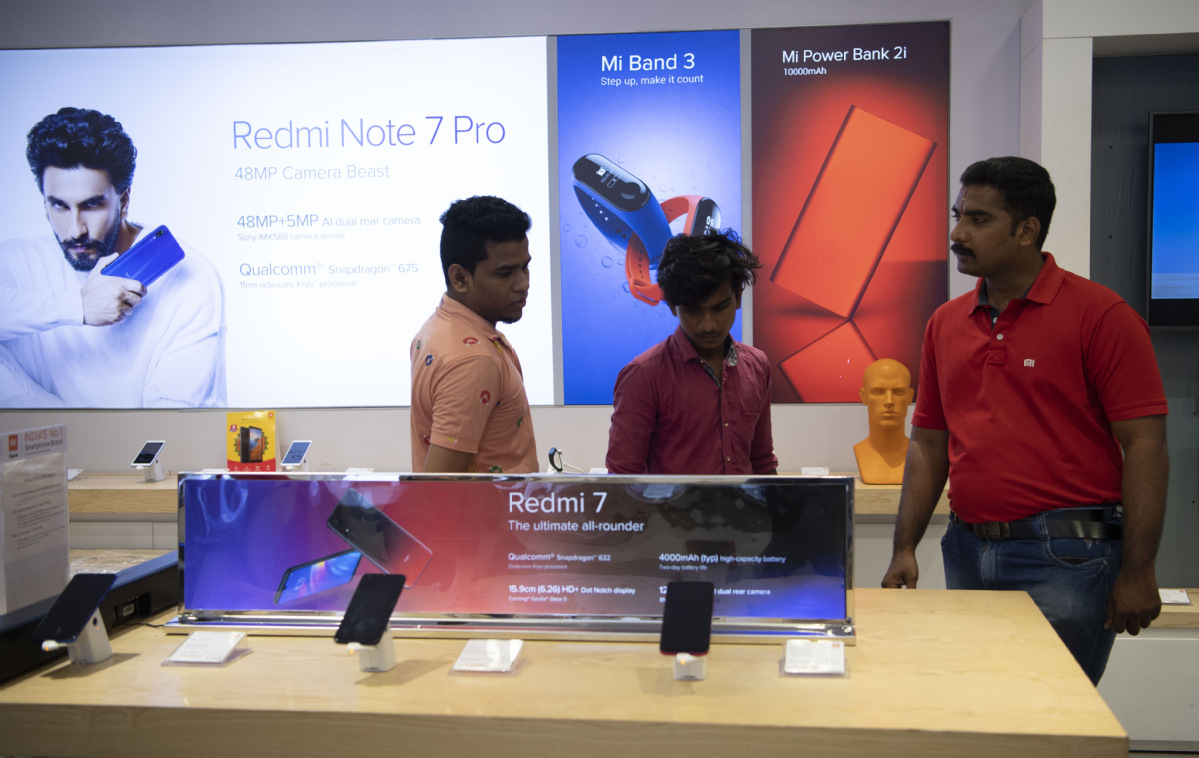
Chinese brands now dominate the local smartphone market in the country. Four of India's top five smartphone vendors are Chinese brands. They are Xiaomi, Vivo, Realme and Oppo.
Their combined market share, in terms of smartphone shipments, exceeded 68 percent in the third quarter of 2019, data from market research company International Data Corp showed.
"Chinese smartphone brands are entering a new stage in India. They no longer just see the country as a market. India has also become an important manufacturing base for them," said Fu Liang, an independent telecom analyst.
The change is partly the combined result of favorable tax policies by the Indian government and the improved efficiency at assembly lines.
A senior executive of a Chinese smartphone maker told China Daily that after several years of training, Indian workers are now almost as efficient as their Chinese counterparts.
The growing enthusiasm of Chinese companies toward the Indian market also came as their home turf, the world's largest smartphone market, has reached a saturation point.
Most Chinese consumers have already bought fancy 4G smartphones and the limited 5G network coverage has yet to trigger a widespread use of 5G smartphones.
In the third quarter of last year, the Chinese smartphone market posted a year-on-year contraction of 3.6 percent, data from IDC showed.
In contrast, India has just started witnessing a new round of burgeoning demand with consumers in third-to-fourth-tier cities ready to upgrade their feature phones into smartphones.
From July to September 2019, over 46.6 million units of smartphones were shipped to India, marking a 26.5 percent quarter-over-quarter and 9.3 percent year-over-year growth, IDC said in a report.
Nipun Marya, brand strategy director of Vivo India, said smartphones only account for about 60 percent of Indian's phone market, with the rest made up of feature phones. This signifies huge potential for future growth.
"Consumers in third-and fourth-tier cities of India are eager to upgrade their phones. That is an opportunity all players want to pounce on," Wang Shuo, head of marketing at Realme India, said.
To meet the demand, Realme is ratcheting up resources to accelerate offline expansion as the company emerged as the fastest-growing smartphone brand in India because of its popularity among online young consumers.
The company expanded its offline sales to 150 Indian cities last year and will soon offer tailor-made smartphones for offline customers.
But offline retailing is a battlefield where Vivo has already established a strong foothold. So far, the company has about 70,000 brick-and-mortar outlets that sell its smartphones. Vivo is also the only smartphone vendor in India that runs all offline after-sales centers, Marya added.
Despite the intensified efforts of Chinese smartphone vendors to attract Indian consumers with diversified products and services, they still face a common challenge-the relatively low average selling price of smartphones in India.
IDC's report showed that affordable smartphones in the range of200 account for 80 percent of the total shipments to India. This means Chinese smartphone makers can not generate very high profits from selling hardware in the country.
To overcome the challenge, Chinese companies are working hard to moving up in the price range with more expensive products. They are also eyeing internet finance services for more profit avenues.
Xiaomi announced its Mi Credit lending service (and Mi Pay) to make its mark in the fintech space a few months ago.
Realme unveiled its new payments platform, Realme PaySa, which is designed to help individual customers and small-or-medium-sized businesses financially. Vivo also announced plans to move in that direction.
Such efforts also show the ambition of Chinese smartphone vendors not to limit themselves as hardware companies. Instead, they want to position themselves as a tech company that offers a wide range of services with the help of smart terminals.
Vivo India's Chen said at this time several Chinese smartphone majors all have good word-of-mouth in the country.
"In the past five years, we have worked together to reshape how Indian consumers perceive Chinese brands and products," Chen said. "But that is just the beginning of internationalization. To become more global, we need to be more local. There is still a long way to go."











