



Time to address urban-rural educational divide









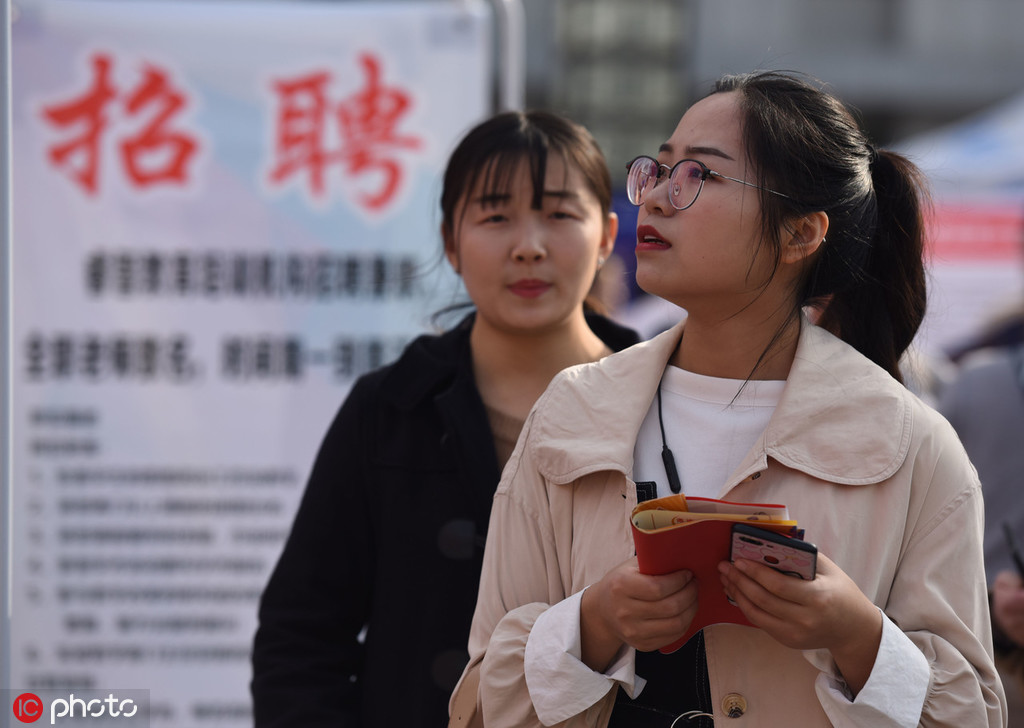
Editor's Note: The average age of China's labor force rose from 32.2 in 1985 to 37.8 in 2017, says a report released by the Center for Human Capital and Labor Economics at the Central University of Finance and Economics. 21st Century Business Herald comments:
Human capital is a source of technological innovation and economic growth, an important driver of sustainable economic and social development and an important guarantee to reduce poverty and inequality.
The rising education level of China's labor force over the past years has improved the quality of its human capital, but the urban-rural divide is still serious. Furthermore, China is also facing an ever-growing aging population pressure, with the average age of the labor force as high as 37.8. That means, after entering the stage of high-quality development, China's economy is facing the double challenge of improving both the education level and average age of its labor force.
According to the National Bureau of Statistics, China had 249 million people aged 60 or above by the end of 2018, accounting for 17.9 percent of the total population, and the number is expected to cross 300 million by 2025, 34.8 percent of the total population, making China one of the world's most aging countries. That the education level of China's labor force cannot meet its innovation-driven development model in the future highlights the need to strengthen the education and training of the labor force to provide high-quality manpower for China's high-quality development.
The report of the 18th National Congress of the Communist Party of China said China will increase educational inputs to build an army of knowledge-based, skilled and innovative workers. Given that the current urban-rural educational divide, the country should promote the integrated development of urban-rural compulsory education and attach greater importance to rural compulsory education. As the 19th Party Congress put forward the popularization of high school education, the country should implement the policy as soon as possible. It should also carry out large-scale vocational skill training, improve its vocational education and training system, and deepen the integration of industry and education, and cooperation between schools and enterprises.
To solve the labor shortage problem and improve the quality of labor force, the country should also speed up the integration of migrant workers in the cities they work in, and establish a social safety net that guarantees their basic needs in employment, education, medical care and old-age care to lay a human capital foundation for high-quality development.





