



China's first-tier cities see polar population trends









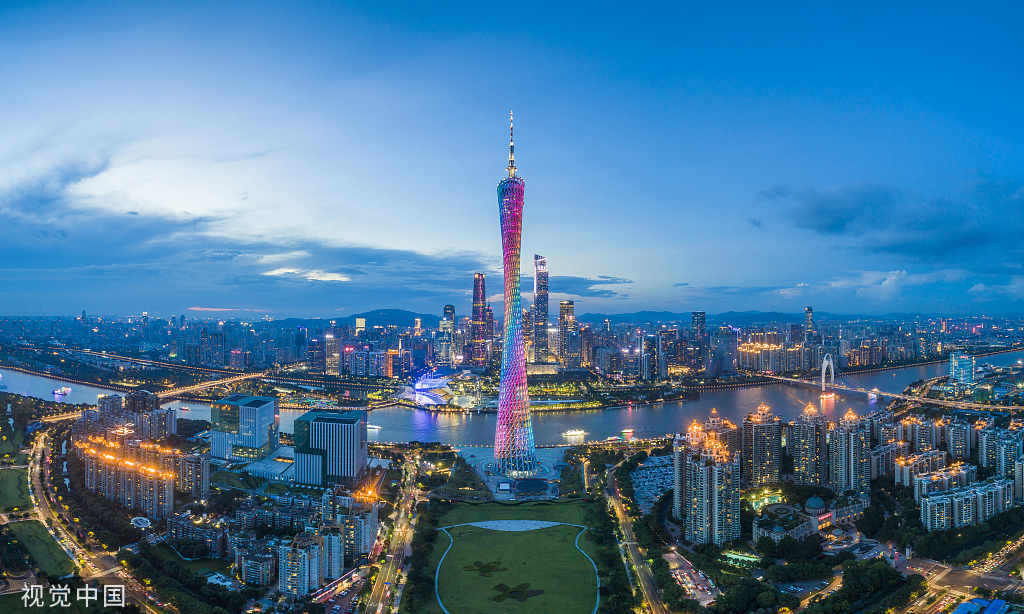
China's first-tier cities show opposite trends in population growth, seeing slowdowns in Beijing and Shanghai but surges in Guangzhou and Shenzhen, according to a Tuesday report from 21st Century Business Herald.
The permanent migrant population of Beijing fell continuously over the past three years, and Beijing's permanent resident population, referring to either people with a hukou (housing registration) or those without who have lived in the city for more than six months, also dropped for two consecutive years, according to a blue book issued by the Beijing Population and Social Development Research Center and the Social Sciences Academic Press on Dec 14.
Similar to Beijing, despite a slight uptick in the permanent population in Shanghai last year, the city has also shown a downward population trend in recent years, decreasing by 104,000 and 14,000 in 2015 and 2017, respectively, the report said.
Behind the population reduction are the control policies in Beijing and Shanghai. In recent years, the two cities have strictly controlled the scale of construction land, and transferred noncore functions of megacities to other areas to promote the outflow of population.
In this way, Beijing's subcenter Tongzhou district and Hebei province's Xiong'an New Area have taken on noncapital functions. Shanghai also proposed strengthening coordinated development with city groups in the Yangtze River Delta region and basin.
On the other hand, Guangzhou and Shenzhen have seen their population numbers jump, the report said. The permanent population size of the two all maintained an increase of more than 150,000 people a year in the past five years.
Those who left Beijing and Shanghai comprise a small portion of the inflow surge in Guangzhou and Shenzhen, said Ying Xiwen, an economist at China Minsheng Bank. More could go along with industrial migration, or to the surrounding areas of the megacities, or just go to their hometowns, Ying said.
Industrial transformation in the Pearl River Delta region, instead, is the reason for the population boom in Guangzhou and Shenzhen, since vast numbers of job opportunities have been created during the transformation, said Li Jian, an economist at the Shanghai Academy of Social Sciences.
There is no need to worry about counterurbanization in Beijing and Shanghai, and it does not mean the disappearance of China's urbanization dividends, said Shen Jianguang, vice-president of China's e-commerce giant JD group.
On the contrary, accompanied by the outflow of population from first-tier cities, China's metropolitan areas have been formed. The rapid development of China's city clusters has become an important feature in cultivating and developing modern metropolitan areas, which is a new driver of economic growth, Shen said.




















