



China's economy to stay resilient









China's economy to stabilize despite trade war
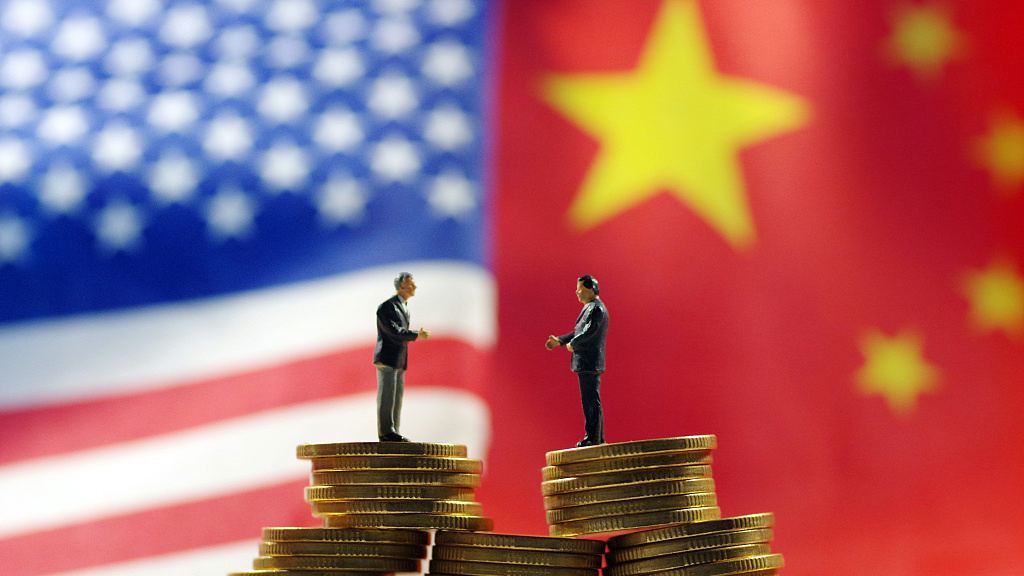
The US-triggered trade war has hurt China’s exports, increased uncertainty and dampened business investment in 2019. We (at UB Investment Bank) think this negative impact will persist next year even with a likely “phase one” trade deal between China and the United States.
Against such headwinds, we expect the Chinese government to continue easing macro policies to support growth. With a modest fiscal expansion focused on infrastructure spending and slightly easier monetary policy, we see China’s growth stabilizing in 2020, with employment and consumption both resilient, and inflation not a lasting concern.
Our base case forecast assumes that the US and China will agree on a “phase one” deal. Even so, most if not all tariff hikes will likely remain and there is a risk of further escalation. US restrictions on technology export to China, too, are likely to remain, if not tightened further. As a result, we expect China’s exports to the US to continue declining due to higher tariffs, and exports to the rest of the world weakening because of slower global growth and increasing uncertainty. Declining exports and rising uncertainty, due to the trade war, will also likely keep corporate investment subdued.
Indeed, UBS Evidence Lab survey of Chinese chief financial officers found that an increasing number of manufacturing companies have cut or plan to cut capital expenditure. We estimate that higher US tariffs and restrictions have had more than 100 basis points drag on China’s GDP growth in 2019 and will have at least another 60 basis points drag in 2020.
Under such circumstances, will China announce a stimulus package? Should it?
There has been extensive debate on the subject in China. For us, the answers are clear. Of course, China will implement stimulus policies. Maintaining a “reasonable” growth rate is considered key to maintaining economic and social stability, and it has always been a top priority for the government. In fact, the Chinese government has eased policies since this summer, relaxing restrictions on financing for infrastructure projects, lowering interest rates at the margin, and improving the business environment for private and service sector companies.
Going into 2020, we expect the government to expand broad fiscal deficit by about 0.5 percent of GDP including an increase in new special local government bonds to at least 3 trillion yuan ($433.33 billion) to help boost infrastructure investment in a bid to ensure a 6-8 percent growth. In addition, we expect a modest monetary easing in 2020, with a 100 basis-point cut in banks reserve requirement ratios and a 10-15 basis-point MLF rate cut, which should help the broad total social financing credit growth to reach 11.5 percent.
However, we do not expect a big stimulus package nor see 6 percent growth as a magic number. While the government wants to keep growth from slowing sharply, it also realizes that containing financial system risk and preventing a big property bubble are also important. Given China’s already high debt/GDP ratio and housing prices, we believe the government will refrain from announcing a big credit-fueled stimulus package or stimulating the property sector.
And since the US-China trade war seems likely to last longer, Chinese policymakers may also want to keep some policy reserves for the future.
Therefore, we do not think the government will strive to achieve 6 percent growth in 2020 at all costs. If the US makes good its threat to raise tariffs on more Chinese goods on Dec 15 and brings a bigger headwind for the economy, we think the Chinese government can accept a sub-6 percent growth in 2020. But if the US suspends the tariff hike, the expected modest policy easing should get growth close to 6 percent.
Despite the expected slowdown in 2020, we do not foresee a significant drop in China’s consumption growth. Ongoing structural transformation, including a gradual move toward services, and more automation in the manufacturing and export sector, means the negative effects of higher tariffs and weaker exports have had only moderate impact on the labor market. We expect more job losses in 2020 as recent tariffs take a toll on exports and growth, and yet we see China creating more than 10 million urban jobs next year. As a result, unemployment rate might rise only modestly in 2020.
Moreover, given the largely resilient labor market, recent income tax cuts, and the government’s initiative to support the service sector and small and medium-sized enterprises, we see consumption slowing only modestly next year. As for consumption, car sales could stabilize and become less of a drag on the economy, and spending on services including healthcare and tourism may increase more than average.
And given the increasing deglobalization forces, we expect China to further open up its markets, including the financial market, to attract more foreign investment. We also expect China to deepen reform, including State-owned enterprises ownership reform and hukou (housing registration) reform, enhanced intellectual property rights protection and higher spending on technology, in order to foster innovation in the long run. We also expect the yuan exchange rate to stay relatively stable, and inflation to decelerate after the Lunar New Year in January.
Wang Tao, head of Asia Economics and chief China economist, UBS Investment Bank.





