



GCC summit: Why does Gulf rapprochement matter?









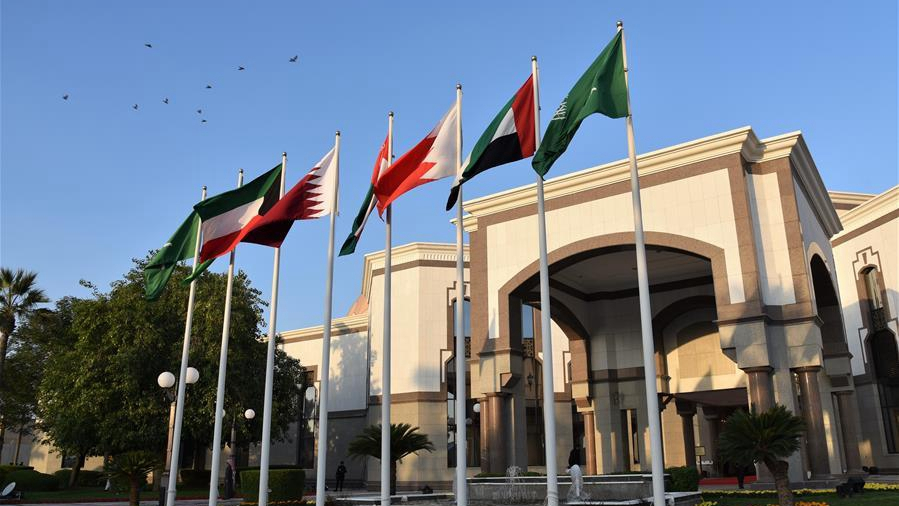
Last week there were signs that a rapprochement between rival Arab Gulf states might be on the cards. Since then, that optimism has been toned down, prompting discussion about how reconciliation might eventually be achieved and what it could look like.
The optimism began a couple of weeks ago when the Gulf Cup football tournament kicked off in Qatar. Saudi Arabia, the UAE and Bahrain all sent teams to compete despite having held a two-year boycott against the host.
Then, at the Med Dialogue forum in Rome, Saudi and Qatari foreign ministers all indicated movement taking place between their countries. Adel bin Ahmed Al-Jubeir, Saudi Arabia's foreign minister, said that despite the problems between his country and Qatar being well known, he noted the changes made in Qatar's laws regarding financing of terrorist groups.
Qatar's foreign minister Mohammed bin Abdulrahman Al-Thani said that the stalemate between the Quartet (Saudi Arabia, the UAE, Egypt and Bahrain) appeared to be ending, with talks on the horizon.
There was even speculation that Qatar's leader, Sheikh Tamim bin Hamad Al Thani, might attend the Gulf Cooperation Council (GCC) between the six Arab Gulf states in Saudi Arabia's capital Riyadh this week.
That turned out to be too optimistic, with Prime Minister Abdullah bin Nasser bin Khalifa Al Thani going instead. But that is still significant, since he is the highest ranking Qatari to attend a GCC summit since the crisis began more than two years ago.
The crisis began in June 2017 when Saudi Arabia and the UAE accused Qatar of supporting "extremist" groups, among which included the Muslim Brotherhood. They also claimed they were too close to Iran, Saudi Arabia's main regional rival. They also didn't appreciate the media scrutiny directed against them by the Al Jazeera media network, based in Qatar.
Saudi Arabia and the UAE closed their borders to Qatar, making it harder for the country to import goods or export its vast gas reserves. The country's commercial airline, Qatar Airways, was also obliged to fly further distances as the Saudis closed their airspace.
Despite Saudi and Emirati efforts, Qatar responded by employing its substantial wealth both to import from elsewhere as well establishing new industries at home; particularly notable in this regard is a dairy industry which has been built virtually from scratch. Furthermore, Al Jazeera continues its reporting while Qatar's relations with Iran have arguably grown closer as a result of the blockade.
Since the announcement that Qatar's Prime Minister would attend the GCC summit, some commentators have downplayed the prospect of this week's meeting leading to be a breakthrough between the oil monarchies. A longtime observer of Gulf politics, Kristian Ulrichsen, a fellow at Rice University's Baker Institute in the U.S., was reported by Al Jazeera that resolving the crisis will be "incremental."
Certainly, if Qatar and the Saudis are starting to talk again, that counts as progress. But it's hard to see Qatar conceding to all the demands that the Saudis and the UAE made of them in 2017, including stopping supporting "terrorist" groups, downgrading relations with Iran and shutting down the Al Jazeera network.
The tensions between the Quartet and Qatar are deep-rooted and go back to before 2017. A similar crisis erupted in 2014 when the Saudis and the UAE removed their ambassadors from Qatar, accusing Doha of supporting extremist groups. A year earlier, the then emir of Qatar abdicated in favor of his son, Tamim, as a way of reducing the acrimony.
But the fact that the tensions crossed over from the old emir to the current one only shows that the tensions go beyond personalities. Instead, it makes sense to see the rivalry between Saudi Arabia, the UAE and Qatar as structural. Mehran Kamrava, who teaches at Georgetown University's School of Foreign Service in Qatar, has pointed to this international relations theory to show how the three are destined to struggle.
As a regional power, Saudi Arabia is not only dominant but also concerned with maintaining the status quo. That position is shared by the UAE, whose economy and population is smaller.
In contrast, Qatar hasn't accepted Saudi hegemony. Having become the richest country in the world in terms of GDP per capita over the past few decades, Qatar hasn't been willing to sit in Saudi Arabia's shadow. It has challenged Saudi dominance, using its substantial resources to advance its influence within and beyond the Gulf.
During the 2000s it became an active mediator, looking to end conflict in the Horn of Africa, Lebanon and Sudan, for instance. Then, after 2011 it backed Mohamed Morsi, the Muslim Brotherhood leader who became President of Egypt, providing him with financial aid before he was overthrown in 2013.
Although Qatar has cut back on its activist foreign policy in recent years, it remains fiercely independent. Its response to the 2017 crisis reinforces that role. Consequently, Saudi Arabia and the UAE will find it hard to bring Qatar to heal, especially if Qatar continues to maintain its position as a revisionist state.
If a resolution is to be reached between the Quartet and Qatar then, it is likely that it will mean some concessions from both sides. Qatar may need to make some adjustments to its foreign policy to accommodate Saudi and Emirati concerns. That may involve greater cooperation on some Gulf-related issues and limiting the involvement of Turkey and Iran in Qatar, for instance.
At the same time though, it is unlikely that this will fully satisfy Saudi Arabia or the UAE. Consequently, whatever agreement is eventually reached between the Quartet and Qatar, it won't be comprehensive. It will be enough for both sides to co-exist, albeit uneasily.
That means that it will be a formal rather than a close and fraternal bond. But even that would be worth striving for, since it would be something rather than the present nothing, which effectively exists between them.





