Astronauts' health seen as core part of space station tech









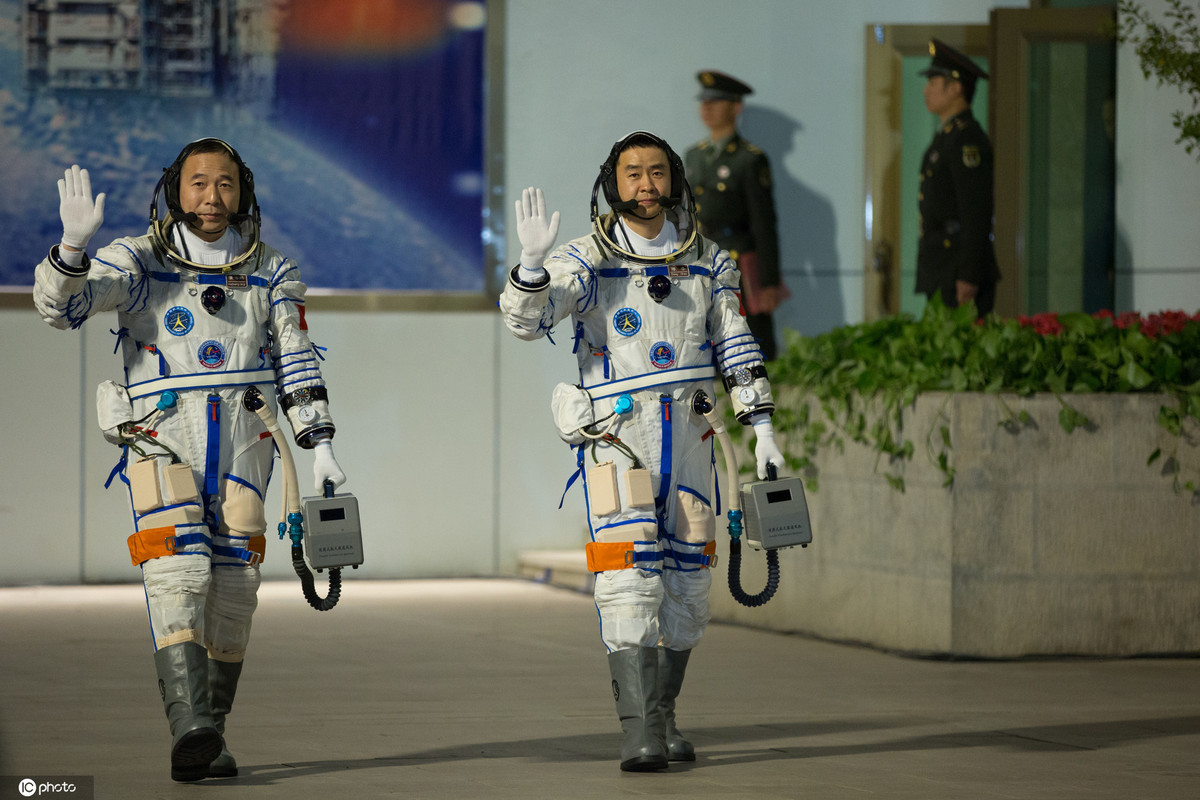
As China advances steadily toward its goal of building a manned space station, the country's medical experts are playing an indispensable role in the grand program, according to a leading scientist.
Du Jichen, a member of the Paris-based International Academy of Astronautics and president of the Aerospace Center Hospital in Beijing, said that medical experts are conducting extensive research to prepare Chinese astronauts for the coming space station mission.
"We're now focused on the impact on astronauts' health during long-term space missions," Du said.
"We want to investigate how the special environment inside the space station, especially its weightlessness, will affect astronauts' health, particularly their cerebral functions. And we'll explore ways to ensure their health during lengthy missions," he added.
Studies have shown that mid- or long-term stays in space mainly affect the musculoskeletal and nervous systems. Extended missions also impact the immune, circulatory, respiratory and urinary systems, according to the professor.
Scientists have used simulations to observe the effects of weightlessness on cerebral functions and to devise solutions. They are also working on methods to monitor long-term effects on astronauts' health after they return from extended space missions.
According to government plans, China will start putting together its first manned space station around 2020. In the first step, a Long March 5B carrier rocket will put the station's core module into orbit that year. Next, other components and astronauts will be ferried to the core module to assemble the station.
The multimodule station, named Tiangong, or Heavenly Palace, will be mainly composed of three components — a core module attached to two space labs — having a combined weight of more than 90 metric tons, according to the China Academy of Space Technology.
The space station is expected to be built and become fully operational around 2022 and is set to operate for about 15 years, the academy said.
Currently, China is training its astronauts for the space station mission. Astronauts will stay up to six months inside the station during each posting, space officials have said.
In addition to serving space travel, scientists have also been taking advantage of space missions to facilitate research into diseases, Du said.
"The micro gravity in space has a special effect on some kinds of cells, which will be good for the treatment of particular diseases. Also, natural radiation in space is likely to curb the growth of some cancer cells," the expert explained.
Du suggested that research into space medicine will be enhanced because it may help create new biotechnologies and enable scientists to further deepen their knowledge about the origin and evolution of life.


- China speeds up post-disaster rebuilding to secure sustainable future for quake-hit county
- China achieves breakthrough in compressed air energy storage technology
- August 1st Air Demonstration Team returns to Singapore Airshow with thrilling J-10 Aerobatics
- Mainland urges Taiwan authorities to remove cross-Strait air transport restrictions
- Bullet train maintenance worker safeguards Spring Festival travel rush
- China records sharp rise in number of generative AI users