



Jingye set to sharpen British Steel









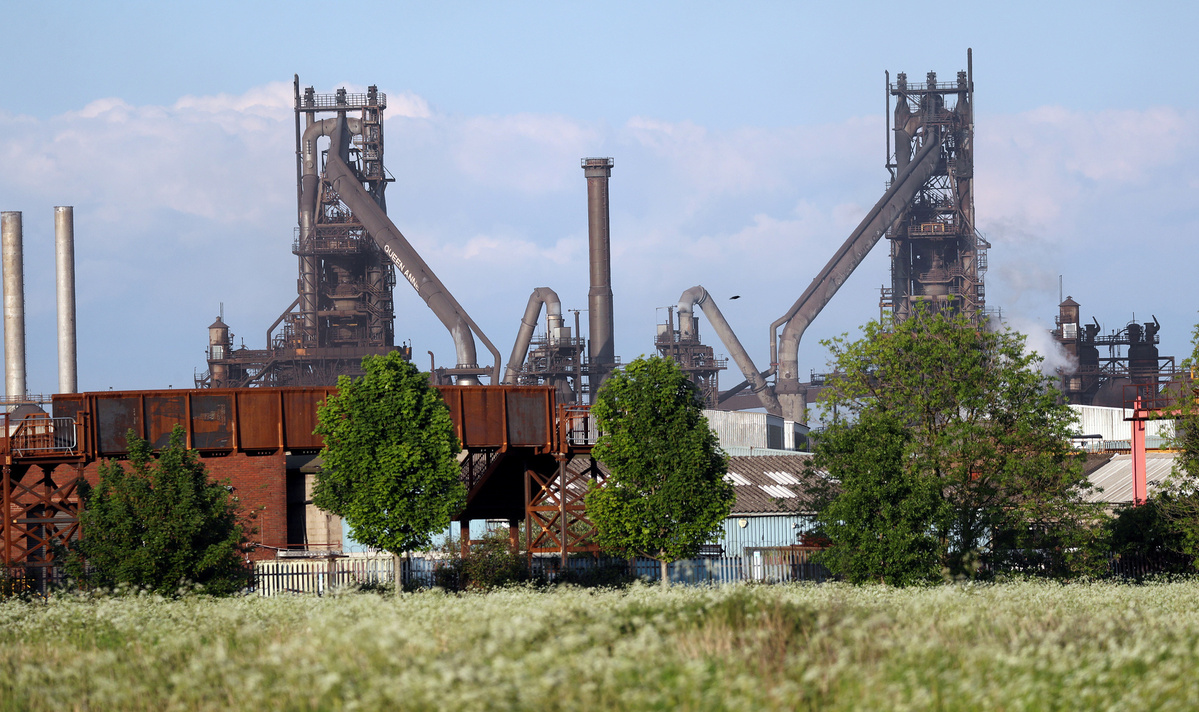
Once again, we see the business news illuminated by yet another Chinese company rescuing an effectively bankrupt Western enterprise with this most recent example highlighting the pathetic plight of the once-powerful British Steel Corporation.
Chinese conglomerate Jingye, which is headquartered in Hebei province near Beijing, recently announced an investment of a staggering 1.2 billion pounds ($1.55 billion).
But despite this news, and the saving of thousands of jobs, some quarters in the UK are yet again skeptical and voicing concern.
Such concerns make no sense whatsoever.
Jingye Group chairman Li Ganpo has already publicly committed to the more than sizeable spending plan over a period of a decade or more.
Not only are British Steel's jobs being preserved but significant, and much-needed, investment in plant and machinery is also promised.
Li's statements also go further than an immediate rescue plan, with commitments to expand into new products and new markets.
It is no doubt Li's long-term vision for a more robust and commercially competitive British Steel that prompted warm words from the director general of industry lobby group UK Steel, Gareth Stace who said, quite understandably, that Jingye's short-and long-term plans are "very welcome".
In addition, the unions and steelworkers have been glowingly referencing the deal, which they are convinced will "secure the jobs of 4,000 employees at the Scunthorpe plant and a further 20,000 jobs over the supply chain".
Sadly, UK media commentators and even UK government spokespeople have not echoed those statements. Why not?
Of course, British Steel, indeed the steel industry in general, represents a national asset and can be described as a strategic industry. But this should not lead automatically to a questioning mentality when a rescue package appears from a faraway company and country.
UK business journalists and the UK government should focus instead on the unequivocal commitment of Chinese companies to expand, long-term into international markets with ever more competitive brands. Furthermore, internationalization of all parts of the Chinese corporate sector has long been a pivotal part of the Chinese government's plans as part of the transition/modernization of the Chinese economy.
Clearly, Jingye's announcement, therefore, is not some sort of short-term "cash and grab", asset-stripping maneuver. Nor should the diversified nature of Jingye's products and services necessarily set off alarms.
And it is all the more surprising that this mentality appears to prevail given the welter of recent cases where Chinese companies have not only invested heavily in struggling UK and European companies but have continued to build ever more competitive Sino-UK corporate partnerships.
A prime example of the very positive, long-term influence that Chinese corporate recovery deals have had is the case of Dynex, an age-old British high-voltage semiconductor manufacturer (the UK's largest). Dynex, renowned for its cutting-edge technology, fell foul (like so many) of the global financial crisis around 2008.
But, fortunately for Dynex and British industry generally, Chinese train-builder CRRC Corporation rode to the rescue. Since the initial rescue, Dynex has received investment of between $10 million and $12 million a year from its Chinese partner that has funded improvement in expertise, both in manufacturing and research and development.
And this year witnessed the latest joint CRRC-Dynex investment, with the opening of a new center of innovation in Birmingham aimed at developing chips for the burgeoning, international electric car market. This center will immediately employ 100 engineers and will have 200 to 300 engineers within a year or two.
Critics of the latest Chinese rescue deal should be reassured by the CRRC-Dynex example.
Crucially, Dynex is better placed now than it was before the deal.
British Steel's rescue by Jingye, therefore, not only represents short-term survival but presents opportunities for long-term investment and growth, growth that includes the very real possibility of expansion into the fast-growing Asian and Chinese markets.
For far too long, British industry has been dogged by a conservative attitude toward investment and growth, especially growth into new, non-EU markets. It is to the Chinese investor, and the likes of Jingye in the case of British Steel, that British industry should warm to more and more, and not just for short-or even long-term survival and growth but for the opportunity to tap new markets.
The Jingye Group, typical of modern Chinese companies, should be welcomed by one and all as the savior of British Steel, from which a sharper, more internationally-oriented business culture will emerge.










